Having the right size for your cake pan can make all the difference, especially if you’re aiming for the perfect slice or matching your recipe. A standard half sheet cake pan typically measures 18 by 13 inches with a 1-inch rim, though slight variations exist between manufacturers.
This size generally yields 36 to 54 servings, making it ideal for a variety of baked treats.
Keep reading to learn everything you need to know about this versatile pan and how to use it effectively.
What Is the Standard Half Sheet Cake Pan Size?
The standard size for a half sheet cake pan is 18 by 13 inches with a 1-inch rim. This size is widely used because it fits most home ovens perfectly and provides enough space for cakes, cookies, or roasting. Some manufacturers may produce slightly smaller versions, such as 17 5/8 by 12 13/16 inches, but sticking to the nominal 18 x 13 inch measurement ensures compatibility and consistency. For those who also use a stand mixer, performing a KitchenAid mixer adjustment can ensure even mixing for large batches in such pans. To remove stubborn baked-on residue from the pan, you can apply the same methods used for lifting baked-on residue on silicone baking mats. When comparing performance, these pans often require similar baking time adjustments as those used for 8 and 9 inch cake pans.
Outside dimensions are typically advertised, but the top-in size may be slightly reduced due to rolled edges. Choosing a pan that measures 18 by 13 inches helps ensure your baked goods will fit well in your oven and come out evenly. Material options include aluminum, which heats evenly, and nonstick coatings that facilitate easy release. Proper storage involves stacking pans with a paper towel to avoid scratching, and avoiding placing heavy items on top to prevent warping.
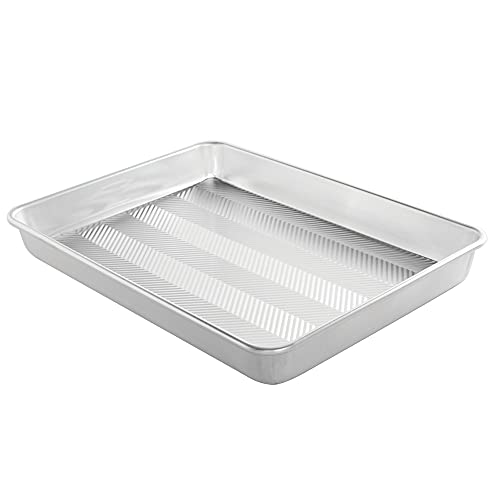
Better Airflow for Crisping

Constructed out of durable aluminum
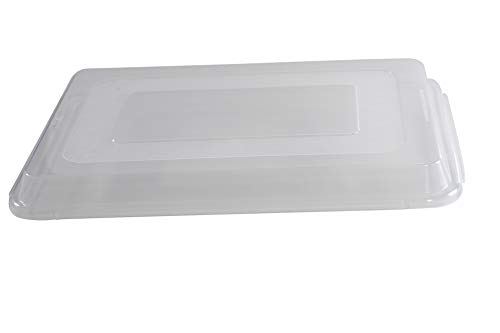
Protect, store, and transport your baked goods with ease using this lid.
How Half Sheet Cake Pans Compare to Quarter and Full Sheets
A half sheet pan measures 18 by 13 inches, making it larger than a quarter sheet but smaller than a full sheet, and is ideal for many home baking and cooking needs. Its size doubles the area of a quarter sheet, which typically measures around 9 by 13 inches, allowing you to prepare more food at once without requiring an industrial oven. Full sheet pans, usually 26 by 18 inches, are primarily used in commercial kitchens and often need to be split into two half sheets for home ovens that typically accommodate up to 18 inches in width. All sheet sizes are commonly made from aluminum or coated with nonstick surfaces; however, aluminum pans tend to be more durable and heat evenly, while nonstick options ease food removal and cleaning. Some high-performance models, like those reviewed in a KitchenAid HD Professional guide, emphasize even heat distribution for consistent baking results. Pot holders are essential for safely handling hot pans, regardless of material. Keep in mind that quarter sheets are easier to clean manually, especially in hand-wash settings, whereas full sheets might need commercial dishwashers due to their size and material. Always measure your oven’s interior to ensure the pan fits comfortably before buying. For similar kitchen tools, a flat beater attachment can enhance mixing efficiency for batters and doughs.

1/2 Size – Large flat baking surface ideal for baking cookies, roasting vegetables or baking desserts

PURE UNCOATED ALUMINUM & SUPERIOR HEAT CONDUCTION: Crafted from 100% bare aluminum with NO chemical coatings – guarantees safe, toxin-free cooking. Engineered for lightning-fast, even heat distribution (up to 30% faster than steel!) for perfectly crispy cookies, golden roasted veggies, and juicy meats every time. The aluminum baking pans are made of thick and heavy aluminum, with a heavy rolled edge making this truly "commercial-grade"that provides maximized scratch resistance

Baked goods rise and bake evenly due to aluminums superior heat conductivity and the reinforced encapsulated steel rim prevents warping
Why Half Sheet Pan Dimensions Vary by Manufacturer
Half sheet pans labeled as 18 by 13 inches can actually vary quite a bit in their exact measurements. The reason for this variability lies in differences in manufacturing methods and design choices. Some pans are measured from the outside rim, adding extra width and length, while others measure only the cooking surface inside the rim. Additionally, rolled or reinforced rims increase the overall footprint without adding usable space. As a result, a pan with the same nominal size can have external dimensions like 17.9 by 12.9 inches but offer just 16.5 by 11.38 inches of flat, usable surface. Variations such as these mean you should never rely solely on the label when comparing half sheet pans. Always check the specific internal and external dimensions listed to ensure it fits your needs. Many reviews of the best sheet cake pans emphasize that measuring the interior cooking surface is the most reliable way to compare options. For piping tasks, choosing the right tool is similarly important, as best piping bags can make a significant difference in precision and control. One point of consistency is that these pans are made of pure aluminum for superior heat conductivity, which ensures evenly browned baked goods. For accurate liquid measurement in baking, many cooks also rely on a clear measuring cup with easy-to-read markings.

Naturals bakeware is made of pure aluminum for superior heat conductivity and produces consistently evenly browned baked goods every time.

Naturals bakeware is made of pure aluminum for superior heat conductivity and produces consistently evenly browned baked goods every time.

Naturals bakeware is made of pure aluminum for superior heat conductivity and produces consistently evenly browned baked goods every time.
What Can You Bake in a Half Sheet Cake Pan?
A half sheet cake pan is perfect for a variety of baked goods that benefit from its wide, shallow surface. Its design allows heat to distribute evenly across the batter, resulting in flat, level cakes ideal for decorating or stacking. You can bake sheet cake batters that produce a smooth, even surface, perfect for intricate decorating techniques. It is also well-suited for cookies, ensuring even browning and consistent results.
In addition, the pan works great for brownies, bars, and tray bakes, providing a consistent edge and moist interior. You can bake sheet-pan pancakes or quick breads flat and evenly shaped. Sponge cakes for jelly rolls also bake well in this pan, offering a uniform thickness. For clean, crisp edges, let baked goods cool completely in the pan before cutting. Its wide surface reduces crowding, which helps baked items crisp rather than become soggy from steam. Expect faster bake times and uniformity whether you’re preparing a party cake or simple snack bars. If using a metal pan, dough can rise safely at room temperature because the metal will not interfere with yeast activity as long as it is not reactive with acidic ingredients. For buyers comparing the top half sheet pans, reviews can help determine which pan offers the best performance for these baking tasks. Selecting the correct piping for bags ensures consistent and neat application of icing or batter onto the wide pan surface.

Naturals commercial bakeware is made of pure aluminum which will never rust for a lifetime of durability. Foods bake and brown evenly due to aluminum’s superior heat conductivity

Classic Half Sheet Pan for baking, sheet cakes, cookies and roasting vegetables; commercial grade and heavy gauge aluminized steel

How Many Servings Does a Half Sheet Cake Yield?
A half sheet cake generally yields between 36 and 54 servings, depending on how you cut it. For smaller 2 x 2-inch slices, you can expect around 54 servings, while larger 2 x 3-inch pieces reduce that number to about 36. If you opt for wedding-style 1 x 2-inch slices, you can get over 100 servings from the same cake.
The actual count varies based on the cake’s height, your event type, and preferred serving sizes. For casual events like birthdays or office parties, planning for 36 to 48 servings keeps things simple. To maximize your servings, mark a grid before cutting, which helps ensure even slices. Proper storage after slicing will keep leftovers fresh and ready to serve later. Always measure your pan and plan your cuts accordingly to get a precise estimate of servings. For precision, you can use standard measuring cups to confirm your liquid ingredients are accurately portioned for the batter. For a sturdy surface while slicing, consider using a top butcher block to protect your tabletop. Just as a loaf pan’s material composition affects baking performance, your half sheet pan’s material influences heat distribution and cake texture.
How to Choose the Right Half Sheet Pan for Your Oven
To choose the right half sheet pan for your oven, start by measuring your oven’s interior width and depth, focusing on the actual rack space rather than just the cavity. Aim for at least a half-inch of clearance on all sides to allow proper airflow and prevent overheating. This ensures your pan fits comfortably without obstructing circulation, which is essential for even baking. When mixing dough for sheet cakes, using a stand mixer fitted with dough hook tips can help develop gluten evenly without overworking the batter. For optimal results when mixing large batches, a tilt-head mixer provides easy access to the bowl and consistent power. For bundt cakes, the baking time depends on factors like pan size and batter volume, requiring adjustments to avoid underbaking or overbrowning just like sheet pans.
Pay attention to the material of the pan. Heavy-gauge aluminum provides even heat distribution, making it ideal for baking cakes. Dark-coated pans tend to brown baked goods faster, so lowering your oven temperature by about 25 degrees Fahrenheit can help avoid over-browning. Stainless steel pans are durable and long-lasting but may develop hot spots, so rotating them during baking can promote uniform results.
Look for pans with rolled rims to prevent warping over time. When placing the pan in your oven, slide it onto the middle rack, leaving space behind and in front. Avoid pushing it against the back wall, as proper clearance helps with even heat exposure. Matching your pan’s dimensions to your recipe is important, but prioritize a good fit and airflow over the labeled size to ensure optimal baking performance.

Commercial & Professional baking sheet pans are essential additions to kitchens, bakeries, cafeterias, diners, restaurants, coffee shops and cafes.
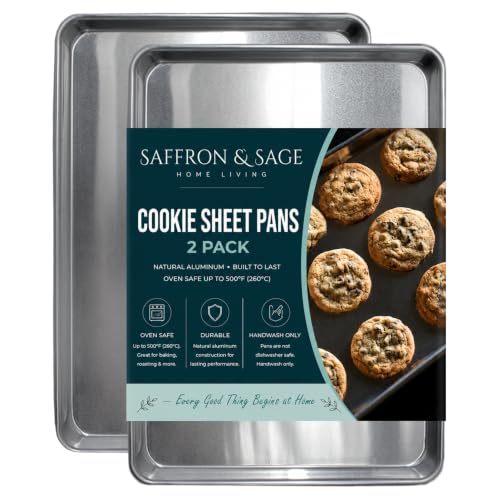
Unlike other pans for baking that are too thin and warp, or have a coating that peels and rusts, the Saffron & Sage baking tray is made out of a thick aluminum gauge with a reinforced steel rim to withstand temperatures of up to 500ºF / 260ºC without twisting or warping. Its metal surface has no teflon or other coatings added, therefore these half sheet pans will not peel or rust, making them long lasting.

Classic half sheet pan set of 2 for baking, roasting, bacon, cookies, vegetables, and cakes; commercial grade and heavy gauge aluminized steel
How to Match Your Recipe to a Half Sheet Pan
To match your recipe to a half sheet pan, aim for a batter depth of about 1.5 inches, which is roughly 22 to 24 cups. This depth ensures your cake bakes evenly without overflowing or spreading too thin. For a standard 9×13-inch recipe, multiply all ingredients by 1.5 to match the larger surface area while maintaining the proper thickness. If you prefer a deeper cake, fill the pan to about 2 inches deep and fill it two-thirds to three-quarters full to prevent spillage. Keep in mind that a shallower batter will bake faster, so start checking for doneness approximately 5 to 10 minutes early. Use toothpick tests and rely on visual cues since the increased surface area influences heat distribution. The oven temperature stays the same, but expect to adjust bake time based on the batter’s depth. Choosing a half sheet pan made from the right material also affects how evenly your cake bakes and browns. For consistent results across batches, consider how bowl lift versus tilt head mechanisms in a stand mixer affect aeration and gluten development, which in turn impacts cake rise and crumb structure.