

Choosing between a bowl lift and tilt head mixer can seem confusing, especially if you’re unsure which style suits your baking needs better. The main difference comes down to how you access the bowl and how much power you need for different tasks.
In this guide, you’ll learn which design works best for light versus heavy baking projects, helping you pick the right mixer for your kitchen.
Keep reading to discover the key differences and find the perfect match for your baking style.
Tilt-Head vs Bowl-Lift: Which Design Is Right for You?
A tilt-head mixer is more convenient if you prefer easy access to the bowl and attachments, while a bowl-lift mixer offers greater stability for demanding tasks. Tilt-head models hinge back, allowing quick addition of ingredients and straightforward scraping. They tend to be lighter, come in more color options, and fit well in smaller kitchens where space is limited. However, the open design means they may be less stable during heavy kneading. Tilt-head models typically have 4.5 to 5-quart bowls, which can make approximately 8 to 9 dozen cookies per batch. For those focused on larger yields, the top attachments for KitchenAid mixers often include options designed to handle such batch sizes efficiently. For buyers prioritizing long-term durability, these models are often rated among the best mixer with stand choices for home use.
Bowl-lift mixers have a fixed head, so you lift the bowl into place—this design provides a sturdier feel when working with thick dough or large batches. They are usually heavier and more professional in appearance, with a price reflecting their rugged build. These mixers require more vertical clearance when raising the bowl, which can be a consideration if your kitchen has limited height. Overall, if you value everyday convenience and versatility, a tilt-head model is a good choice. If you need a reliable machine for heavy-duty baking and prefer stability, a bowl-lift might suit you better.

Built to take it all on with the durable and built-to-last metal construction, and 59 touchpoints around the mixer bowl for great mixing results.

Built to take it all on with the durable and built-to-last metal construction, and 59 touchpoints around the mixer bowl for great mixing results.

Reduces mixing time when used on your KitchenAid 4. 5 and 5 quart tilt-head stand mixer
Tilt-Head vs Bowl-Lift: Which Capacity Fits Your Baking?
Bowl-lift mixers generally come with capacities starting at 5 quarts and go up to 8 quarts, making them suitable for larger batches. This allows you to handle between 9 and 14 dozen cookies per batch, which is up to 40% more than tilt-head models. If you frequently bake for big families or serve crowds, a bowl-lift mixer provides the volume you need. Conversely, tilt-head mixers with 3.5 to 5 quarts are ideal for everyday baking and small batches, such as fewer than a dozen cookies at a time. Capacity influences accessories compatibility as well—larger bowls may require specific attachments, so check compatibility based on your desired recipes. Larger models tend to be more expensive because of their increased capacity and heavier build, but they can save time when preparing large quantities. For moderate baking needs, a 5-quart bowl often strikes the right balance between capacity and cost, fitting most typical home kitchens. Unlike the subtle differences found when choosing between measuring cups and spoons, the capacity decision here directly impacts batch size and mixer performance. For a deeper look at top-rated options, see our expert review and picks for bowl-lift models. For example, the best dough hook for a bowl-lift model is designed to handle heavy, dense mixtures efficiently.
Which Mixer Handles Heavy Doughs Best?
A bowl-lift mixer handles heavy doughs best. Its fixed-head design and lever-raised bowl provide maximum stability, preventing the machine from walking across your counter during dense kneading. These models typically have sturdier construction and more powerful motors—often around 575 to 600 watts—which enable them to sustain long, tough mixing sessions without straining. Because the motor operates more efficiently under load, bowl-lift mixers usually run quieter than tilt-head models struggling with heavy doughs. For serious bread baking or making thick pizza dough regularly, a bowl-lift mixer offers better control, less slipping, and a durable build that easily handles dense ingredients where a tilt-head mixer might falter. This stability is comparable to the reliable performance of top roasting pans with racks in high-temperature cooking. Reviews of best paddle attachments often recommend bowl-lift models for their superior stability with heavy doughs. For those comparing options, the KitchenAid Commercial models are especially noted for their long-term durability under frequent heavy use.
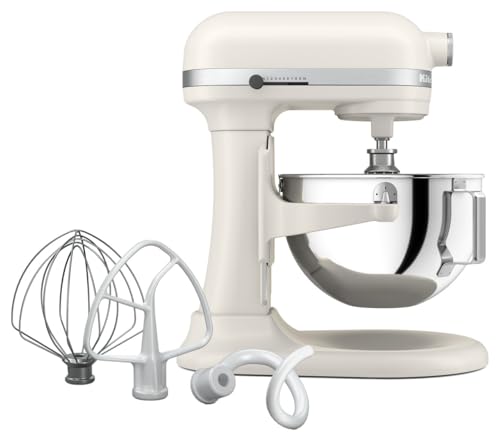
Knead & shred at the next level with 2x the power in the bowl than Tilt-head stand mixer*; 3-point locking bowl for stability. *Compared to KSM150 when measuring peak HP in the bowl; above speed 2

⭐【Perfect for Kitchen Aid】This mixing bowl compatible with Kitchen Aid Professional and Artisan series bowl lift stand mixer(not fit tilt head mixer). You can choose it for most of 6 quart stand mixer like KV25, KV25, KP26, KB26, KSM6583, KSM6585 Good replacement for KN2B6PEH mixing bowl.

STOP YOUR MIXER FROM MOVING DURING HEAVY MIXING — Heavy dough and thick batters can cause stand mixers to vibrate and slowly “walk” across the countertop. Baker’s Buddy adds a non-slip silicone grip surface between your mixer base and countertop to help keep your mixer more stable during demanding mixing sessions.
Tilt-Head vs Bowl-Lift: Size, Weight, and Storage Differences
Tilt-head mixers are generally smaller and lighter than bowl-lift models. They are typically about 14 inches tall and weigh between 18 and 26 pounds. This makes them easier to store under cabinets and more maneuverable for regular use. Bowl-lift mixers, on the other hand, stand taller at 16 to 17 inches and weigh between 29 and 32 pounds. Their larger size demands more vertical clearance and can take up more counter space. This makes them better suited for permanent placement on your countertop, especially if you have a dedicated baking area. When choosing between the two, consider your storage options: tilt-head mixers can fit into tighter spots, while bowl-lift models require more room but often offer greater stability. Both styles come in a variety of colors, allowing you to match your kitchen’s aesthetic regardless of your choice. For those prioritizing performance and value, bowl-lift models are typically recommended for heavier doughs and frequent use. When evaluating options, a precise food scale can complement your mixer for accurate ingredient measurements. For best results, follow a step-by-step guide for proper bowl-lift maintenance.

Designed, engineered, and tested by KitchenAid

【Move Your Mixer With Ease 】 - The dust cover comes with a mixer slider mat sewed into the bottom. I often use the mixer, but it is quite heavy for me to move. The kitchen appliance slider on the base is specially designed to help easily move the heavy kitchen mixer. (Patent Pending)
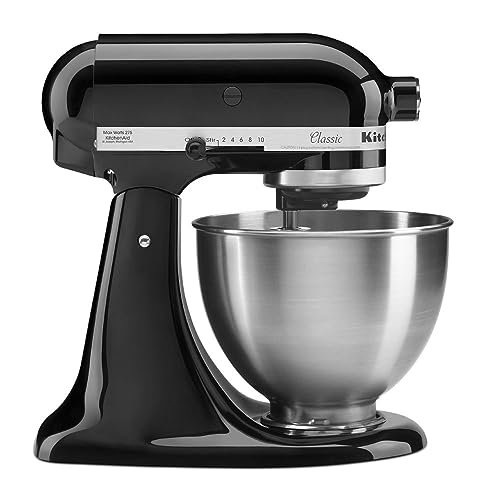
Built to take it all on with the durable and built-to-last metal construction, and 59 touchpoints around the mixer bowl for great mixing results.
How Does Your Baking Style Match These Models?
Your baking style determines which mixer is right for you. If you mainly bake small batches of cookies, cakes, or whipped cream, a tilt-head model is ideal. Its design provides easy access to the bowl, making quick ingredient additions straightforward. Since it’s lighter and less powerful, it’s suited for tasks that don’t require heavy-duty mixing and helps conserve energy for smaller jobs. Plus, the tilt-head mechanism allows you to swap attachments easily during mixing, adding convenience. Frequent bakers should note that expert reviews often recommend tilt-head models for their ease of use in everyday tasks.
On the other hand, if you bake large quantities regularly, especially involving dense bread dough or doubling recipes, a bowl-lift model is the better choice. Its larger bowl capacity and stable lifting mechanism handle bigger batches with ease. The stationary head provides extra support for heavy kneading, and the robust motor ensures sufficient power without overstraining. Though bigger and heavier, it offers the muscle needed for intense, frequent use, making it suitable if capacity and strength are priorities. For reliable results, reviews on top stand mixer bread dough frequently highlight the bowl-lift model’s superior performance with heavy batches. For lighter tasks like whipping egg whites for an angel food cake, a tilt-head model is often preferred because it avoids the risks of angel food cake in a bundt pan, which can cause sticking and uneven baking.