

Ever wondered what makes a cookie sheet truly good? The right pan can make all the difference in getting cookies evenly baked and golden.
A quality cookie sheet is typically made of thick aluminum for even heat distribution and warp resistance.
You’ll want a flat, rimless surface to promote proper airflow and browning. Stay away from nonstick finishes—bare aluminum heats more predictably, though you’ll need parchment paper or grease.
With the basics covered, here’s how to find the perfect pan for your baking needs.
Why Baking Sheet Material Matters Most for Even Heat
Aluminum is the best material for even heat distribution in baking sheets. Its heat conductivity is approximately 200 W/m·K, much higher than aluminized steel at about 50 W/m·K. This high conductivity allows aluminum to heat up quickly and transfer heat uniformly across the surface, reducing hot spots and promoting consistent browning. As a result, cookies baked on aluminum sheets tend to brown evenly from edge to edge, helping you achieve a perfect Maillard reaction every time. For baking items like cinnamon rolls, choosing a sheet with high heat conductivity helps prevent uneven browning and ensures consistent results.
Uncoated aluminum remains a top choice due to its predictable performance and rapid, even heating. Aluminum also heats up faster than other materials, giving you more control over baking times. Aluminum sheets are lightweight and heat-responsive, making adjustments easier. On the downside, pure aluminum can be more prone to warping at high temperatures, but proper use mitigates this issue. Using a Silpat mat can also help protect the sheet’s surface and improve cleanup.
Aluminized steel offers a compromise with good durability and respectable heat conduction—around 50 W/m·K—making it suitable for frequent baking without sacrificing performance. While not as conductive as aluminum, aluminized steel still distributes heat well enough for most baking needs. It’s a solid option if you need a durable sheet that can hold up to regular use, even if it takes a bit longer to heat evenly.
In contrast, stainless steel conducts heat poorly, with conductivity that’s significantly lower than aluminum. This can lead to uneven baking, hot spots, and splotchy results. If your goal is precise and even baking, stainless steel sheets are less ideal unless combined with a diffusing layer or heat-conductive base. Similar to mixing bowls, verifying material and heat limits for your bakeware is essential to avoid damage and ensure safe, consistent performance.

Naturals bakeware is made of pure aluminum for superior heat conductivity and produces consistently evenly browned baked goods every time.

1/2 Size – Large flat baking surface ideal for baking cookies, roasting vegetables or baking desserts

PURE UNCOATED ALUMINUM & SUPERIOR HEAT CONDUCTION: Crafted from 100% bare aluminum with NO chemical coatings – guarantees safe, toxin-free cooking. Engineered for lightning-fast, even heat distribution (up to 30% faster than steel!) for perfectly crispy cookies, golden roasted veggies, and juicy meats every time. The aluminum baking pans are made of thick and heavy aluminum, with a heavy rolled edge making this truly "commercial-grade"that provides maximized scratch resistance
How Baking Sheet Thickness Prevents Warping
A baking sheet that is at least 1.2 millimeters thick is less likely to warp during baking. Thicker sheets contain more metal, which helps absorb and evenly distribute heat, preventing uneven expansion that causes warping. Lower-gauge metals like 18-gauge or thicker add weight, increasing the pan’s structural rigidity and helping it stay flat despite temperature fluctuations. Thin pans heat up and cool down rapidly, which makes them more prone to permanent warping over time. Using a textured surface on your pan can also help diffuse heat more evenly and reduce hot spots that speed up warping. Avoid rinsing a hot sheet with cold water because the rapid thermal shock can cause bending. For dependable, warp-free baking, choose a heavy-duty sheet about 1.2 mm thick, and your bakeware will hold its shape through many batches. To ensure accurate ingredient portions when using these sheets, dry measuring cups are best for scooping and leveling flour and sugar. Consider that a similarly durable option, like a glass bowl for KitchenAid, also relies on material thickness to resist thermal stress and maintain its shape, much like a springform pan designed for even heat distribution.
Flat Baking Sheets: The Key to Consistent Cookies
A flat baking sheet is essential for consistent cookies because it ensures even baking across all types. When your sheet is perfectly flat, hot air can circulate freely around the dough, promoting uniform browning. This prevents edges from burning while the centers stay pale, giving you evenly baked cookies every time. Flat sheets also help bases brown evenly, resulting in crisp, appealing bottoms. They are easy to store, stacking neatly without wobbling or causing damage. Using a cookie scoop helps maintain uniform sizes, and spacing dough evenly on the sheet allows heat to reach all cookies equally. Without a flat surface, you risk uneven spreading, requiring you to rotate pans during baking. A cool, flat sheet further prevents premature spreading in subsequent batches, making your process more efficient. A high-quality pan with a tight seal also prevents batter from leaking during baking. With a flat baking sheet, your cookies come out consistent in texture, color, and doneness—perfect results, batch after batch. Mastering similar techniques ensures even heat circulation for perfectly consistent results, just as when crocheting pot holders requires careful tension control. For example, using a wire rack on the sheet elevates the bacon for optimal air flow and fat drainage.

DELICATE BROWNING: Farberware GOLDEN BAKE non stick baking sheet features air pocket insulation for better airflow and super-even heating - no more burnt bottoms!

HEALTHY & NONTOXIC STAINLESS STEEL: Our baking pan set made of food-grade pure 18/0 stainless steel without without chemical coating or any other materials, Good heat and corrosion resistance, Safe enough to baking all kinds of dishes and without leaching anything harmful, Healthier alternative to aluminum pans for everyday baking use. Compared with glass or ceramic sheet pan, it is unbreakable. Compared with aluminum, it is more healthy. ALSO, more environmentally friendly than disposable baking pans.

Premium pan made of pure aluminum will never rust and produces evenly browned baked goods every time
Rimless vs. Rimmed: Which Baking Sheet Style for Cookies?
Rimless baking sheets are generally better for cookies because they promote even and faster browning. Without a rim, hot air circulates freely around the cookies, leading to more uniform baking. This also means you spend less time cleaning, as crumbs and residue don’t get trapped in corners. Rimless sheets offer a sleek, minimal look, making them a popular choice for those prioritizing aesthetics. Using a digital kitchen scale to portion your dough can further improve baking precision.
Rimmed sheets, on the other hand, feature raised edges that help contain drips and make it easier to handle hot, bubbling batches. However, the rim reduces airflow around the cookies, which can slow down baking and cause uneven results. While rimmed pans are versatile and suitable for multiple purposes, they are not optimal if your main goal is achieving perfectly browned cookies.
Choose a rimless baking sheet when you want the best cookies with even browning and faster baking times. Opt for a rimmed sheet if you prefer a pan that provides better spill containment and durability for various baking tasks.

Heavy guage 1-mm aluminized steel construction for even heating

VARIOUS CUISINE AT WILL- The 2-pack nonstick 16 x 14'' cookie sheets is designed for commercial and family. It is a perfect size for baking cookies, pastries, scones, jelly rolls, pizzas, etc. Just one can easily satisfy your daily baking needs and help you take your baking skill to the next level.
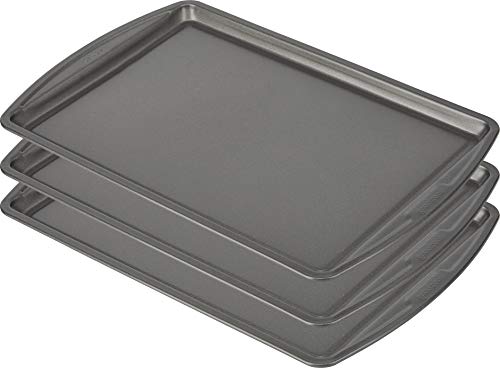
SET OF 3 BAKING SHEETS: GoodCook’s Nonstick Cookie Sheet Set comes with three 13 x 9-inch baking sheets to bake your favorite recipes from cookies, desserts, and tasty sheet pan dinners
Nonstick or Uncoated: How Surface Finish Affects Release
Uncoated aluminum or aluminized-steel sheets have no coating to fail, making them highly durable. You will need parchment paper or greasing to prevent sticking, but the metal itself can last up to 20 years with proper care. Scratches on the surface do not compromise performance and can be scrubbed away without concern. For frequent bakers, uncoated pans offer greater longevity and value. In contrast, nonstick surfaces provide quick and easy release but tend to have a shorter lifespan and require more careful maintenance to avoid damage. For those who also bake cakes, a springform pan provides even release and durability for delicate desserts. To keep a silicone baking mat fresh, baking soda paste effectively lifts baked-on residue without scratching. For versatility in mixing, consider pairing your cookie sheets with a KitchenAid mixer and its top attachments to streamline dough preparation.
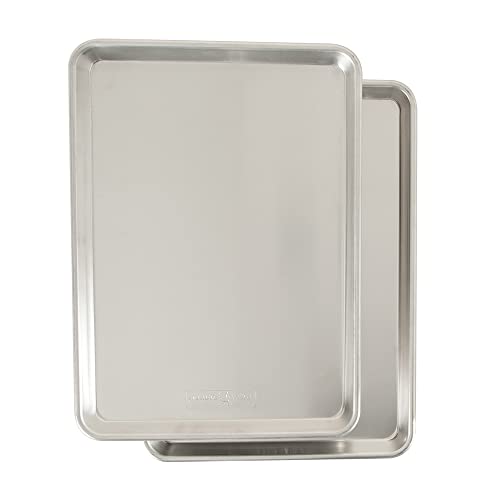
Naturals bakeware is made of pure aluminum for superior heat conductivity and produces consistently evenly browned baked goods every time.

Naturals commercial bakeware is made of pure aluminum foods bake and brown evenly due to aluminum’s superior heat conductivity. Reinforced encapsulated steel rim prevents warping and adds strength.

Get perfectly baked results every time you bake with this natural uncoated aluminum pan
What Size Baking Sheet You Actually Need for Batch Cookies
A 13 x 18-inch half-sheet pan is the most practical size for batch-baking cookies. It fits standard home ovens and can hold between 10 to 20 cookies, depending on how much space you leave between them. This size strikes a good balance between capacity and versatility, making it the default choice for most cookie recipes. Just as with cake pans, the right release tricks can prevent baked goods from sticking to the pan.
You can choose between dark or light finishes—dark pans brown bottoms faster, while light-colored pans promote gentler, more even heating. Handle designs also matter; look for rolled edges or silicone grips to improve safety when maneuvering hot trays repeatedly out of the oven. For consistent results, the mixer hook height must be correctly set to ensure dough is evenly incorporated without overheating the motor.
If your oven runs on the smaller side, an 11 x 17-inch pan works well for moderate batches. For smaller test batches, quarter-sheets are suitable, but for regular baking volume, sticking to a half-sheet is best. Keep in mind that cookie spacing, which affects how many cookies fit per batch, should match the pan size to your dough’s spread.
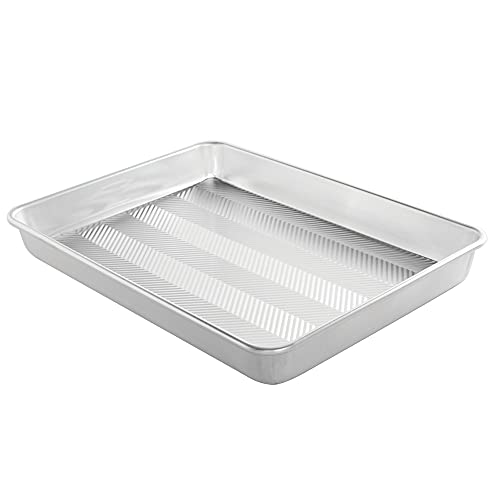
Better Airflow for Crisping

Baked goods rise and bake evenly due to aluminums superior heat conductivity and the reinforced encapsulated steel rim prevents warping

HEALTHY & NONTOXIC STAINLESS STEEL: Our baking sheet made of food-grade pure 18/0 stainless steel without chemical coating or any other materials, Good heat and corrosion resistance, Safe enough to baking all kinds of dishes and without leaching anything harmful, Healthier alternative to aluminum pans for everyday baking use. Compared with glass or ceramic sheet pan, it is unbreakable. Compared with aluminum, it is more healthy. ALSO, more environmentally friendly than disposable baking pans.
Decode Gauge Numbers to Judge Baking Sheet Quality
Gauge numbers are your quick clue to baking sheet quality, even if they seem backward. Lower numbers indicate thicker metal; a 12-gauge pan is much heavier and more warp-resistant than an 18-gauge one. For serious baking, aim for a gauge between 16 and 18. An 18-gauge pan measures about 1.2 millimeters thick, offering durability without flexing under high heat. A 20-gauge pan, at roughly 0.9 millimeters, is thinner and more prone to warping, making it suitable for lighter tasks. Similarly, when choosing a food scale, look for lower gauge numbers as an indicator of sturdier construction. For mixing heavy batters, a KitchenAid stand mixer with a sturdy dough hook provides the same principle of robust, warp-resistant performance. To ensure your baking sheets match the durability of such a mixer, look for a flat beater that is designed for heavy-duty mixing.
Thicker pans also tend to work better with lids—they won’t buckle under a tight cover. Keep in mind that heavier, lower-gauge sheets take up more space in your cabinet. Use gauge as your first indicator of quality, pairing it with rim reinforcement to avoid flimsy pans that can ruin browning and even heat distribution.
When to Sacrifice Heat Transfer for Nonstick Convenience
Choosing nonstick over bare aluminum means accepting quicker heat absorption, which can lead to overbrowning delicate baked goods. Nonstick surfaces tend to heat up faster and more unevenly, often causing baked items like cookies to develop a darker crust or even burn if not monitored carefully. To counteract this, reduce your oven temperature by about 20 to 25 degrees Fahrenheit when using nonstick pans. This adjustment helps prevent overbrowning and ensures more controlled baking results. Use nonstick for recipes where sticking is a significant challenge and convenience is a priority, but stick with bare aluminum when even browning and predictable heat transfer are essential. Keep in mind that nonstick coatings degrade with heavy use, so reserve them for sticky or delicate items rather than everyday baking. Your choice between nonstick and uncoated pans depends on whether preventing sticking or achieving precise browning is more important for your recipe. Consider using a hand mixer for perfectly creaming butter and sugar to avoid dense cookies that stick to the pan.