

Wondering how long to bake a loaf cake? The typical baking time for a standard 9×5-inch loaf pan at 350°F is about 45 to 60 minutes.
However, several factors like pan material, batter density, and fill level can change that timing.
Keep reading for all the tips to get your cake perfectly baked every time.
The Best Temperature for Baking a Loaf Cake
The ideal baking temperature for a loaf cake is typically around 350°F (177°C), but your specific recipe should guide you. Dense batters like pound cakes benefit from lower temperatures, around 325–340°F (165–170°C), to prevent the crust from burning before the center is fully cooked. This slower, more controlled heat ensures even baking and helps maintain a moist crumb texture. For a softer finish, aim for an internal temperature of 200–205°F (93–96°C). Your chosen temperature directly affects the cake’s crumb structure, with higher temperatures risking cracks or uneven doming. Additionally, flavor variations matter: recipes with higher sugar content brown faster, which may require a slight temperature reduction to achieve a balanced, evenly baked loaf. Using a stainless steel roasting pan with a rack can help distribute heat evenly and lift the loaf for better air circulation. For the most consistent results, a digital kitchen scale ensures you measure your flour and sugar by weight rather than volume, eliminating guesswork. After baking, you can clean silpat mats using similar methods to lift baked-on residue and keep them looking new.

【PRECISE WEIGHT】 The digital food scale built-in four high-precision load sensors, quickly and accurately response 1g or 0.1oz increments when adding ingredients, its measuring range: 0.1oz to 22 lbs and 3g to 10kg(Min. weigh at 0.1oz or 3g).

【Precise Weight】 10kg/22lb capacity, 1g/0.1oz resolution, Great for cooking, baking, weight loss, Meal Prep, Coffee, Package, Postage.

Precise Recipes: KUAIVO dual platform food scale features two distinct weighing capacities, designed to provide precise weight for a variety of cooking and baking needs. The large scale has a capacity of up to 33lbs with an accuracy of 0.1oz, the small scale can weigh 1.1lbs with an accuracy of 0.001oz. With its dual-range capabilities, KUAIVO kitchen scale ensures you can maintain accurate ratios for baking, cooking or preparing fitness meals.
How Long to Bake a 9×5-Inch Loaf Cake (With Timer Guide)
Start checking your loaf at around 45 minutes when baking at 350°F with a standard 9×5-inch pan. Lighter batters can finish closer to 55–60 minutes, while denser, pound-style cakes may need 60–75 minutes. Extra moist batter recipes might require 80–90 minutes. Keep in mind that ingredient substitutions, such as reducing sugar, can change moisture content and alter baking times. To test for doneness, insert a toothpick into the center—if it comes out clean or with just a few moist crumbs, the cake is done. The center should feel firm and spring back when pressed. For more precision, use an instant-read thermometer aiming for 200–210°F in the middle of the loaf. Using the correct mixer attachments can help achieve a consistent batter texture, which directly impacts even baking and final moisture distribution. Avoid opening the oven door frequently during baking, as this can cause the cake to sink or collapse. After the initial check, wait in 5-minute increments to prevent overbaking. Using a high-quality pan can also improve heat distribution, as found in springform pans designed for ice cream cakes. For decorating a finished loaf, consider how different Wilton piping tips can create various frosting textures and designs.

STANDARD 9 x 5-INCH LOAF PANS: This loaf pan set of two is perfect for baking meatloaf, sweet or savory breads, thick cakes or brownies, smaller portions of lasagnas or casseroles, and more. Enjoy a perfect bake every time with these versatile bread pans

QUALITY AND CONVENIENCE: Ensures a perfect bake every time and oven safe up to 480°F

Set of 2 rectangular-shaped loaf pans; ideal for baking bread, pound cake, meatloaf, and more
Loaf Cake Baking Time: Mini, 8×4, and Jumbo Pans
Mini loaf pans typically require 12 to 28 minutes of baking time. The exact duration depends on the size and material of the pan. Dark or glass mini pans tend to run hotter, so lowering the oven temperature to 325°F and increasing the bake time helps prevent over-browning. Dense batters, like chocolate or fruit-filled recipes, might need closer to 30 to 40 minutes. For best results, start checking for doneness early, and insert a toothpick into the center—if it comes out clean, your mini loaf is ready. If you don’t have a loaf pan, a bundt pan substitute can work for similar batters, but baking times will differ significantly due to the pan’s shape and center tube. For denser batters, 10 minutes hand kneading can be more effective than a dough hook for achieving an even crumb structure before baking. When using a pan that is too large, you can resize a baking tray by creating a foil barrier to reduce the effective baking area and ensure proper loaf height.
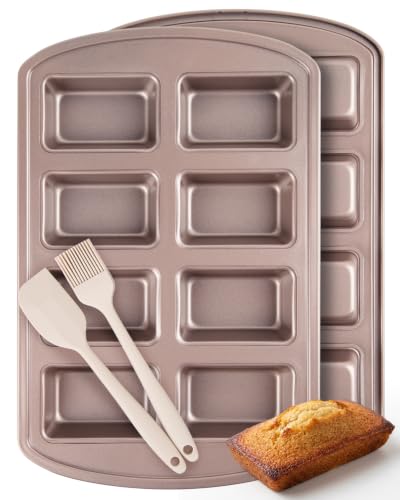
4-Piece Value Set for Batch Baking. Maximize your oven space! This premium set includes TWO 8-cavity mini loaf pans (bake 16 mini treats at once!), plus a high-heat resistant silicone spatula and a basting brush. A complete, ready-to-use kit perfect for weekly meal prep, holiday baking, or as a thoughtful gift.


Diamond Texture for Even Baking: Mini bread loaf pans feature a diamond‑textured surface that helps hot air circulate more evenly and quickly for even baking. Helps form a golden‑brown crust while keeping the inside moist and soft. The textured surface also enhances nonstick performance for easy release.
How Fill Level Affects Your Loaf Cake Baking Time
Your fill level directly impacts your baking time and the cake’s final rise. For a consistent loaf, fill your pan to about two-thirds full, typically around 5 to 6 cups in a 9×5-inch pan. Underfilling results in a thinner batter layer, causing the cake to bake faster and increasing the risk of drier edges. Overfilling to three-quarters full extends baking time and can lead to an underbaked center despite a browning top. When filling, consider your batter’s consistency: a thinner batter spreads more evenly, while a thicker one stays in place. Keep an eye on your cake as it bakes, especially with underfilled pans—start testing for doneness early. Overfilled pans require additional time and careful monitoring to prevent overflow. Using an ungreased cookie sheet under the loaf pan can help catch any drips and promote more even bottom heat distribution. A quality bundt pan can also affect heat distribution and even baking. For consistent results, a tilt-head mixer ensures thorough batter mixing without overworking the gluten.
Why Dense Batters Change Your Loaf Cake Baking Time
Dense batters contain less incorporated air, which slows heat transfer through the cake and causes the center to take longer to set. This often occurs with richer flavors, especially when more flour or fat are used. Because of the higher viscosity, heat penetration is hindered, so the edges finish baking before the middle. As a result, baking times for dense batters usually extend to 50–70 minutes, compared to the standard 45 minutes for lighter batters. For even cooking, consider using a high-performance baking sheet that promotes uniform heat distribution and prevents burnt edges. To avoid a burnt crust and raw center, bakers have learned to lower the oven temperature and increase the baking time. The longer, gentler heat allows the dense batter to cook evenly without over-baking the exterior. Remember to trust the skewer test: insert it into the center and pull it out when the crumb shows only a few moist bits, not wet batter. Patience is key, as dense batters need extra time for the final setting. Using a pan with a different shape and volume, such as a bundt cake pan, will further alter the required baking time due to changes in surface area and heat flow. A powerful stand mixer with a meat grinder attachment can also be used to efficiently grind fresh ingredients for certain dense cake recipes.
Glass vs. Metal Pans: Which One Bakes Faster?
Metal pans heat up in about 5 to 10 minutes, making them the faster option because their high conductivity quickly transfers heat to your batter. This results in a quicker rise and even browning. In contrast, glass pans can take 15 to 20 minutes to warm up fully due to their lower heat conductivity. Once hot, however, glass retains heat longer, which can cause over-browning of edges before the center is cooked through. To prevent burning, you should typically lower your oven temperature by about 25°F when baking with glass. For faster baking, metal pans are preferable. If you choose glass, start checking for doneness earlier within the extended bake time to avoid surprises. If you need to release a stuck cake, a springform pan substitute can help achieve clean sides without damaging the loaf. Ensuring your mixing equipment is well-lubricated with best grease for KitchenAid stand mixers keeps the appliance running smoothly during prolonged baking sessions. For those who frequently use a stand mixer, investing in top attachments for Hamilton Beach stand mixers can expand your baking capabilities beyond simple batters.

SET OF TWO 8 x 4-INCH MEDIUM LOAF PANS: Great for baking meatloaf, sweet or savory breads, thick cakes or brownies, smaller portions of lasagnas or casseroles, and more for the perfect bake every time

PROFESSIONAL GRADE CONSTRUCTION: Made from heavy-weight aluminized steel for superior heat conduction and even baking results; Delivers consistent, golden-brown loaves every time

Premium Loaf Pan: Designed for professional bakers, the Platinum Non-Stick Loaf Pan offers precision, premium performance; it measures 9.25 inches long, 5.25 inches wide, and 2.75 inches deep
The Easiest Ways to Tell When Your Loaf Cake Is Done
To tell when your loaf cake is done, look for a golden-brown top with edges pulling away from the pan. Insert a toothpick into the center; if it comes out clean or with just a few crumbs, the cake is finished. Wet batter indicates more baking time is needed. Lightly press the center; if it springs back, it is baked through. For the most precise check, use a cooking thermometer to measure the internal temperature; 200°F to 210°F confirms doneness. Combining these tests ensures the cake is perfectly baked without guesswork. After removing the cake, allowing the pan to cool with baking soda paste helps lift any baked-on residue for easier cleanup. Using a baking sheet pan with rack can help cool the loaf evenly and prevent a soggy bottom.
5 Mistakes That Wreck Your Loaf Cake’s Baking Time
Using the wrong pan size can significantly impact your loaf cake’s baking time and final texture. A smaller pan creates a taller loaf that requires more baking time, often leaving the center undercooked. Conversely, a larger pan results in a flatter, thinner cake that bakes faster and might dry out if overbaked. Make sure to follow the recipe’s recommended pan size to ensure even baking. If you need to substitute, adjust the baking time accordingly and keep an eye on the cake’s color and texture.
How to Adjust Loaf Cake Baking Time When Your Oven Runs Hot or Cold
If your oven runs hot or cold, you need to adjust the baking time for your loaf cake accordingly. For an oven that runs about 25°F hotter than the dial setting, lower the temperature and check for doneness 10 to 20 percent earlier. For example, a 60-minute bake becomes 48 to 54 minutes. Conversely, if your oven is colder by 25°F, raise the temperature and extend the baking time by 10 to 20 percent. A 60-minute bake would then take around 66 to 72 minutes. Always verify your oven’s actual temperature with an oven thermometer to ensure accuracy. Use oven calibration to fine-tune your dial rather than guessing. Remember, these temperature adjustments can significantly affect your bake time, so rely on doneness cues like browning or texture rather than just time to judge when your cake is ready.

Oven and grill safe for leave-in use while cooking

Reliably precise oven temperature in one handy little tool

Clear Large Dial Display: Featuring an extra-large 3-inch dial, this oven thermometer ensures effortless readability and instantly displays the accurate internal temperature of your oven, guaranteeing safe and precise cooking