

Ever wondered how to measure food when you don’t have a scale? It’s a common question, especially when you want to keep track of portions without special equipment.
You can estimate serving sizes using your hands and standard measuring cups—simple tools with quite a bit of accuracy. Get ready to learn how to do this easily and confidently.
Use Measuring Cups to Measure Without a Scale
If you don’t have a scale, measuring cups are your best option for getting accurate amounts. For dry ingredients, use dry measuring cups and follow proper techniques: gently spoon the ingredient into the cup without packing it, then level it off with a straight edge like the back of a knife. Avoid scooping directly from the container, as this can pack down the ingredient and give you more than intended. For liquids, opt for a liquid measuring cup, place it on a flat surface, and check the fill line at eye level for accuracy. Match the type of measuring cup to the ingredient to ensure precision. Keep both dry and liquid measuring cups readily available to achieve consistent results even without a scale. When measuring small amounts, use the smallest cup possible to reduce error. Dry measuring cups are typically more durable and affordable for everyday baking tasks. For bakers who frequently work with dense doughs like bread, pairing a sturdy set of dry measuring cups with a heavy-duty stand mixer can further improve consistency and ease. Using a silicone baking mat under your mixing bowl can also help keep it stable during measurements.

[Multiple Sizes]: Including 5 Measuring cups (1/8, 1/4, 1/3 , 1/2 , 1 cup), 5 Measuring spoons (1/4, 1/2 , 1 tsp, 1/2, 1 tbsp). Meet All Your Needs On Cooking And Baking.

[Multiple Sizes]: Including 4 Measuring cups ( 1/4, 1/3, 1/2, 1 cup), 6 Measuring spoons (1/8, 1/4, 1/2 , 1 tsp, 1/2, 1 tbsp). Meet All Your Needs On Cooking And Baking
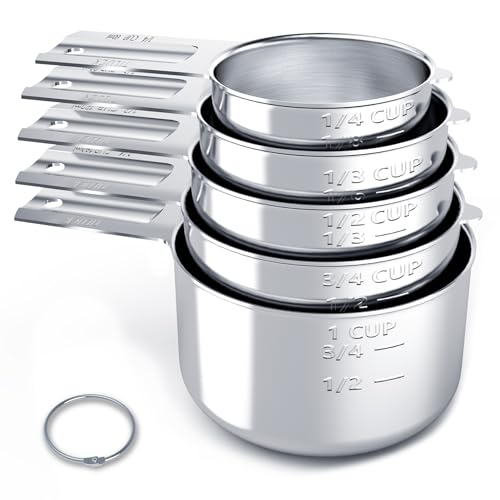
[Multiple Sizes]: Including 5 Measuring Cups (1/4, 1/3 , 1/2 ,3/4, 1 cup). Meet All Your Needs on Cooking and Baking.
Estimate Portion Sizes With Your Hands and Everyday Objects
If you don’t have a kitchen scale, your hands and everyday objects are reliable tools for estimating portions. Use your palm (excluding fingers) for a 3 to 5-ounce portion of protein, which is about the size of a deck of cards. A closed fist roughly equals 1 cup of vegetables or fruit, making it easy to measure produce without measuring cups. For cooked grains, snacks, or legumes, form a cupped hand to get approximately half to two-thirds of a cup. A thumb-sized portion typically indicates about 1 tablespoon of fats like oil or nut butter. For object comparisons, a 3-ounce serving of fish matches the size of a checkbook, and a serving of cheese looks like a pair of dice. For larger batches, consider using Cuisinart stainless steel mixing bowls which include lids for convenient storage and consistent measuring. Using these hand gestures and visual cues helps keep your portion sizes consistent without the need for any measuring tools. For consistent mixing of large batches, a KitchenAid mixer attachment can also simplify portion preparation. For baked goods needing precise heat distribution, a baking sheet pan with rack ensures even cooking and airflow.
Match Foods to Tennis Balls and Deck of Cards for Visual Cues
A deck of cards roughly equals 3 ounces of cooked protein, like chicken, steak, or fish. It’s a useful visual cue for keeping your portion sizes in check, especially with whole cuts of meat. Keep in mind that this comparison works best for solid cuts rather than ground meat, which can be more irregular in shape. Tofu also fits within this size, making it a handy reference. For hard cheese, about one-third of a deck matches a typical serving. Using a deck of cards helps you gauge your protein intake quickly without measuring precisely. For a similar visual comparison when rolling pasta dough, a Top Pasta Rolling Pin ensures even thickness and consistent results. Also, choosing a reliable stand mixer can simplify consistent, evenly mixed doughs for your pasta and other baking projects. When you need to bake those doughs evenly, the baking sheet material affects heat distribution and browning, so selecting the right one matters for consistent results.
Convert Cups to Grams and Ounces Without a Scale
You can convert cups to grams and ounces without a scale by using standard benchmarks for common baking ingredients. For all-purpose flour, 1 cup is approximately 120 to 125 grams. Granulated sugar is denser, with 1 cup weighing around 200 grams. Butter is straightforward: 1 cup equals roughly 227 to 230 grams. These figures provide reliable estimates when you don’t have a scale handy. For example, half a cup of flour is about 60 to 63 grams, while a quarter cup of sugar is approximately 50 grams. Using these conversions allows you to switch ingredient quantities confidently without weighing each time. To ensure accuracy, stick to a single conversion chart when scaling recipes. You can also verify your estimates with digital measuring tools available in many cooking apps, helping you achieve consistent baking results. For long-term precision, refinishing and maintaining your measuring tools keeps them in good order. Using standard measuring spoon sizes such as the ¼ teaspoon, ½ teaspoon, 1 teaspoon, and 1 tablespoon set ensures consistent volume measurements when scooping dry ingredients. Choosing the correct Bundt cake pan size is equally important for even baking and proper cake structure.
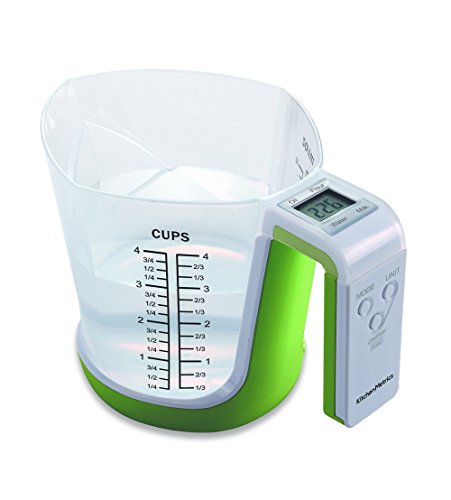
Accurate and easy to use
Accurate and easy to use

Accurate and easy to use
Level, Pack, and Use the Right Cup for Accurate Results
Using the right cup is essential for accurate measuring. Always use dry measuring cups for ingredients like flour or sugar, and liquid measuring cups for milk or oil. For dry ingredients, spoon them into the cup, letting them mound above the rim, then level with a straight edge. Avoid scooping or tapping, as this compresses the ingredient and skews the measurement. When measuring liquids, set the cup on a flat surface and read the measurement at eye level from the bottom of the meniscus. For additional precision, some stand mixer attachments like those reviewed in best paddle attachments can help ensure even mixing without overpacking ingredients. Standard dry measuring cups typically come in four sizes: 1 cup, ½ cup, ⅓ cup, and ¼ cup. For the most reliable baking results, using a precision food scale eliminates all volume-based inaccuracies.
Ingredient consistency also affects how you measure. Pack brown sugar or solid shortening only if the recipe specifies; otherwise, keep flour and powdered ingredients loose and fluffed. Packing ingredients alters their volume significantly, so always follow the recipe instructions precisely. These simple habits help eliminate guesswork and ensure your measurements are accurate every time.

MAGNETIC MEASURING SPOONS SET:Including 7 magnetic measuring spoons (1 tbsp, 1/2 tbsp, 1 tsp, 3/4 tsp, 1/2 tsp, 1/4 tsp, 1/8 tsp) and 1 Leveler.With U.S and metric measurement marks, double-sided, magnetic, etc. Suitable for measurement in most spices and other ingredients.
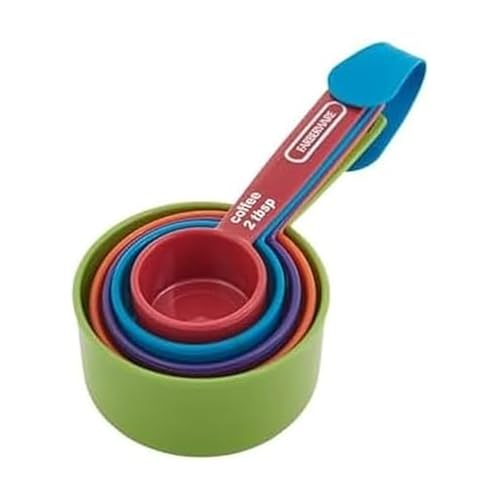
COMPLETE MEASURING SET: Includes 1/4 cup, 1/3 cup, 1/2 cup, and 1 cup measurements plus bonus coffee scoop (2 tablespoons). Perfect for both wet and dry ingredients. Clearly marked measurements for precise cooking
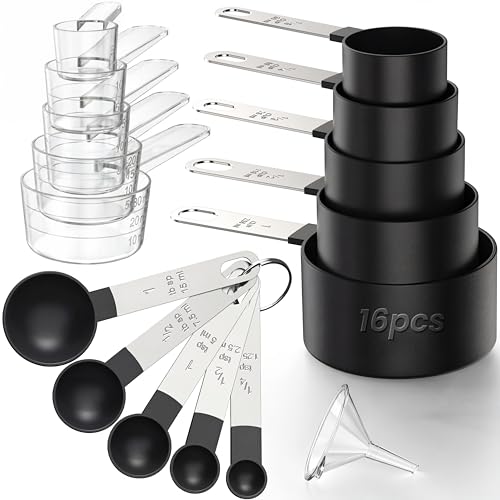
16PCS SET: Including multiple sizes, including 1cup, 1/2cup, 1/3cup, 1/4cup, 1/8cup, 30ml, 20ml, 15ml, 10ml, 5ml, 1tbsp, 1/2tbsp, 1tsp, 1/2tsp, 1/4tsp, and 1 funnel