

Need to measure three-quarters of a cup but don’t have a measuring cup handy? You can do it by using simple kitchen tools like tablespoons or teaspoons, or even a scale for perfect accuracy.
Whether you’re working with dry ingredients or liquids, there are quick tricks and tips to get the right amount every time.
Keep reading for easy, reliable methods you can use right now.
Why This Measurement Is Trickier Than You Think
This measurement is trickier than you might think because a cup measures volume, not weight. Filling the cup with flour, sugar, or cocoa powder results in very different weights each time. For example, flour can range from 100 to 160 grams per cup—a 33% difference that can ruin baked goods like cakes. When using a sourdough loaf pan, consistent dough hydration is critical to avoid dense or gummy results.
Layering techniques further complicate things. Scooping directly from the bag compresses the ingredient, packing more into the cup. Spreading it out gently and leveling it off makes it lighter and fluffier. Humidity also plays a role, as moisture causes particles to settle differently. When you measure 3/4 cup, you’re not just estimating the volume—you’re also estimating how tightly packed the ingredient is. These small differences become even more significant with smaller measurements, where tiny errors can throw off your entire recipe. Choosing the right springform pan materials can also affect how evenly your batter bakes, reducing the risk of undercooked centers or burnt edges. Upgrading to a stand mixer with compatible attachments ensures consistent mixing speed and even distribution, which helps stabilize your batter before it ever reaches the pan.
The Quickest Fix: Grab 12 Tablespoons
Using 12 tablespoons is the quickest way to measure 3/4 cup in U.S. standard measures. This method offers a fast, reliable shortcut without needing a measuring cup. Any standard U.S. tablespoon works, so you can use whatever set you have on hand. Fill each spoon level with the ingredient, avoiding heaping portions which can lead to inaccurate measurements. This is especially important for dry ingredients that tend to compact unevenly. For a durable workspace, consider building a butcher block table to keep your tools organized. Investing in a Hamilton Beach stand mixer can simplify mixing tasks for consistent results.
For liquids, 12 level tablespoons also equal exactly 6 fluid ounces, matching a 3/4 cup measurement. Simply count out each spoonful, and you’ll get the precise amount your recipe calls for. This approach saves time, reduces the need to search for a measuring cup, and ensures your measurements remain accurate. If you prefer a more precise tool, consider reading top measuring cups reviews for the best options available.

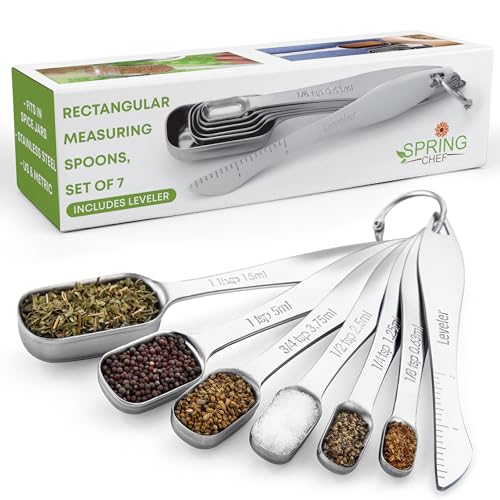
Come in value 12-PACK: provide enough teaspoon scoops for kitchen or Pantry use.

【Package Includes】This teaspoon measuring spoon set contains 12 x 5ml measuring spoons, each measuring 4.49 inches/11.5 cm in length. The ample quantity meets daily usage and replacement needs.

GUARANTEE SAFE FOR COOKING: Are you worried about silicone and plastic tools not safe for cooking? Protect your health using our stainless steel measuring spoons which are made of food grade stainless steel
No Tablespoons? Use 36 Teaspoons
If you find yourself without a tablespoon measure, you can still accurately measure 3/4 cup by using 36 level teaspoons instead. In U.S. kitchen measurements, cups and teaspoons are related units based on a standard conversion: 1 cup equals 48 teaspoons. Since 3/4 of a cup is exactly 36 teaspoons, counting out that number guarantees precise measurement. It’s important to use a standard teaspoon, not a dinner spoon, and to level each spoonful carefully to avoid overmeasuring. Measuring 36 teaspoons might take a moment, but it’s a reliable emergency method. This approach works best for dry ingredients like sugar or salt, which settle evenly and don’t require precise leveling beyond a flat, level teaspoon. Essentially, you’re scaling down from the standard cup-to-teaspoon ratio, so your recipe remains consistent even without a larger measuring spoon. For stubborn residue, baking soda paste can similarly lift baked-on grime from sheet pans. The same principle of careful measurement applies when using a roasting pan with rack for even cooking results. A high-quality food scale offers comparable precision for measuring dry ingredients by weight instead of volume.
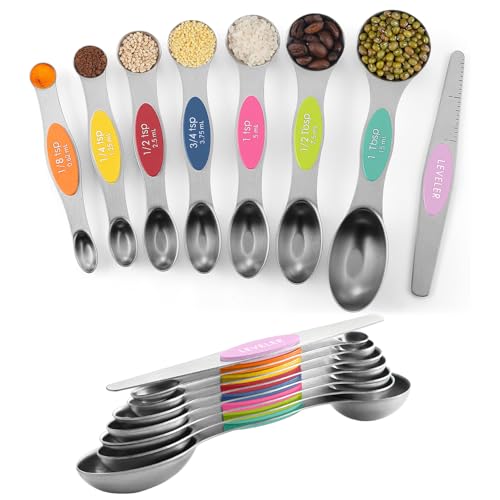
Treat Yourself To A Set Worth Having - With single metal construction and heavy duty premium Stainless Steel, these measuring spoons were built with endurance in mind. Get this set that looks beautiful, performs incredibly and will seemingly last forever.

SCRAPERS GONNA SCRAPE | Handles squeeze together to scrape off excess ingredients giving a level and accurate measurement
Complete, Accurate Set To Measure Spices, Medicine And More - Measure precise quantity of ingredients with these metal measuring spoons to get great results with cooking and baking.
Measuring 3/4 Cup of Liquid With 6 Fluid Ounces
To measure 3/4 cup of liquid correctly, aim for 6 fluid ounces. This amount matches the volume you need and ensures accuracy. Use a standard liquid measuring cup that shows fluid ounce markings. Place the cup on a flat, level surface. Then, slowly pour your liquid until it reaches the 6 fl oz line. To get an accurate reading, check at eye level and use the bottom of the meniscus—the curve of the liquid—when viewing clear liquids. Remember, fluid ounces measure volume, not weight, so this method provides a precise measurement without guesswork. Treat your measuring tools with care, similar to how Silpat mats need gentle handling to avoid scratches. Avoid confusing fluid ounces with dry ounces, which measure weight. Use this approach whenever your recipe calls for a liquid ingredient to ensure proper accuracy. For more consistent results, you can also use a food scale to weigh the liquid instead.

Large 48 oz / 6 Cup Capacity for Everyday Kitchen Use This 1500 ml liquid measuring cup is ideal for everyday kitchen tasks like baking batter, mixing sauces, preparing soups, drinks, and cold brew coffee. The large capacity reduces refills and saves time during cooking.
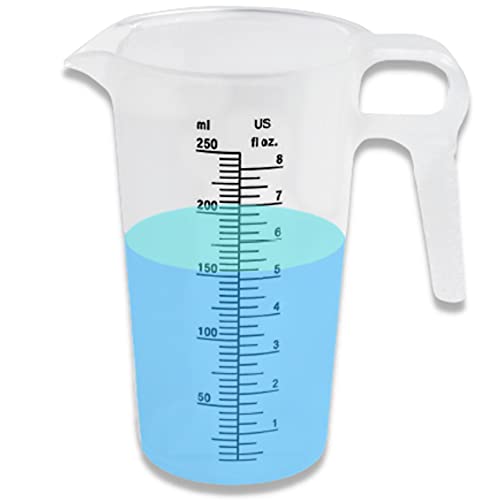
ULTRA-TOUGH & DURABLE – PRACTICALLY INDESTRUCTIBLE: This gallon measuring pitcher is made from food-grade polypropylene with extreme chemical resistance. This plastic container won’t wear down, chip, cloud, or discolor and has a melting point of 246°F. Great for using as an oil measuring container, chemical measuring pitcher, and pool measuring cup for chemicals.
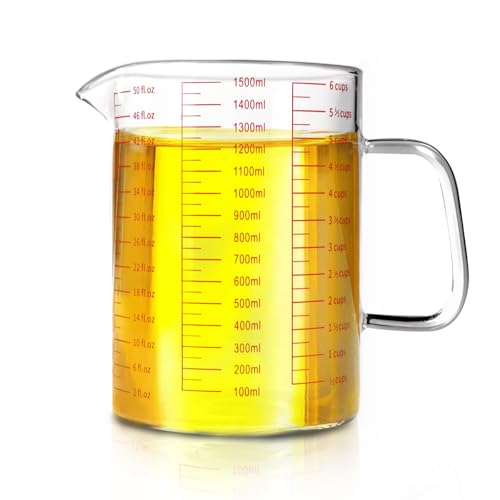
【Essential Kitchen Tool】,6Cup/1500ml/50oz measuring cup with multiple measurements (cup, ounce and milliliter).The measuring cup is lightweight, making it easy to handle and reducing the strain on your wrists, so the measuring cups that are perfect for baking, cooking, mixing and more!
Visual Shortcut: Combine 1/2 Cup and 1/4 Cup
To measure 3/4 cup without a dedicated 3/4-cup tool, combine a full 1/2 cup with a 1/4 cup. First, fill your 1/2-cup measure completely and level it off for accuracy. Next, refill the same measure only halfway to get exactly 1/4 cup. Pour both portions into your bowl. The total will be 3/4 cup. This visual shortcut works because 1/2 cup plus half of that measurement (1/4 cup) equals 3/4 cup. It’s a quick and reliable method that relies on matching common fractions instead of guessing. Be sure to fill each measure carefully to avoid overfilling, and pour steadily between steps to prevent spills. This trick can save time and fuss when you don’t have a specific 3/4-cup tool handy. Using a well-seasoned pan that has been properly prepared ensures perfect bundt cake release and avoids sticking. Choosing the right bakeware can also impact the accuracy of your baking results. For cake decorating, selecting the correct piping tips is essential for achieving precise designs.
Measuring 3/4 Cup for Dry Ingredients Like Flour
To measure 3/4 cup of dry ingredients like flour accurately, you should aim for about 90 grams when spooned and leveled. Using a kitchen scale is the most precise method, especially for recipes sensitive to texture and consistency. If you prefer using tablespoons, 12 level tablespoons will give you roughly 3/4 cup. Keep in mind that the density of flour can vary depending on how you measure it—scooping, spooning, or sifting. Consistently using the same technique ensures reliable results. For best accuracy, weigh your flour to match the specific amount your recipe calls for, eliminating guesswork. When using a scale, always zero out the bowl before adding ingredients to ensure an accurate reading. If you build a DIY cooling rack for your bakeware, it can also help baked goods cool evenly before storage in the pantry. Investing in top oven gloves can also improve safety when handling hot bakeware.

Digital kitchen scale with food-safe, BPA-free plastic components

𝗘𝗳𝗳𝗼𝗿𝘁𝗹𝗲𝘀𝘀 𝗪𝗲𝗶𝗴𝗵𝗶𝗻𝗴: Supports 5 units (oz/lb:oz/fl'oz/g/mL), tare function, and includes 2 AAA batteries for hassle-free operation
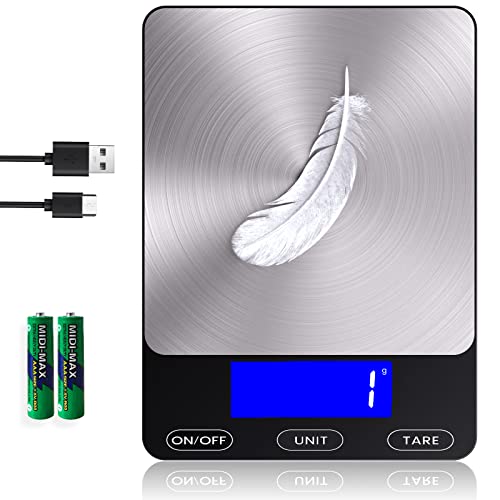
【Precise Weight Food Scale】Our Food Kitchen Scale equips four high-precision load sensors, waterproof Anti-collision glass weighing panel. Large measuring capacity with 1g precise graduation from 0.1oz/3g to 33 lbs/15kg.
What About 1/2 Cup Plus 2 Tablespoons?
1/2 cup plus 2 tablespoons equals 10 tablespoons, which is 5/8 of a cup. This falls short of the 3/4 cup measure, which requires 12 tablespoons. The missing 2 tablespoons amount to 1/8 of a cup, a difference that can impact your recipe’s accuracy, especially in baking. If you need exactly 3/4 cup, use 1/2 cup plus 4 tablespoons instead to reach the full 12 tablespoons. Relying on 1/2 cup plus 2 tablespoons leads to under-measuring and can alter the final outcome. Always verify your measurements to keep your recipes precise.
How to Use a Metric Measuring Cup for 3/4 Cup
A metric measuring cup holding 250 mL requires filling to the 187.5 mL mark to measure 3/4 cup accurately. First, check your cup’s markings because metric and US measurements aren’t always the same. For dry ingredients like flour, scoop into the measuring cup and level off the top once it reaches 187.5 mL to ensure an even measure. For liquids, place the cup on a flat surface and read the meniscus at eye level to prevent parallax errors, which can lead to inaccurate readings. Unlike liquid measuring cups, dry measuring cups are designed for leveling off dry ingredients to achieve precise volume.
If your measuring cup lacks precise marks, using approximately 180 mL can be a practical approximation, but keep in mind it’s a rounding. Always verify whether your recipe specifies metric or US cups because even small volume differences can impact baking outcomes, affecting rise and texture. Properly measuring with a metric cup helps maintain consistency and accuracy in your recipes.

Multi-Unit Liquid Measuring: Printed cup, ounce and milliliter graduations keep common recipe units on one vessel for cooking, baking and drink preparation

Right-Sized Measuring: Three small liquid measuring cups cover flavorings, sauces, coffee and cocktail ingredients, letting you choose a vessel closer to the portion instead of one oversized pitcher

Application: The Graduated Beaker is designed for measuring, transferring, and storing the liquid in the lab or home, it features double-sided graduations with different measurements, and with a comfortable handle and spout, is a great tool even in the laboratory.
3 Mistakes That Throw Off Your 3/4 Cup Measurement
Don’t scoop directly from the bag when measuring 3/4 cup of flour. This compresses the flour, adding 20 to 40 percent more than the actual amount needed. Instead, use a spoon to lightly fill the measuring cup, then level it off with a straight edge to ensure accuracy. Avoid packing the flour down or tapping the cup, as this increases its density and results in too much flour in your recipe. Properly fluff the flour first if it has settled, so your measurement remains consistent. Using the correct bundt cake pan size can also prevent overfilling or uneven baking in your recipes. For best results, always use a dry measuring cup for dry ingredients like flour. Following these steps helps prevent common mistakes that can throw off your 3/4 cup measurement and compromise your baked results.
Which Method Works Best for Your Recipe?
Using a kitchen scale is the most accurate method to measure 3/4 cup, especially in baking where precision matters. Convert 3/4 cup to roughly 6 ounces by weight, ensuring you avoid issues caused by packing or settling. This method guarantees consistent results, particularly for dry ingredients like flour or sugar. For everyday cooking, tablespoons are a quick and reliable alternative, with 12 level spoonfuls equaling 3/4 cup. This strikes a good balance between speed and accuracy. If only teaspoons are available, you’ll need 36 scoops, which can work for small batches but significantly slows down the process. For casual recipes that don’t require exact measurements, filling a standard mug to about three-quarters can serve as a rough estimate. However, avoid relying solely on visual guesses for delicate dishes. To ensure precision, stick to the scale; for convenience, use tablespoons, and for quick approximations, a mug can suffice with caution.