

If you’re wondering how much four quarts measure in a measuring cup—you’re looking at 16 cups, or a full gallon.
This size is great for preparing large batches of soup, stew, or other family-sized meals. It’s a versatile size that simplifies handling bigger cooking tasks.
Keep reading to see how this measurement fits into your kitchen routine.
So, What Is 4 Quarts in the Kitchen?
A 4-quart vessel is a versatile, medium-sized kitchen tool that strikes a good balance between capacity and manageability. It’s ideal for preparing family-sized portions, batch cooking, and everyday tasks like making soups, stews, chili, or one-pot dishes. This size provides enough room for ingredients to expand during cooking and allows you to stir comfortably without splashing. For example, the Pyrex Smart Essentials 4-Quart Glass Mixing Bowl is made from non-porous glass that resists absorbing food odors, flavors, and stains, enhancing its utility for daily kitchen use. If you’re using a stand mixer for these tasks, the bowl’s size pairs well with planetary mixing action to ensure even blending without overcrowding. A top rated food scale can help you accurately measure ingredients for these recipes, ensuring consistent results every time. For baking, a high-quality sheet pan is also essential for even heat distribution and uniform browning.
When it comes to storage, a 4-quart pot or bowl is compact enough to fit neatly in most cabinets or on shelves, yet large enough to handle regular cooking needs. You can braise, simmer, poach, or blanch with confidence because its size offers ample space for ingredients and minimizes splatter. Whether you’re cooking grains, reducing liquids, or mixing batter, this vessel can manage it all without taking up too much space on your countertop.
How Many Cups Are in 4 Quarts? (It’s 16)
Four quarts equal exactly 16 cups. This is a straightforward conversion in U.S. customary units, and it’s useful whether you’re scaling a recipe or measuring ingredients precisely. To find the number of cups in quarts, simply multiply the number of quarts by four: 4 quarts times 4 cups equals 16 cups. If you need to cut a recipe in half, that’s 8 cups, and doubling it becomes 32 cups. The math scales linearly, so knowing the base conversion helps you adjust recipes quickly. When measuring out ingredients for larger batches or meal prep, remember that 4 quarts always equals 16 cups—no rounding necessary. Just as precise measurements keep recipes consistent, proper cleaning techniques ensure that baked-on residue lifts easily from your kitchen tools. For long-lasting durability, consider using heat-resistant materials when making hot pads.
What’s the Liter and Fluid Ounce Equivalent for 4 Quarts?
4 quarts is equivalent to 3.785 liters or exactly 128 US fluid ounces. This makes it easier to convert between the metric and US customary systems when measuring ingredients or liquids. For practical purposes, you can round 4 quarts to approximately 3.79 liters, which simplifies calculations without losing much accuracy. Knowing these conversions ensures your recipes stay precise, especially when scaling up or down or substituting ingredients across different measurement standards. For bakers, using a properly prepared loaf pan prevents sticking and ensures clean removal every time, much like understanding loaf pan release techniques. Choosing the right mixer size, such as an Artisan model, depends on your kitchen’s needs and how often you bake. A non stick baking sheet offers similar benefits by ensuring easy release and even baking when preparing cookies or pastries.
How Big Is 4 Quarts Compared to a Measuring Cup?
A 4-quart measuring cup holds four times the volume of a standard one-cup measure, totaling 16 cups. That means it’s significantly larger than the typical measuring cup found in most kitchens. While regular measuring cups handle up to about one or two cups, a 4-quart version is designed for bigger tasks such as preparing large batches of stock, dough, or soup. It’s usually made with clear markings for quarts, gallons, and cups, allowing you to measure accurately without multiple pours. For those who enjoy DIY kitchen projects, building your own storage solution can be a smart way to save money, much like constructing a rolling pin holder uses affordable materials to avoid retail costs. To keep such large tools effective, regular maintenance is key, including using baking soda paste to gently scrub away any stubborn residue that can accumulate after heavy use. This size is ideal for batch cooking or when you need to handle substantial quantities of liquids, making it a convenient tool that saves time and effort in the kitchen. For those who prefer glass options, Pyrex mixing bowls with lids offer similar durability and sealed storage for large-volume ingredients. Designed with impact-resistant aluminum construction and embossed measurement bars, this specific Vollrath model ensures both durability and accuracy for demanding kitchen tasks.

Included Components: One Measuring Cup

MEASURE EASILY: These plastic measuring cups feature embossed graduations up to 4 quarts (16 cups) in 1/4 cup increments to measure liquid precisely. Bolded indications in metric and imperial units.

EASY-TO-READ DUAL MEASUREMENTS: Printed with bold, clear, high-contrast US standard (cups and fluid ounces) and metric (milliliters/liters) measurement scales on transparent plastic for effortless, precise viewing.
What Can You Cook in a 4-Quart Pot?
What Can You Cook in a 4-Quart Pot?
A 4-quart pot is versatile for many cooking tasks suited for small to medium-sized servings. You can easily prepare soups like minestrone or chili, which serve about 3 to 4 people, thanks to the size’s ample capacity. It’s also great for braises such as beef bourguignon, allowing you to cook flavorful dishes without overcrowding the pan. For pasta, you can boil enough spaghetti for a couple of plates or make risotto, with the wide base making stirring straightforward. The pot’s size is perfect for experimenting with ingredient substitutions in curries or one-pot meals—swap in chickpeas instead of chicken, or vegetables instead of meat, without worry. For side dishes, it’s ideal for steaming green beans or blanching vegetables in small batches. You can even poach fish or eggs in it or use it for baking artisan bread. However, unlike insulated cookie sheets which provide even heat distribution for baking, a 4-quart pot’s direct heat can cause hot spots if not stirred frequently. For baking tasks, a perfect square pan ensures more uniform results than a round pot. For similar reasons, a bundt pan designed for breads helps prevent uneven cooking in sticky doughs. Mastering these techniques allows you to take full advantage of a 4-quart pot for a wide range of recipes, from simmering broths to melting chocolate.

SAUCEPOT WITH LID: 4-Quart Saucepot and Soup Pot with Lid

THIS ITEM IS A NECESSARY ADDITION TO YOUR KITCHEN - These stockpots have four size options (4 / 6 / 8 / 10 quart) - Feature French kitchen elegance with mirror polished body; cut a fine figure both in the kitchen and at the dining table - Thick (4MM in base thickness), undeformable base eliminates warping and hotspots - Great for boiling eggs, simmering stocks and soups, or making sauces - Discover the GOURMET CHEF IN YOU with this HEALTHY, BEAUTIFUL & EFFICIENT stockpot.

FAMILY-SIZE 4QT FOR EVERYDAY COOKING: The 4QT saucepan gives you extra room for everyday family cooking while staying practical for regular stovetop use. A versatile size for pasta, soup, grains, curry, side dishes and light meal prep.
Kitchen Tools and Containers That Hold 4 Quarts
Several kitchen tools and containers are designed to hold exactly 4 quarts, making them ideal for bulk measurement and storage. Heavy-duty 4-quart measuring cups, such as Vollrath’s aluminum model or Cambro’s clear polycarbonate version, come with molded markings that allow for quick batch preparation. These tools are especially useful for measuring large quantities of liquids like broth, oil, or batter, ensuring accuracy in your recipes. Additionally, these polycarbonate containers are resistant to cracking and breaking, meeting commercial-grade standards for durability. For those who frequently whip up large batches, a Hamilton Beach mixer with stand can pair perfectly with a 4-quart measuring cup for streamlined mixing and pouring. When using such a stand mixer, the universal attachments from brands like KitchenAid can also be swapped between certain models, though not all are truly interchangeable. For even heat distribution during baking, a half sheet pan is another kitchen essential that works well with these large-volume measurements.
For organizing your kitchen, 4-quart food storage containers, like Cambro’s square polycarbonate containers with lids, help streamline ingredient storage and keep your workspace tidy. Their translucent bodies let you see contents clearly, which reduces guesswork and minimizes opening containers unnecessarily. Pitchers with embossed graduations also serve well for liquids such as water, milk, or juice. Built with durability in mind, these items often feature welded handles and NSF listings, so you can rely on them for daily use without worry.
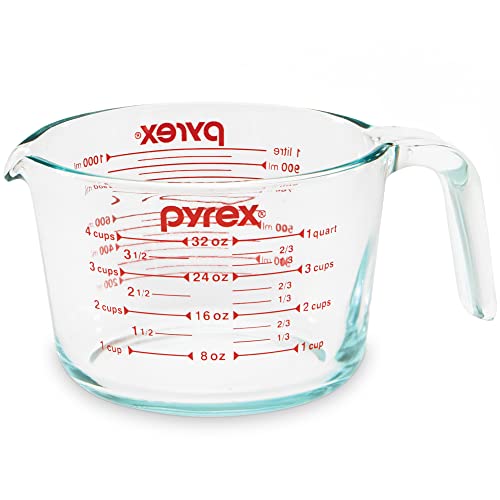
ESSENTIAL KITCHEN TOOL: 4-cup measuring cups that are perfect for baking, cooking, mixing and more!

WET AND DRY: Easily measure out wet and/or dry ingredients for all of your baking and cooking needs
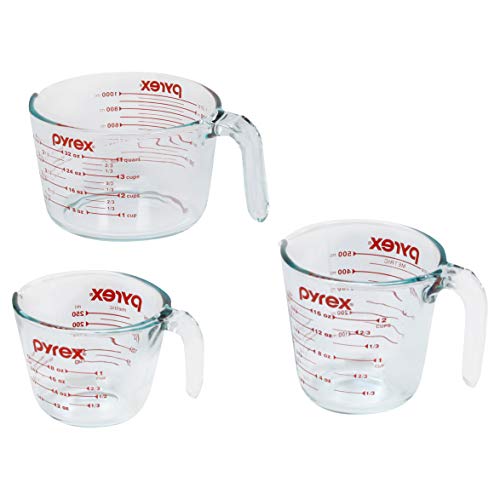
3-PIECE: Includes 1-cup, 2-cup, and 4-cup measuring cups that are perfect for baking, cooking, mixing and more. Dimensions for 1 cup: 6'' diameter x 4.5'' high. Dimensions for 2 cup: 6.5'' diameter x 4.5'' high. Dimensions for 4 cup: 8'' diameter x 6'' high.
How to Scale Recipes Using 4 Quarts
To scale recipes for a 4-quart vessel, adjust ingredient quantities carefully to ensure the batch fits without overflows or gaps. Use fractional measurements for uneven splits; for example, if doubling a recipe, multiply each ingredient by 2. Measure liquids precisely with liquid measuring cups and dry ingredients with appropriate spoons or scales to maintain accuracy. For extreme precision, a dedicated food scale can provide exact gram measurements, especially useful when scaling uneven splits. Keep dry and liquid ingredients separated until mixing to prevent measurement errors. Be mindful that increasing the volume may alter cooking times—simmer or bake longer if necessary—and taste the dish after scaling to adjust seasonings. For best results in a 4-quart vessel, use a silicone cake pan that requires proper greasing and support to avoid uneven baking and spills. This method helps your recipe turn out perfect and consistent in a 4-quart vessel.

Reusable Silicone Air Fryer Liners: Compatible with Ninja AF101/AF142/AFA61, Chefman 4-5QT, COSORI 4-5QT, Bella 4QT, Instant Pot 4QT, and other air fryers with 4-5.3QT capacity.

Reusable Air Fryer Silicone Liners: 2 PACK (Red+Black)airfryer liners,No longer clean your air fryer basket ,air fryer accessories Diameter: 8inch,Fits 3qt-5qt air fryers.Airfryer liners silicone is reusable and durable, saving money over time.It can be used in cooking environments ranging from -40 ° C to 240 ° C (-40 ° F to 464 ° F)

【Air Fryer Accessories for Ninja Crispi】This comprehensive air fryer accessory set includes everything you need for creative cooking: 2 × Silicone Liners (including 4QT & 6-Cup silicone liner), 50 × 8''Paper Liners, 50 × 6''Paper Liners, 1 × Silicone Mat, 1 × Pizza Pan and 6 × Silicone Muffin Cups.
When to Choose a 4-Quart Pot Over Others
Choose a 4-quart pot when you’re cooking for 2 to 4 people. This size provides the perfect balance of capacity and manageability. It’s ideal for making soups, stews, chili, and curries, offering enough room for simmering without taking up too much space on your stove. It also works well for boiling pasta for 2 to 3 servings, cooking rice, or reheating leftovers efficiently. Its 5-ply stainless clad construction ensures even heat distribution for professional-quality simmering. For precision baking tasks, using a 4-quart measuring pot allows you to both measure and cook liquids directly, simplifying your workflow.
Compared to larger options like 6- or 8-quart pots, a 4-quart pot heats faster and is easier to store. Its smaller size means less clutter in your kitchen cabinet and simpler utensil storage. Handling a 4-quart pot is also safer—less risk of tipping or splashing—making it a practical choice for everyday use. It’s often used as a versatile second pot alongside a smaller saucepan, handling everything from sauces to braises without the bulk.

Chef's Choice Stainless: 18/10 mirror finish. Classic looks, professional performance.

QUICK, EVEN HEATING: KitchenAid 4-quart casserole has been crafted from stainless steel with an aluminum core base to spread heat quickly and evenly

Larger Capacity - A 4 qt saucepan is ideal for for heating milk, making hot chocolate, oatmeal, soups, ramen, sauces, or baby food. Large enough for 2–4 people, yet compact enough for daily stovetop use without wasting space.
Quick Cheat Sheet: Conversions for 1, 2, 3, and 4 Quarts
For quick conversions, remember that 1 quart equals 4 cups, 2 quarts are 8 cups, 3 quarts amount to 12 cups, and 4 quarts equal 16 cups. These measurements help you easily convert quarts to cups for recipes or meal prep. Additionally, 2 quarts convert to 4 pints, 3 quarts to 6 pints, and 4 quarts to 8 pints, which is also equivalent to 1 gallon.
Using 2 quarts is ideal for preparing soups or batters because it provides a manageable volume for many kitchen tasks. When your recipe requires more, 3 quarts bridge medium and large mixing needs effectively. To match your cookware to the volume, consider the material—stainless steel or nonstick surfaces—ensuring even heating and better results. Always remember that multiplying the quart amount by 4 gives you the corresponding number of cups, simplifying your measurements for any recipe.