

Choosing the right cake pan size can make all the difference in your baking results.
But how do you measure it correctly?
Knowing how to get an accurate measurement ensures your batter fits perfectly and bakes evenly every time.
The key is to measure the inside top edge, ignoring rims, handles, or lips.
Keep reading for simple tips to measure any pan with confidence.
Why the Inside Top Edge Is All That Matters
The inside top edge of a cake pan is what truly matters because it defines your actual baking space. When measuring, always measure from inner edge to inner edge across the top opening, ignoring the outer rim and lip. Exterior measurements include wall thickness, which can vary significantly depending on the pan material—heavy-gauge steel, for example, inflates the size and can lead to inaccurate sizing. Relying on the inner measurement ensures your cake batter fills the proper space, preventing cakes from becoming too thin or overflowing. To handle your pan, grab the rim for lifting, but always record the interior top opening. Since this measurement remains consistent across shapes and brands, it makes recipe conversions more reliable. Using the inside top edge as your standard measurement helps you avoid surprises like sloped sides or uneven tops every time you bake. This precision mirrors the way bakers compare mixer performance when choosing between different bowl capacities, ensuring your tools match the task at hand. For example, an angel food cake pan’s distinctive tube center requires the same inner-edge measurement to guarantee proper batter volume. Applying this same careful approach to your silicone bakeware, like using mild dish soap and a soft sponge, will prevent residue buildup and extend the life of the mat.
How to Use a Ruler or Tape Measure for Best Results
To get the most accurate measurements with a ruler or tape measure, place your cake pan on a level, stable surface. Use a rigid ruler for straight spans across shallow pans or a flexible tape measure for deeper or irregularly shaped pans. Measure straight across from inside edge to inside edge for the length and width, keeping the tool upright and parallel to the edges. For depth, hold the ruler or tape measure perpendicular to the pan’s base and read from the bottom to the top edge, avoiding the outer lip, which can skew results. Always ensure the measuring tool is aligned with the longest dimension first, then measure the shorter side without shifting the starting point. For round pans, always measure from one edge to the opposite across the diameter. Double-check each measurement to confirm accuracy, then record the length, width, and depth in the same unit of measurement immediately to prevent confusion later. For recipes that demand precise ingredient amounts, using a food scale can further improve consistency. A foil-lined baking sheet is an alternative bakeware option that simplifies cleanup and resists sticking. Consistent, careful measuring is key for precise baking and presentation. Consider exploring high-quality attachments from KitchenAid to expand your baking capabilities beyond simple pan measurements.
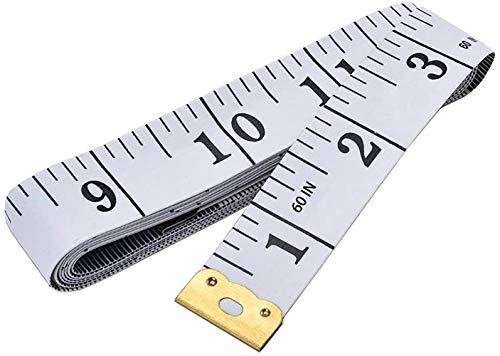
Measuring range: 0 to 60 inches and 0 to 150 centimeters. There is a centimeter scale on the back, which is accurately printed in inches and centimeters. Both sides can be measured according to your requirements. You can put one in your pocket or backpack without taking up too much space

2 Pack Soft Fashion Measuring Tape Set. Double sided, 60 inch / 150 cm, portable,durable tape measure. Small and light pocket size measuring tape.

Tough enough for the toughest contractor, these tapes feature superior blade extension
Measure a Round Cake Pan by Diameter
To measure a round cake pan by its diameter, focus on the top opening from inside lip to inside lip at the widest point. Use a ruler for shallow pans or a flexible tape measure for deeper ones. Ensure you are measuring the inside edge, not the bottom, to avoid skewed results caused by tapered sides. Keep the tool level to prevent diagonal errors. Metal pans with thinner walls are best measured from the inner rim, while ceramic or thick-walled pans may require careful handling but the measurement remains the same. Always verify the measurement at the pan’s widest point across the top opening to get the true diameter, which matches the labeled size like 8 or 9 inches. This method ensures accurate sizing every time for a proper fit of your baked goods.
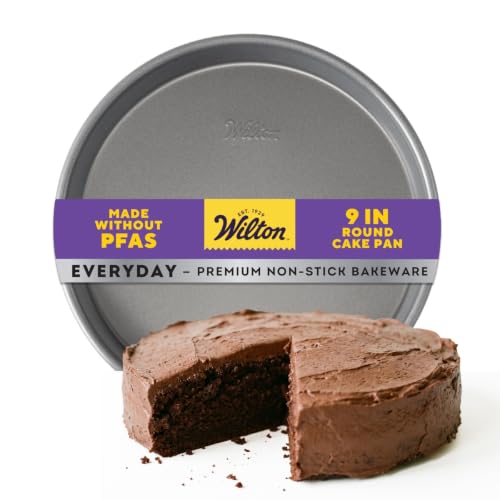
Ideal for everyday baking like layer cakes, cheesecakes, cornbread and brownies with consistent results for birthdays, holidays, and special occasions.

VARIOUS CUISINE AT WILL - This deeper 8 inch round cake pan set is designed for commercial and family. It has external dimensions of 8.8x8.8x2.5 and internal dimensions of 8x8x2.5. Perfect for baking layer cakes, cookies, pastry, cinnamon rolls, vegetables, etc
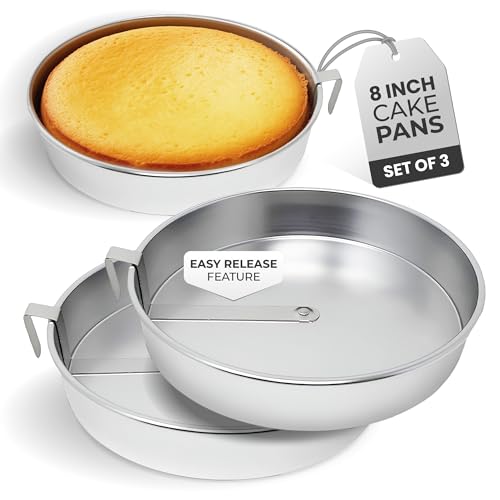
Easy and Fun Cake Removal – Releasing cake from a pan shouldn’t be frustrating. Make it easy with these nonstick cake pans! Designed with a built-in swivel blade, our easy-release cake pans let you remove your perfectly shaped cakes with ease.
Measure Square and Rectangular Pans by Length and Width
To measure square and rectangular pans accurately, measure the inside dimensions at the top opening from inner edge to inner edge. Avoid measuring the base or exterior walls, as the thickness of the pan can distort your measurements. For square pans, record one side length and then the other; for rectangular pans, measure the longer side and the shorter side separately. Keep the ruler straight across the opening and do not measure diagonally, as this will give incorrect results.
To calculate the area, multiply the length by the width. For example, a 9 by 13 inch pan has an area of 117 square inches, while an 8 by 8 inch pan contains 64 square inches. This measurement method applies regardless of the pan’s material or color, whether it’s dark nonstick or shiny aluminum. Standard pan sizes include 8 by 8, 9 by 9, 11 by 7, and 13 by 9 inches. Consistent interior measurements make it easier to compare pans precisely when planning your recipes. For accuracy comparable to using a food scale, the same careful measuring approach is essential. Using a foil lining can also help with even cleanup and heat distribution during baking. Knowing the exact area helps determine how baking time compare between different pan sizes for consistent results.

Meet Your Daily Needs: DOWAN larger and deeper ceramic baking dish measures 15.6"L x 9.3"W x 3.1" H (including handle size)-135 OZ, sized perfectly for cooking lasagna, casseroles, chicken, roast, bread, pasta, beef, and more. Whether you're cooking a family dinner or serving food, this versatile casserole dish has got you covered.

9 x 13 inch rectangular cake pan; made from aluminized steel; a mix of steel for strength and durability and aluminum for superior heat conductivity; oven safe to 450°F
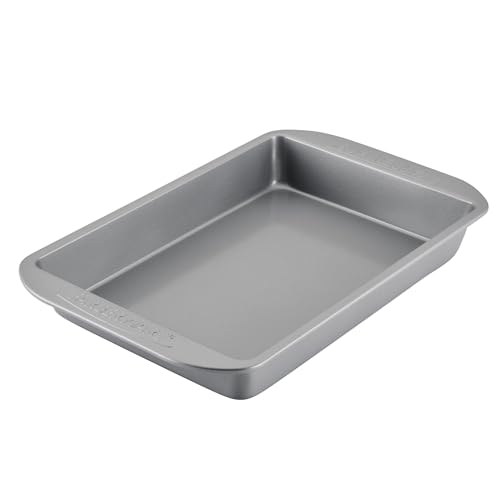
NO WARP DURABILITY: This nonstick 9x13 cake pan features heavy-duty construction that resists warping and heats evenly to brown beautifully and help reduce hot spots
Measure Pan Depth Correctly for Accurate Results
To measure a cake pan’s depth correctly, start by locating the lowest interior point of the pan’s bottom. Keep your ruler straight and perpendicular to the surface—avoiding any angle. An angled measurement can make the pan seem deeper than it actually is. Measure from this interior base to the top rim, excluding any rolled rims, lips, or exterior edges. Focus solely on the interior height, as this reflects the actual baking capacity. Don’t be distracted by the pan’s material or handle length; these do not influence the usable depth. Standard cake pans are typically 1.5 or 2 inches deep, and even a slight variation can impact how much batter you need. For example, an 8 inch pan with a shallower depth will require less batter than one with a deeper interior. Take multiple measurements, ensuring the ruler stays centered and upright each time. Check both sides of the pan, especially if walls are uneven, to get an accurate reading. Consistent measurements help improve recipe accuracy and guide you in choosing the right pan for your baking needs. Only the inside depth matters, so ignore the outside edges. This principle is similar to measuring a rolling pin holder interior, where only the internal dimensions dictate usable space. Just as with cake pans, a spiral mixer relies on its internal bowl capacity rather than external features for proper dough mixing.

Precise control of curves and layout: A set of four pieces provides multiple specifications of curved templates, enabling precise control of the curvature, size, and overall composition layout in cake decoration.

Purpose - The Tier Ruler takes the guesswork out of stacking and centering cake tiers.

Your baking with precision using this cookie scale that measures and adjusts the thickness of fondant, cakes, cookies, and more. Achieve even and consistent textures, ensuring every baked good is a delicious masterpiece.
How Sloped Sides Trick You Into Picking the Wrong Pan
Measuring the top-opening dimensions of a pan is essential, especially when it has sloped sides. The taper causes the outer rim to appear larger than the actual cooking surface, which can mislead you into choosing a smaller pan. To get an accurate measurement, measure straight across the inside top opening at the rim level, keeping the ruler level to avoid overestimating. Do not measure along the slope or at the outer lip because these will overstate the size. Conversely, measuring only the bottom underestimates the actual baking area. A common mistake is trusting the labeled size, such as a 9-inch pan, which refers to the top opening, not the base. Always verify with a level ruler to ensure you’re selecting a pan that matches your recipe’s needs. For superior durability and even heat distribution, consider pans made from materials similar to those in stainless steel bowl mixers. If your bacon recipe calls for even cooking, selecting a pan with heavy-gauge construction helps prevent hot spots and warping over time. For consistent cookie results, a silicone baking mat provides a non-stick surface that eliminates the need for greasing.
Find Pan Capacity by Filling With Water
To find a pan’s capacity by filling with water, start with an empty pan on a level surface. Pour pre-measured cups of water slowly to the rim, counting each cup as you go. Be careful to avoid splashing or tilting the pan, as this can skew your measurement. Repeat the process if needed to ensure accuracy. Once filled, pour the water into a liquid measuring cup to get a precise volume reading. For even more accuracy, use a kitchen scale: tare the empty pan, then fill it to the rim and weigh the water in grams. Since 1 gram equals 1 milliliter, you can easily convert this to cups—using the conversion of 237 milliliters per cup—without additional pouring. Keep in mind that the rim-full capacity reflects the volume the pan can hold, including any design features like fluted edges or nonstick coatings, which can slightly affect the total volume. This measurement accounts for the pan’s material and shape but doesn’t include the safe batter fill line, which typically leaves 1¼ to 1½ inches below the rim to prevent overflow during baking.
Use Pan Measurements to Prevent Overfilling and Spills
To prevent overfilling and spills, use your pan measurements as a guide to gauge the batter depth. Most cake pans should be filled to only about two-thirds of their total height. For light sponge batters, fill only halfway since they tend to rise more aggressively. Avoid mounding the batter; instead, level it to ensure an accurate fill line. Leave about an inch of headspace to accommodate expansion during baking. Keep in mind that baking temperature can influence how much the batter rises, so adjust your fill level accordingly. If you’ve made ingredient substitutions that may affect batter density, err slightly under the safe fill line. Measure your total batter volume with a measuring cup or a scale before pouring to prevent overfilling. If you accidentally pour too much, remove the excess and bake it separately. Placing a sheet pan underneath the cake pan catches any drips or spills, making cleanup easier.
Match Pan Volume When Labels Are Missing
If your cake pan has no label or stamped capacity, don’t guess. Fill it with water using a measuring cup, adding one cup at a time until the water reaches the rim. Record the total number of cups; that’s your pan’s volume. For greater accuracy, weigh the water in grams on a tared scale—each gram equals one milliliter. Convert milliliters to cups by dividing by 236.6.
If you prefer a rough estimate without measuring, use the shape formulas for the pan. For round pans, calculate π times the radius squared times the height (πr²h). For square or rectangular pans, multiply length by width by height. Then compare your results to common capacity charts: an 8-inch round typically holds 4 to 6 cups, while a 9×13-inch pan holds about 14 to 16 cups.
Avoid relying on color or material for size estimation, as they do not indicate volume. Confirm the capacity with measurement or calculations before selecting your recipe. When in doubt, choose the larger capacity to prevent overfilling and spilling during baking.

One piece leak-proof design in the classic angel food shape, a perfect pan for angel food cakes, pound cakes, coffee cakes and more
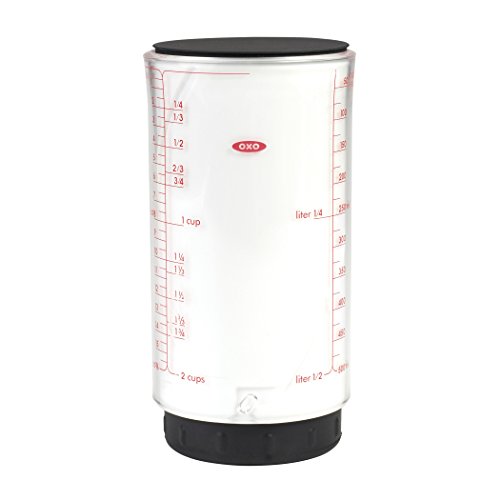
Cup is adjustable for easy, convenient measurement of various volumes

Make coffee cake rings just like top-notch bakeries with this formed tube cake pan
Never Measure a Pan From the Outside
The interior measurement from lip to lip is what matters when measuring a pan. Always use a ruler to measure from inside edge to inside edge at the top of the pan. This ensures you get the actual usable baking space. Avoid measuring from the outer rim, as this includes the wall thickness, which varies and can lead to overstating the size. Thick rims, flared sides, and any angular features can distort your measurement. Understanding the baking sheet material can also impact how accurately your pan performs in the oven.
Do not include the handle or rolled lip in your measurement—they do not affect the size of the baking area. Recipes assume the interior dimensions, so measuring from outside or including rim thickness can cause you to make incorrect substitutions. For round pans, keep the ruler level across the top. For square or rectangular pans, measure length and width separately. Record only these interior dimensions, and ignore the pan’s exterior shell or handles. This precise method makes sure your pan matches the specifications expected by your recipe, leading to more even baking and consistent results. Paying attention to the interior top edge ensures the pan’s actual volume matches what the recipe expects.