Deciding between a planetary mixer and a spiral mixer can feel overwhelming, especially if you’re unsure which one best suits your baking needs.
Generally, a planetary mixer is more versatile and handles a variety of tasks.
While a spiral mixer excels at kneading tough, high-hydration doughs with less heat.
Your choice depends on what you bake most often.
The full comparison below will help you understand their differences clearly so you can pick the right one for your kitchen.
Planetary vs. Spiral Mixers: The Core Difference
A planetary mixer’s orbital attachment motion differs sharply from a spiral mixer’s rotating bowl. In a planetary mixer, the attachment orbits around a stationary bowl, creating a sweeping action that thoroughly scrapes the sides. This orbital movement ensures even mixing of ingredients, making it ideal for a variety of recipes. The orbital action is especially beneficial when you need consistent coverage for smaller batches or delicate mixtures. It also adds an aesthetic appeal to your countertop, often making the mixer look more stylish. Unlike a tall tube pan that supports light batters, an angel food cake pan lacks a nonstick coating to help the batter climb the sides.
However, planetary mixers tend to create more airborne flour because of their vigorous orbital motion. You’ll need to implement better dust management strategies, such as placing a cover or working in a dust-controlled environment. In contrast, a spiral mixer’s bowl rotates around a fixed hook, pulling ingredients inward. This minimizes flour dust in the air and handles dough more directly, which is advantageous for bread making and high-gluten doughs. The bowl’s rotation efficiently develops gluten with less friction heat, making it suitable for baking professionals. Spiral mixers also feature a breaker bar that improves dough consistency and mixing efficiency by scraping and pulling dough off the hook. When using a planetary mixer, check if the bowl is dishwasher safe to avoid damage from high heat or harsh detergents. Overall, for versatile tasks and lighter batters, a planetary mixer offers greater flexibility. For example, a baking sheet is often not dishwasher safe due to the high heat and harsh detergents that can damage its surface.
When to Choose a Planetary Mixer for Your Kitchen
A planetary mixer is the ideal choice if you need a versatile kitchen tool for small to medium-sized batches. This type of mixer is perfect for tasks like baking cakes, muffins, meringues, and cookie dough that require thorough aeration and even mixing. Its attachments allow you to whip cream, emulsify mayonnaise, or mix batters—all without switching equipment. For example, owners can explore top attachments for KitchenAid mixers to find additional tools that expand their machine’s capability. Because planetary mixers handle ingredient substitutions well, you can adjust recipes easily on the fly while maintaining consistent texture. They are suitable for kitchens with limited space or moderate budgets, with countertop models ranging from 5 liters up to 20 quarts. Regular maintenance, such as cleaning attachments and checking the planetary gear lubrication, ensures smooth operation. When you need a single machine to handle multiple prep tasks—from sweet icings to savory sauces—this mixer offers a reliable, space-saving solution. For even baking results, consider using a half sheet pan with your mixer to achieve consistent cake layers. For precise ingredient measurement, a highly rated food scale ensures your batches are perfectly consistent.

FOR BAKERS AND DESSERT LOVERS: The stand mixer takes the stirring, beating and mixing out of your hands and distributes ingredients more evenly than by hand. Set it up and let the food processor do the work.

【3-IN-1 MULTIFUNCTIONAL DOUGH MIXER】Our stand mixer comes with three different whisk attachments, making it incredibly versatile. The flat beater is used for mashing potatoes or vegetables and mixing dough; the spiral dough hook is used for smoothing or kneading dough; and the wire whisk is used for aerating light mixtures like cream and egg whites.

【3-IN-1 MULTIFUNCTIONAL DOUGH MIXER】Our stand mixer comes with three different whisk attachments, making it incredibly versatile. The flat beater is used for mashing potatoes or vegetables and mixing dough; the spiral dough hook is used for smoothing or kneading dough; and the wire whisk is used for aerating light mixtures like cream and egg whites.
When a Spiral Mixer Is the Better Fit for Dough-Heavy Work
A spiral mixer is ideal for dough-heavy tasks, especially when working with high-hydration recipes like bread and pizza. It can handle capacities from 7 kg up to 120 kg, making it suitable for both small and large-scale production. The spiral motion gathers ingredients from the edges of the bowl, ensuring a homogeneous mix and maintaining dough elasticity. This design significantly reduces mixing time—often cutting it in half compared to fork mixers—and offers adjustable speeds to accommodate different dough consistencies. Thanks to its built-in durability and capacity for long run times, a spiral mixer is the perfect choice for bakeries, pizza shops, or any operation focused on consistent, high-volume dough production. For cooks who also need a vessel for roasting, a top-rated All Clad pan with a rack offers comparable durability and uniform performance in the oven.

Better Dough at Home - Make bakery-quality dough at home with groundbreaking spiral mixing technology used in professional kitchens, bakeries and pizzerias.

Versatile Machine: Our commercial stand mixer is equipped with 3 stirrers, including a dough hook, a flat beater, and a wire whip. The dough hook is used for smoother mixer operation and is ideal for pizza and other heavy dough. The flat beater is suitable for mashing potatoes or vegetables, mixing cakes, batters, or icing. The wire whip is widely applied in aerating light mixes such as whipped cream, egg white. These considerate accessories help you achieve the results you need for any recipe.

Large Bowl Capacity: Our commercial stand mixer is equipped with a bowl 10.5 QT, allowing you to mix up to 11 LBS dough in about 10-15min. In addition, all parts touching food are made of food-grade stainless steel, which can meet the cooking needs of home as well as commercial use.
Why Spiral Mixers Excel at Gluten Development
Because a spiral mixer’s hook and bowl rotate in sync, it keeps dough in continuous contact with the mixing elements. This coordinated movement repeatedly stretches and folds the dough rather than just pushing it around. As a result, proteins align into a stronger gluten network with less stress on the dough. The controlled mixing speed and multiple passes generate shear and folding forces that improve dough ventilation by stabilizing gas cells. This process creates a smoother surface and a better windowpane without overheating the dough. Lower friction during mixing preserves gluten structure, allowing you to develop strength and extensibility more efficiently. The outcome is a dough that is robust, elastic, and able to hold gas during fermentation. The flex edge beater provides a similar advantage by scraping bowl sides to ensure thorough incorporation. Spiral mixers excel at building gluten evenly and cleanly, leading to more consistent baking results. Just as choosing the right oven gloves ensures safe handling of hot bakeware, selecting the proper mixer is essential for maintaining dough quality during production. For achieving perfect structure in your baked goods, the pan material also matters, and an aluminum or steel pan provides superior heat distribution for even baking.
Speed and Heat: Why They Matter for Your Dough
Mixing speed directly impacts dough temperature. Faster mixing generates more friction heat, which can raise the dough’s temperature significantly if not controlled. A spiral mixer minimizes bowl drag, resulting in only a 1°C to 3°C increase, helping maintain a stable fermentation environment. In contrast, a planetary mixer produces more contact friction, often raising dough temperature by 3°C to 6°C or more. This additional heat accelerates fermentation but can also make the dough sticky and harder to handle. For those focused on quality and performance, a spiral mixer typically offers better heat management during long mixing cycles. To further protect your equipment and dough quality, you should regularly clean baked-on residue from mixing components using approved methods. Choosing the right tool is similar to selecting a top cake pan with tube, where heat control and material quality directly affect the final result.
Start mixing at the lowest effective speed to limit heat buildup. Increase speed only during gluten development, not merely to save time. Always monitor the final dough temperature and aim for 22°C to 27°C, adjusting your water temperature accordingly—chilled water can help offset excessive heat. Consistent temperature control is crucial for reliable fermentation and optimal dough handling.
Versatility vs. Specialization: Planetary or Spiral?
Choosing between a planetary and spiral mixer depends on whether you prioritize versatility or specialization for your kitchen. A planetary mixer offers multiple attachments for whipping, beating, and kneading, allowing you to handle a range of tasks such as making cakes, batters, and light doughs with a single device. Additional attachments, like vegetable slicers or meat choppers, can expand its functionality, making it suitable for operations that require diverse menu items. For lighter home baking needs, an Artisan vs. Classic KitchenAid comparison can help you decide which planetary model fits your budget and countertop space. Just as a stainless steel rolling pin offers easy cleaning and resistance to warping, a planetary mixer provides similar low-maintenance versatility for multi-purpose kitchens.
In contrast, spiral mixers are designed primarily for dough preparation. Their fixed spiral hook and slow, counter-rotating bowl excel at developing high-gluten bread and pizza doughs, providing consistent structure and texture. While they lack the variety of attachments found on planetary mixers, they focus on optimizing one core function. If your operation centers around dough-intensive products, a spiral mixer offers better performance. Conversely, if your menu includes multiple prepared foods, a planetary mixer’s flexibility makes it the more practical choice.

THOROUGH MIXING AND COMPLETE BOWL COVERAGE. As you mix, each stand mixer attachment rotates around the entire bowl as it spins at your selected speed. This planetary mixing action ensures that ingredients are mixed thoroughly and provides complete bowl coverage.

THOROUGH MIXING AND COMPLETE BOWL COVERAGE. As you mix, each stand mixer attachment rotates around the entire bowl as it spins at your selected speed. This planetary mixing action ensures that ingredients are mixed thoroughly and provides complete bowl coverage.
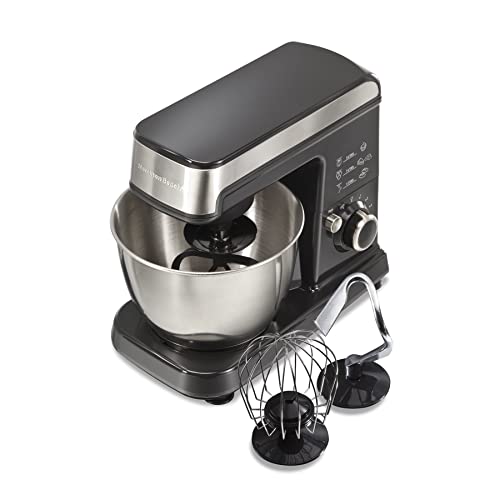
BAKE WITH EASE: Effortlessly mix thick batters and doughs for bread, cookies and more; With a 300 watt motor, this Hamilton Beach stand mixer will easily handle the ingredients for all your homemade baked goods from cupcakes and cookies to hearty bread
Batch Sizes: Matching Capacity to Your Operations
Matching your mixer’s batch size to your production needs involves considering usable dough capacity rather than just bowl volume. For planetary mixers, aim for 20–25% less than maximum load to ensure consistent mixing. For example, a 20-quart bowl typically handles about 6.6 to 40 pounds of dough depending on hydration levels. When working with bread dough, fill only 60–70% of the bowl volume to avoid overloading and to achieve optimal mixing. For achieving perfect cake results, choosing the right pan is equally important; ensuring the pan is properly greased and floured, much like using effective release tricks for bundt cakes, prevents sticking and preserves the cake’s shape. Exploring top attachments for your mixer can further expand its versatility.
Spiral mixers simplify capacity planning by clearly specifying the maximum dough weight per batch. If your operation regularly exceeds 40 pounds of dough, opting for a spiral mixer is advisable. Smaller bakeries with moderate batch sizes usually choose planetary mixers in the 5 to 80-quart range, suitable for small to medium batches. For higher volume production, spiral mixers can handle between 8 and 550 kilograms per batch.
Always translate your daily production volume into total batch weight and count. Including factors like loading time helps prevent bottlenecks and maintains efficiency. Proper capacity matching ensures your mixer operates smoothly without underusing or overstuffing it, directly impacting the quality and consistency of your baked goods.
Cost Comparison: What Commercial Kitchens Pay
The cost of commercial mixers varies widely based on the type and features, with the biggest factor being whether you choose a planetary or spiral design. Entry-level planetary mixers start around $770 and can go up to $1,600, making them accessible for smaller operations or those on a budget. Mid-range 30 to 40-quart models typically fall between $2,000 and $6,280. Premium planetary mixers from well-known brands like Hobart can exceed $20,000, primarily reflecting brand reputation and durability. For buyers seeking a more affordable option, Hamilton Beach models offer strong performance and value at a lower price point.
Spiral mixers generally begin at approximately $1,115 for compact units and can reach as high as $22,815 for high-end commercial models. The higher price reflects their specialized design for dough mixing, offering focused performance with less wear over time. Spiral mixers are more costly because they are built for dough-intensive tasks, while planetary mixers offer versatility at a lower entry price. Besides purchase price, keep in mind maintenance costs, which differ. Planetary mixers, handling multiple tasks, may experience increased wear, leading to more repairs. Spiral mixers, focused solely on dough, often require less maintenance overall.
Delivery fees and taxes can also significantly affect your final cost. Shipping large, heavy units might add hundreds or thousands of dollars depending on your location, so it’s essential to consider these additional expenses when budgeting for a commercial mixer.

INNOVATION DESIGN — It features a lever adjuster for easy raising or lowering of the bowl, which is more convenient and quicker compared to traditional wheel adjustments. Additionally, all components that come in contact with food, including the bowl, hooks, and rods, are made of food-grade stainless steel. These reliable components are rust-resistant, corrosion-resistant, and easy to clean.
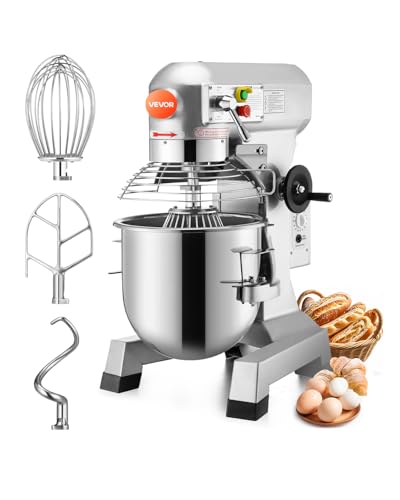
Versatile Machine: Our commercial stand mixer is equipped with 3 stirrers, including a dough hook, a flat beater, and a wire whip. The dough hook is used for smoother mixer operation and is ideal for pizza and other heavy dough. The flat beater is suitable for mashing potatoes or vegetables, mixing cakes, batters, or icing. The wire whip is widely applied in aerating light mixes such as whipped cream, egg white. These considerate accessories help you achieve the results you need for any recipe.
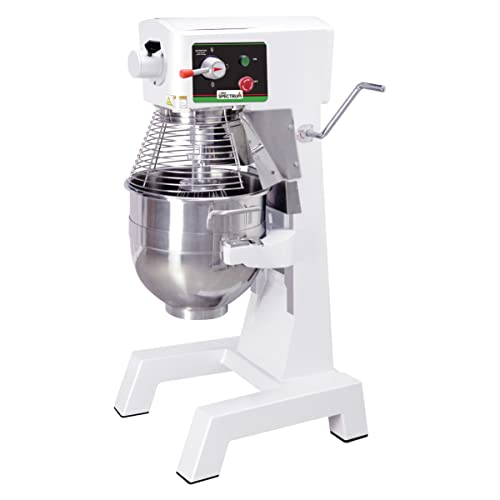
30 Liter – High capacity stainless steel mixing bowl features a safety guard and interlocking mechanism
5 Mistakes Buyers Make When Choosing a Mixer
Choosing a mixer based solely on advertised capacity can be a costly mistake. Many buyers assume the mixer’s maximum capacity matches their daily batch needs, but this is often misleading. If your actual production volume is lower, operating a large mixer at partial loads can lead to inefficient mixing, increased wear on components, and higher energy consumption. It’s essential to evaluate the real batch sizes you process regularly and select a mixer that matches those requirements, ideally capable of handling peak production comfortably without forcing full loads. This ensures better mixing efficiency, longer equipment lifespan, and lower maintenance costs.

High Capacity & High Efficiency: The maximum amount of dough is 3 kg/6.6 lbs/105.8 oz. Compared with other mixers, our 8.4-quart commercial mixer is perfect for large families and bulk baking. It eliminates the need for repetitive mixing. Powered by a robust 800W DC motor, durable metal gears, and 11 levels of speed settings, it ensures efficient, high-intensity kneading with ease.

NSF Certified for commercial use - whether you're mixing up batter or kneading a yeast dough, this mixer makes the process easier
INNOVATION DESIGN — It features a lever adjuster for easy raising or lowering of the bowl, which is more convenient and quicker compared to traditional wheel adjustments. Additionally, all components that come in contact with food, including the bowl, hooks, and rods, are made of food-grade stainless steel. These reliable components are rust-resistant, corrosion-resistant, and easy to clean.
Choose a Planetary Mixer If… Choose a Spiral Mixer If…
A planetary mixer is your best choice when your production involves cakes, batters, creams, icings, or meringues. It’s versatile, equipped with interchangeable attachments like whisks, paddles, and dough hooks, making it suitable for a variety of tasks. Variable speed controls allow you to adjust the mixing intensity easily, giving you precise control. This type of mixer handles small to medium batches efficiently and is ideal for detailed work where flexibility is important. Its design ensures good mixing results for softer or more delicate ingredients but may struggle with large dough batches or high-hydration recipes that require prolonged kneading. For bakers focused on smaller, precise tasks, understanding measuring spoon sizes is crucial for achieving consistent results with batters and creams.
A spiral mixer, on the other hand, is optimized for large-scale dough production, especially bread, pizza, or bagel doughs. It offers a gentle kneading action that develops the gluten structure without overheating the dough. This design allows for continuous processing of large batches without compromising dough quality. Spiral mixers excel with high-hydration recipes that need strong gluten development and consistent texture. They typically operate at slower speeds, reducing heat buildup and producing more uniform results. If your focus is primarily on bread or other dough-intensive products, a spiral mixer provides superior performance and consistency.