

If you’ve ever looked at Ateco piping tips and wondered what all those numbers mean, you’re not alone. Understanding their new numbering system can seem tricky at first.
But once you know the basics, it’s easier to pick the right tip for any project.
In this guide, you’ll learn how to decode Ateco’s tips, whether you want smooth swirls, stars, petals, or detailed leaves.
Keep reading, and you’ll have a clear map to find the perfect piping tip every time.
How to Decode Ateco Tip Numbers: Old vs. New Series
Decoding Ateco tip numbers involves understanding both the old letter system and the newer numeric codes. The old B series, which indicated certain shapes, has been replaced by the 860 series. Similarly, the CS designation changed to 840 for closed star tips, while S, representing open star shapes, is now 820. The plain round tips, previously in the P series, are now classified under the 800 series. For example, an old 1B tip corresponds to the new 861 tip, demonstrating that shape identifiers cannot be guessed based on the number alone. To accurately match tips across different systems, consulting a conversion chart is essential, especially during brand comparisons since many manufacturers use Ateco numbers as a standard. Remember to consider tip material as well, since stainless steel versions may have different durability characteristics. For example, choosing the correct tip is similar to finding the perfect fit for your KitchenAid mixer attachments, ensuring compatibility and performance. For baking, the material of your piping tips is just as important as choosing the right cookie sheet. Always verify both the series code and the shape description before baking to ensure you select the right tip for your needs. Regardless of the tip you choose, the pan you pair it with can affect your final bake, as a 9×13 pan often changes volume and rising behavior compared to a tube pan.

Item Package Dimension 5.9099999939718L x 3.7399999961852W x 1.0599999989188H inches


Product type :FOOD SERVICE SUPPLY
Plain Round Ateco Tips: 1–12 vs. the 800 Series
Plain round Ateco tips come in two main numbering families: the traditional 1 through 12 series and the modern 800 series. The 1–12 tips are tiny, very precise sizes ranging from 0.04 inches to 0.30 inches, making them ideal for detailed work like fine writing, small dots, or delicate accents. The 800 series starts at about 0.16 inches and goes up to approximately 11/16 inch, offering larger openings suited for filling, bold lines, and controlled flow of thicker icing. To keep these tips performing well, avoid harsh abrasives and instead use a soft sponge for gentle cleaning of baked-on residue. For stubborn residue, you can use a gentle cleaning method similar to freeing a stuck bundt cake from the pan. This approach can be adapted from techniques like soaking in warm water to loosen debris without damaging the metal.
Both tip families serve the same basic piping functions but are chosen based on the scale of your work. The 1–12 series excels at creating subtle textures and intricate details, while the 800 series is better for larger, more sweeping strokes or filling larger areas efficiently. Material-wise, the 800 series often features seamless stainless steel, which resists rust and offers durability. The 1–12 tips typically use traditional metal, which can be more prone to rust but is easy to work with for fine work.
Your choice depends on your project’s needs: opt for the 1–12 tips when precision and intricate finishes matter most, and choose the 800 series for easier handling of larger surfaces and bolder decorating.
Which Ateco Open Star Tips Create Big Swirls?
Open star tips that create big swirls include sizes like the Ateco 1M, 825, and 827. The 1M tip produces tall, bakery-style peaks, perfect for dramatic, high-volume swirls. The 825 and 827 have larger openings—7/16 inch and 9/16 inch respectively—that create oversized ridges and bold textures, building substantial volume quickly with each squeeze. These jumbo tips are ideal when you want a big, eye-catching swirl on your cake or cupcake. For safety during prolonged piping sessions, consider pairing these tips with heat-resistant gloves that protect hands when handling warm filling bags. Unlike a springform pan, which can leak custard bases, these piping tips work reliably with thick buttercream. For medium-large swirls with pronounced ridges but less bulk, consider the 826 and 828 tips. They offer a good balance, giving you textured patterns without the overwhelming size of the biggest options. To keep those large swirls sharp and well-defined, use firm buttercream, which holds ridges best. Smaller tips like the Ateco 14 or 16 work well for more controlled, delicate accents that provide contrast to the bold open star swirls. To prevent cakes from sticking when using these large swirls in a bundt pan, thoroughly grease the pan with a nonstick baking spray that includes flour.
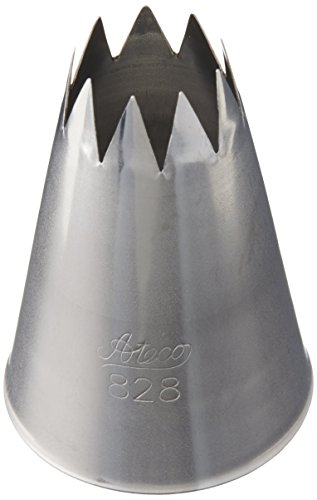
Sold as: Each . Manufacturer #: 828 .
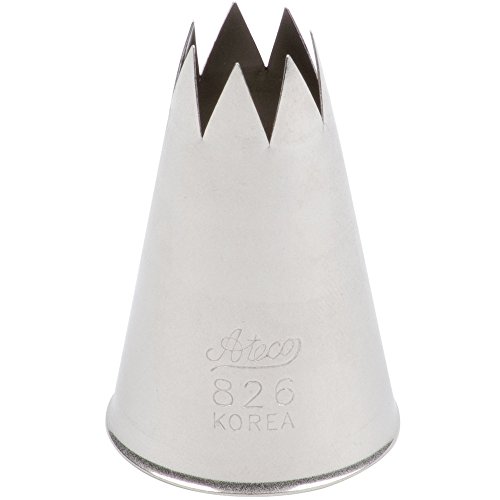

10-Piece star pastry tip set
Closed Star vs. French Star Tips: Key Differences
Closed star tips have a tighter opening that results in bold, deeply ridged stars, making them ideal for creating dramatic borders and striking rosettes. The Ateco 869 is a fine example of a French star tip, featuring a size 9 opening. In contrast, French star tips feature finer, more deeply grooved cuts, producing intricate, delicate grooves that lend an elegant and refined finish to your decorations. The main difference lies in the cut design: closed star tips deliver a substantial, classic look with defined ridges, while French star tips provide more precise, detailed textures suitable for delicate designs. Both types are made of stainless steel, so durability is comparable. Regarding color grading, closed star tips produce distinct, noticeable lines in buttercream, while French star tips blend shades more smoothly for a softer effect. When choosing between these tips for a recipe, consider that a bundt pan substitute may also require adjusting your piping technique for proper coverage. Referencing the full RFAQK piping tips chart can help identify which specific tip numbers correspond to each style. Your choice depends on whether you want bold impact or fine detail in your piping work. For bakers who also use specialty pans, the durability of stainless steel ensures these tips will not rust or bend during repeated use.
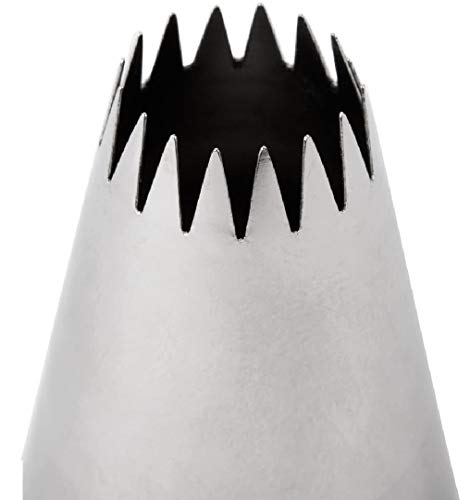
Item Package Dimension 4.199999995716L x 2.7999999971439995W x 1.49999999847H inches

Item Package Dimension 4.649999995257L x 1.4199999985516W x 1.1799999987964H inches

Petal, Leaf, and Specialty Flower Ateco Tips
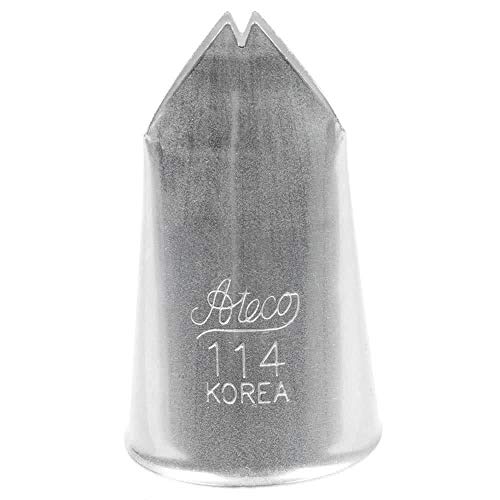
Petal, leaf, and specialty flower tips each have a distinct visual purpose. Use a teardrop-shaped petal tip, like the Ateco 104, to create realistic roses, ruffles, or bows. A V- or W-shaped leaf tip, such as the 352, is designed to give leaves natural-looking veins and pointed edges. To craft a realistic flower petal, apply consistent pressure with a thin-to-thick stroke, gradually increasing the amount of pressure as you pipe. Leaf veining appears naturally when using the 352’s V-shaped opening, which produces pointed foliage and filler greenery. Specialty flower tips, such as the deep-cut 8-point star (Ateco 853), are ideal for making stars, scrolls, and molded blossoms. The Ateco Russian tube set (241–247) offers layered, molded floral shapes for diverse decorating options. For a deeper understanding of which brands excel in overall quality and performance, you might consult expert reviews that compare KitchenAid mixers with stand models. Petal tips are typically numbered in the 100–150 range, leaf tips in the 300 series, and specialty tools are grouped separately. Compatibility depends on your piping bag size and coupler, not just the tip number, so always check that they fit your equipment before use. Made of stainless steel, the Ateco 104S is dishwasher safe and manufactured in South Korea. These piping tips work well for decorating cakes, though for tall, airy cakes you would need a pan with a removable center tube to ensure even baking. Even when piping intricate flowers, ensuring proper pan prep with parchment prevents delicate decorations from sticking to the baking surface.


Basketweave and Texture Tips for Unique Effects
To create woven textures and structured patterns on cake sides, use basketweave tips such as the Ateco No. 44, 45, 47A, or 48. These tips have a two-sided design: one smooth edge for ribbon-like lines and one toothed side for braided strands. Alternating between these sides allows you to build classic basket patterns with textural contrast. The No. 44 has a 0.27-inch opening, ideal for fine detail, while the No. 45 features a larger 0.42-inch opening for covering broader surfaces more quickly. The No. 48 is thinner, perfect for delicate stripes or small, compact cakes. For those who prefer baking their cake base in a square pan, it can provide level edges that are easier to decorate consistently with these basketweave patterns. These stainless steel tips provide sharp, crisp lines, making them perfect for creating rustic or structured surface effects. Applying consistent pressure with a straight tip placement ensures clean, precise results. Use these tips mainly for surface patterns rather than raised or three-dimensional shapes. For tasks requiring broader coverage, consider pairing these tips with a hand mixer fitted with flat beaters for smooth, even mixing. Decorative accents like smooth borders or woven panels can further enhance your textured designs. A quality bundt pan can also provide a complementary shape for showcasing these basketweave patterns.
Which Ateco Tips Fit Standard Couplers?
Standard couplers like the Ateco 400 fit small-base piping tips with a bottom diameter of roughly 11/16 inch. You’ll find this compatibility with the Ateco 407 seven-piece set too. These couplers allow you to swap tips without emptying the piping bag, making tips cleaning and storage more efficient since you can change designs quickly. The Ateco 40717 set includes a universal coupler system that eliminates the need for multiple bag sizes. Just as proper pan prep prevents cookies from sticking, ensuring your tip fits snugly on the coupler prevents leaks during piping. To keep your equipment in top shape, remember that heat exposure can damage plastic couplers, so never leave them near a hot oven or dishwasher cycle. Stick to small-base tips, such as the Ateco 6 or 12 plain rounds, for a perfect fit with these couplers. Avoid medium or large tips, as they have bigger bases and won’t work with these standard couplers. Always check the product page for the exact base diameter before purchasing. If it measures about 11/16 inch, it will fit. Using standard couplers like these simplifies your piping workflow, saving you time and fuss.


All In One Kit: 12 Russian flower nozzles, two leaf nozzles, two couplers, 30 disposable pastry bags and one reusable silicone bag; supplies and tools for cake, cupcake and cookie projects

Stable & Organized: The piping bag stand provides a stable base for securely holding your pastry bags, while the 8 nozzle slots neatly organize your cake decorating supplies, making it easy to access your icing tips while working.
Ateco Tip Cheat Sheet: Shape, Number, and Best Use
Once you know which Ateco tips fit your couplers, the next step is matching each tip’s shape and number to your intended use. Round tips numbered 800 to 809 are versatile, with smaller numbers like 1 or 00 providing precision for lettering or intricate details. Larger round tips, such as 806, are better for flooding large areas with smooth outlines. For example, a 13mm tip is commonly recommended as a single versatile essential for general piping tasks. Open star tips, numbered 820 to 829, produce textured swirls; tip 827 particularly excels at creating cupcake mounds, making it ideal for decorating with flavors like vanilla and chocolate. Closed star tips, numbered 846 to 849, create tighter ridges that result in dramatic borders. For decorating techniques, petal tips numbered 59 and 60 shape ruffles and petals, while leaf tips craft foliage. Specialty tips like drop flower tips can be used to create small blossoms. Keep in mind that within Ateco families, smaller numbers mean smaller openings, so choose your tip size according to the detail or volume you need for your design.