

If you’re wondering how to get that perfectly square, evenly baked loaf, a Pullman loaf pan might be just what you need. It’s a rectangular pan with straight sides and a removable lid that shapes your bread into a clean, uniform form.
Whether you want thin crusts or a soft crumb, knowing how to use this pan will help you achieve consistent results every time. Keep reading to learn all about it.
What Exactly Is a Pullman Loaf Pan?
A Pullman loaf pan is a rectangular baking pan measuring approximately 13 inches long by 4 inches wide and 4 inches high. Its design includes straight sides and a removable sliding lid, which allows you to bake a loaf with a perfectly square shape and flat top. The pan is usually made from aluminized or thick-gauge steel to ensure even heat transfer across the dough. It is specifically intended for baking dough, not batter-based recipes like cakes or muffins. When using it, make sure the lid is securely in place to achieve that characteristic boxy top. For cleanup, non-stick coatings can make the process easier, but hand washing is recommended to preserve their condition. Some versions feature ridges or perforations that improve airflow and help prevent sticking. Without the lid, you can still bake traditional rounded loaves, but the distinctive square shape comes from using the complete Pullman pan. For those looking to mix dough efficiently, Kitchenaid mixer attachments can help streamline the process. Similar to improvising with a DIY piping bag nozzle, home bakers can also experiment with alternative pan materials for cost-effective results. A stainless steel bowl mixer offers superior durability and even blending for consistent dough preparation.
How a Pullman Pan Transforms Your Bread
Because the lid and box walls force the dough to rise into a tidy rectangle, your loaf will have perfectly square, clean-edged slices. The covered environment creates a thinner, softer crust since the heat is contained, making it ideal for sandwiches. The constrained rise results in a fine-grained, even crumb with a firmer interior structure compared to free-form loaves. This uniform shape ensures consistent thickness from end to end, supporting precise baking techniques. Use a variety of flavor combinations, from seeded whole wheat to rich brioche, and proof the dough to about 60–70 percent of full rise. Be mindful that baking times may need adjustment to prevent sticking. For troubleshooting a sticky release, it helps to follow troubleshooting tips similar to those used for crochet projects when yarn tension goes wrong. The payoff is a repeatable, soft-crusted bread perfect for French toast or Texas toast, with no domed tops and perfectly stackable slices. To keep the pan in top condition, use gentle cleaning methods that avoid abrasive scrubbers, similar to caring for nonstick bakeware. If you don’t have a standard tablespoon measure on hand, you can rely on common kitchen equivalents to portion wet ingredients accurately before adding them to your dough.
Where the Pullman Pan Got Its Name
The Pullman pan got its name from the American Pullman Company, which designed the pan specifically for making uniform loaves suited for train travel. Although the name is American, the pan’s design actually has European roots that go back even further. French bakers used similar lidded pans for pain de mie as early as the 18th century. The term “Pullman” became associated with the pan in the United States because it evoked images of efficient, neatly sliced bread ideal for passengers on long journeys. The name stuck, creating a practical shorthand that links the concepts of travel and convenience. So, when you use a Pullman pan today, you’re drawing on a European baking technique, but with an American label that highlights its historical ties to travel and efficiency. Unlike silicone baking mats, Pullman pans are safe for the oven at high temperatures without any risk of melting or deformation. Unlike KitchenAid mixing bowls, which have manufacturer-specific microwave safe guidelines and material limits, the Pullman pan is designed exclusively for oven use. For those who prefer a more hands-on approach, you can even build a DIY Dough Hook at home to save money on mixing tools.
The Best Breads for a Pullman Loaf Pan
The best breads for a Pullman loaf pan are those that benefit from its square shape and enclosed baking environment. Classic pain de mie or soft white sandwich bread are ideal choices because the pan promotes even rising and results in a fine, tender crumb. Enriched doughs like milk bread also flourishes here; the pan’s lid prevents doming and helps produce a uniform loaf perfect for sandwiches. Sourdough works well too, especially if you ferment it overnight with a cold retard to enhance flavor and develop structure for a longer bake. Understanding how a gram looks on a scale helps you measure ingredients accurately for these enriched doughs. Whole wheat blends can be baked successfully in a Pullman pan as well, but proper shaping is essential to avoid a dense crumb. Always shape your dough into a tight log, seam side down, to maintain the loaf’s shape during baking. When baking, ensure the internal temperature reaches between 195 and 210°F. This guarantees the bread is fully baked and yields a square, evenly textured slice.
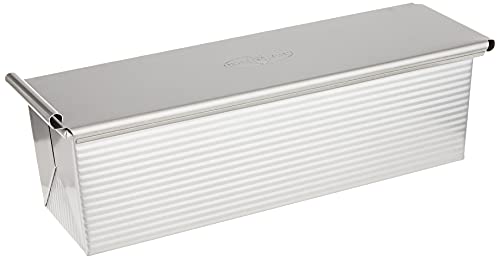
USA Pan baking pans feature Americoat which promotes quick release of baked-goods plus fast and easy clean up; wash with hot water, mild soap and gentle scrub brush or sponge

Three sizes of multi-functional baking bread POTS, suitable for different scenarios, no waste at all, come with 5 additional tools: 3 scraper, 1 brush, and 1 spatula

Medium Pullman loaf pan has a cover and consistently bakes beautiful bread commercial grade and heavy gauge aluminized steel with a Lifetime
Pullman Pan Sizes: Which One Should You Choose?
The 13x4x4-inch pullman pan is the standard choice for most home bakers. It can hold around 2 pounds of dough, making it suitable for typical bread recipes. This size provides a good balance between loaf height and length, resulting in a traditionally shaped pullman loaf with evenly distributed heat and consistent browning. When selecting this size, ensure your recipe’s dough weight aligns to prevent overflow or underfilling. Always verify the dimensions and capacity since manufacturers may label sizes differently. Choosing the right size helps achieve uniform baking results and a pleasing final loaf. This pan’s commercial-grade aluminized steel construction ensures even heat distribution for reliable, consistent browning across the entire loaf. For those seeking a different shape, a bundt pan offers a decorative alternative for cakes with a distinct ring design. To properly mix the dense dough required for a pullman loaf, using a KitchenAid dough hook is highly recommended for efficient kneading. When comparing options, consider the best loaf pans for sourdough bread to review top-rated picks that meet your baking needs.

【PERFECT LOAVES EVERY TIME】Bake like a pro with our extra-long Pullman loaf pan, perfectly sized for 2.2LB dough. Measuring 12.59 * 4.72 * 4.64 IN (exterior) and 12 * 4.33 * 4.64 IN (interior), it’s ideal for family-sized sandwich loaves or weekly bread prep. From sandwich bread to brioche, every loaf comes out with straight sides, a soft center, and a golden crust. The sliding lid helps the bread rise evenly and creates that classic square shape—making this pullman pan a must-have kitchen tool and a thoughtful gift for any home baker.
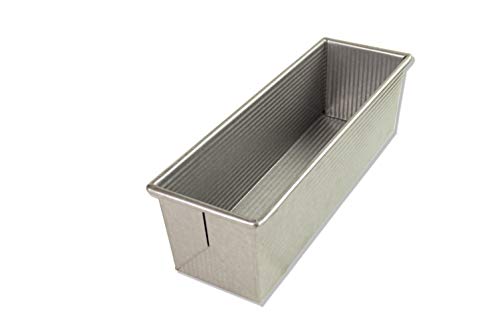
Large Pullman loaf pan bakes beautiful bread; commercial grade and heavy gauge aluminized steel with a Limited Lifetime

PURELY NATURAL & FOOD-SAFE: Crafted from unbleached wood pulp, our parchment paper is free of BPA and fluorescent agents—safe, waterproof, and 100% food-grade.
Using Your Pullman Pan With or Without the Lid
Whether you bake with the lid on or off depends entirely on the shape and texture you want. When you use the lid, you create a perfectly square, uniform loaf with a soft, tight crumb—ideal for pain de mie and thin sandwich slices. To achieve this, proof the dough just below the lid and bake at a moderate temperature until the internal temperature reaches between 190°F and 210°F. Without the lid, the loaf develops a domed, rustic top with more browning and a less compressed crumb. For consistent results, a Kitchenaid Mixer Professional 5 Plus can handle the dense dough needed for these loaves. Unlike springform pans, which are designed for delicate cakes and cheesecakes, a Pullman pan is engineered for high-hydration doughs and tight sandwich loaves. When choosing your equipment, note that 8 inch and 9 inch cake pan performance varies for different recipes, but a Pullman pan offers unique square loaf precision.
For flavor variations, you can switch up your flour or add herbs to the dough. To store your bread properly, remove it from the pan soon after baking to prevent soggy sides. Be sure to grease both the pan and the lid well to avoid sticking, especially when baking with the lid on.
What Should You Look for When Buying a Pullman Pan?
Finally, check the lid fit. It should slide on smoothly without sticking and secure tightly to prevent air from entering or escaping. A well-fitted lid ensures your loaf cooks evenly and maintains its shape. Look for lids that sit flush against the pan’s edges without gaps, as this can affect the texture and rise of your bread. Additionally, a corrugated interior can help with easy release, making it simpler to remove your baked loaf without sticking. Sturdy construction is essential for durability, so choose a pan built to withstand repeated use without warping or wearing down. For those seeking optimal heat retention and crust quality, cast iron bread loaf pans are a top choice among bakers. These pans also pair well with a high-performance stand mixer to handle dense doughs with ease. Precise weight measurements are just as important for consistent baking results as choosing the right pan.

Even Heat for Better Rise: The Lodge Seasoned Cast Iron Loaf Pan provides even heat distribution that helps breads and cakes rise well while baking evenly
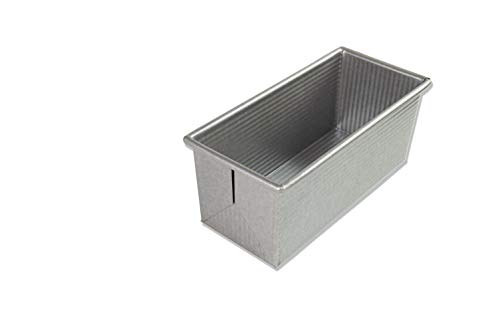
Small Pullman loaf pan consistently bakes beautiful bread; commercial grade and heavy gauge aluminized steel;Pan measures 9 x 4 x 4 inches

Versatile Cast Iron Construction: This bread pan's durable cast iron construction ensures even heat distribution, making it ideal for baking a variety of breads, including sourdough, sandwich loaves, and mini loaves.
How Much Dough Does a Pullman Pan Hold?
A Pullman pan can typically hold between 750 and 1,200 grams of dough, depending on its size. For example, a 9x4x4-inch pan accommodates about 750 to 850 grams of dough, while a larger 13x4x4-inch pan can handle roughly 1,100 to 1,200 grams. Smaller pans, like a 1-pound version, work well with 450 to 500 grams. When filling your pan, start on the lower end of the suggested dough amount to prevent overfilling. Aim for the dough to fill the pan halfway to two-thirds before proofing, ensuring proper rise and good crust development. After baking, always place the hot pan on a cooling rack that is safe for oven use to prevent damage to your countertop.
Pullman Pan Tips for Perfect Square Loaves
To achieve that square loaf shape, proof your dough so it sits just below the lid rim of your Pullman pan—about an inch of clearance before baking. This ensures the top presses evenly against the lid, giving you clean corners and a flat surface. Shape the dough into a tight log, slightly shorter than the pan, with the seam side down to keep it secure. Be sure to grease every interior surface thoroughly, especially the corners and the lid, to facilitate a smooth release once baked. Bake with the lid on to help set the shape, then remove it near the end for browning. Cooling the loaf completely before slicing preserves its structure and makes storage easier by preventing moisture loss. For decorative touches, try scoring patterns or adding seed toppings after removing the lid. This first-time use of the loaf pan confirms that the pullman pan produces a perfectly square loaf when these steps are followed.
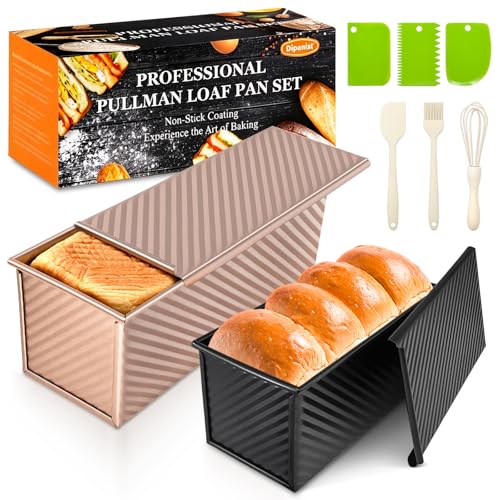
【Bakery-Style Pullman Bread at Home】 Create perfectly shaped square loaves with this pullman loaf pan with lid. Designed for sandwich bread, shokupan, pain de mie, and sourdough sandwich loaf pan recipes, the sliding lid helps create uniform slices with a soft interior and golden crust. Includes 2 sizes: 2.2 LB and 1 LB dough capacity for different baking needs.
Common Pullman Pan Mistakes and How to Avoid Them
To get the perfect Pullman loaf, avoiding common mistakes is essential. Start by carefully weighing your dough. Overfilling the pan causes blowouts and mushroom tops, while underfilling results in flat, dense loaves. During shaping, pay attention to your folding techniques; poor structure here can lead to weak expansion and uneven crumb. Don’t rely solely on timing for proofing—over-proofed dough collapses, and under-proofed dough bakes up gummy. When using the lid, remove it a few minutes before the baking time ends to help the top firm up. If the top browns too quickly, tent the loaf with foil. After baking, turn the loaf out promptly to release trapped steam and prevent a soggy crust. Finally, cool the bread completely before slicing to avoid a gummy interior.

Two Pullman loaf pans with sliding lids make square sandwich bread at home. Includes 13x5 and 8.4x4.8 inch sizes for large and small bread recipes. Aluminized steel...