

Ever wondered how to measure ingredients precisely in the kitchen? Measuring cups are your best friend for getting the right amount, whether you’re working with dry solids like flour or liquids like milk.
Using the proper cup and technique helps ensure your recipes turn out just right every time. The full story on choosing and using them properly is just below.
What Exactly Is a Measuring Cup and Why Does It Matter?
A measuring cup is a kitchen tool designed to measure volume accurately, typically in cups, ounces, or milliliters. It’s essential in ensuring that the quantities of ingredients are precise, which is especially important in baking and delicate recipes. When you pour water or scoop flour into a measuring cup, its job is to deliver a consistent amount every time, reducing guesswork and helping your recipes turn out as intended. Similarly, precise measurements are just as vital when using KitchenAid mixer attachments to ensure consistent mixing results for different doughs or batters.
Measuring cups come in various materials such as glass, plastic, or metal, often with a handle and spout to make pouring liquids easier. They aren’t just for cooking; you can also use them to portion household products like laundry detergent or bleach, helping with organization and controlling usage.
Using a measuring cup guarantees measurement accuracy, which is crucial for replicable results. For instance, using the correct amount of flour or sugar affects the texture and structure of baked goods. Without precise measurement, you’re more likely to end up with inconsistent and sometimes ruined dishes. Invest in a good measuring cup to ensure your cooking and baking outcomes are reliable every time.
Measuring Cup Sizes: Common Sets and Conversions
A standard dry measuring cup set usually includes 1 cup, 1/2 cup, 1/3 cup, and 1/4 cup. Some sets also offer 1/8 cup and 1/16 cup for more precise conversions. Understanding these sizes is key to accurate baking and cooking. Remember, 1 cup equals 16 tablespoons or 48 teaspoons. For more precise measurement of tricky fractions, note that 1/3 cup is equivalent to 5 tablespoons plus 1 teaspoon, while 3/4 cup equals 12 tablespoons. Cultural differences matter too—U.S. cups are approximately 237 milliliters, whereas metric cups are usually 250 milliliters. This small difference can affect the outcome of your recipe. For liquid ingredients, use liquid measuring cups in 1-cup, 2-cup, or 4-cup sizes. Keep these separate from dry measuring cups to avoid inaccuracies; stick with nested dry cups for dry ingredients to ensure consistent results. Proper prep prevents sticking through careful fitting and folding of the paper into the pan. For mixing tasks, a stainless steel bowl on a mixer stand offers superior durability and even heat distribution. When choosing a set, look for ones with clear markings and sturdy handles to ensure long-lasting accuracy.
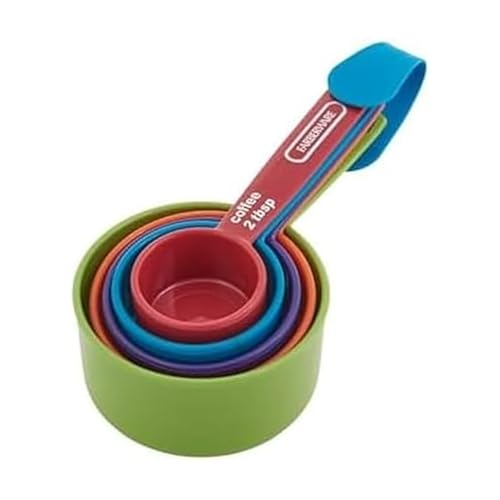
COMPLETE MEASURING SET: Includes 1/4 cup, 1/3 cup, 1/2 cup, and 1 cup measurements plus bonus coffee scoop (2 tablespoons). Perfect for both wet and dry ingredients. Clearly marked measurements for precise cooking

1/4, 1/3, 1/2, and 1 cup measurements

FOUR-PIECE SET: includes 1/4, 1/3, 1/2, and 1 cup size
How to Measure Dry Ingredients Accurately
To measure dry ingredients accurately, use a combination of dry measuring cups and measuring spoons. The scoop-and-level method is essential: spoon flour or oats into the cup until it is heaping, then sweep a straight-edged tool across the rim to level it off. Avoid scooping directly from the bag, as this compresses the ingredient and leads to inconsistent measurements. For brown sugar, pack it firmly into the cup so it maintains its shape, ensuring an accurate amount. Stir baking powder or baking soda before measuring to break up lumps, which helps with precise leveling. A level measurement ensures the right ratio of ingredients; piling on top adds extra volume and skews results. Keeping your tools clean helps prevent cross-contamination, and using gentle cleaning methods on silicone measuring cups can avoid residue buildup. Using a digital scale to weigh ingredients can improve precision by eliminating volume variability. For the most precise measurements, especially with small quantities, use a kitchen scale when weight is specified—it’s always the most accurate option. Always check that your measuring spoons are labeled with standard sizes such as tablespoon and teaspoon to ensure correct proportions in recipes. For similar precision, placing the cooling rack in the right spot allows heat to escape evenly and prevents warping.

PERFECT DESIGNED TO LAST A LIFETIME: Our measuring cups and spoons are all made out of one piece of metal so the handles will never bend or break off. We upgraded the material to rust resistant & durable 18/0 stainless steel and thickened the cup body to avoid cracking, easy to clean and dishwasher safe.
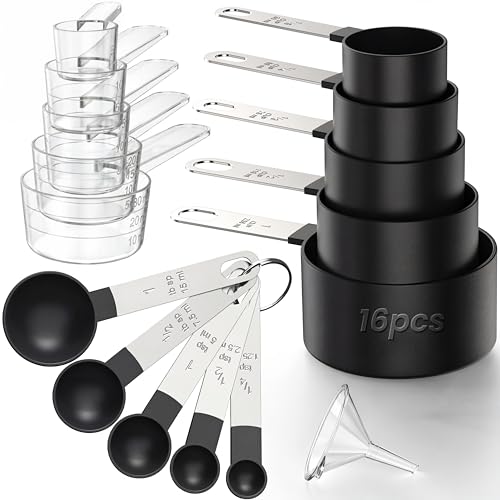
16PCS SET: Including multiple sizes, including 1cup, 1/2cup, 1/3cup, 1/4cup, 1/8cup, 30ml, 20ml, 15ml, 10ml, 5ml, 1tbsp, 1/2tbsp, 1tsp, 1/2tsp, 1/4tsp, and 1 funnel

Complete 8 Piece Dry Measuring Cup Set Stainless steel 8 piece dry measuring cups set covers 1/16 to 1 cup sizes for dry flour sugar powder and coffee, perfect for home baking and cooking needs
Measuring Liquids Correctly: Spouts, Lines, and Eye Level
To get a precise liquid measurement without guesswork, follow proper techniques and use the right tools. Start with a clear, graduated liquid measuring cup that has a spout and a wide opening. These features make pouring more accurate and help reduce drips. Always place the cup on a flat surface before adding the liquid to ensure stability.
Pour the liquid slowly, stopping just below the desired level. Avoid overfilling to prevent spills. Once you reach the approximate mark, bend down so your eyes are level with the measurement line. Looking from above or below causes parallax error, which can skew the reading. For clear liquids, focus on the bottom of the meniscus—the curved surface of the liquid—and align it precisely with the fill line. Use the transparent sides of the cup to see the meniscus clearly. Never rely on the rim of the cup as a reference point; instead, focus on the lines below it. With steady hands and eye-level positioning, your measurements will be accurate each time. Small measurement errors can affect recipe success, so accuracy in baking relies on this technique. Similarly, when using a jelly roll pan, its specific dimensions ensure that batter spreads evenly for consistent results. For larger mixing tasks, a stand mixer provides the consistent power needed to handle heavy batters and doughs. A springform pan is also useful for recipes that require easy removal, thanks to its removable base and clamp-side design.

PRECISELY MEASURE AND POUR with the Fox Run easy pour 3.5 cup measuring cup with funnel spout; This pitcher features a unique pour spout design that brings incredible convenience to cooking and baking


Clear plastic for durability and ease of measuring
Why Dry and Liquid Cups Aren’t Interchangeable
Dry and liquid measuring cups aren’t interchangeable because they are designed for different ingredients and measurement techniques. Dry cups work by scooping and then leveling off solids like flour or oats, which requires a flat rim for accuracy. This design ensures precise measurement by allowing you to scrape off any excess after filling. Liquid cups, on the other hand, have spouts and marked fill lines so you can read the meniscus at eye level, ensuring an accurate measurement of water, oil, or other liquids.
Pouring liquid into a dry cup can obscure the measurement line and cause overflow due to surface tension. Conversely, filling a liquid cup with dry ingredients can lead to unevenness and compaction, which affects the measurement. Dry ingredients tend to settle differently and need to be leveled; liquid cups are not built for scooping or leveling. Using the wrong type of cup can lead to hidden errors that affect the entire recipe, ruining your desired texture or hydration levels. For best results, always use the appropriate cup designed for the ingredient you’re measuring. For mixing tasks, a set of Pyrex mixing bowls with lids offers durable glass construction that allows you to see measurement lines clearly and seal leftovers securely.
Plastic, Glass, or Metal: Choosing the Right Material
Stainless steel is the best choice for durability. It resists stains, odors, and corrosion, making it suitable for handling dry ingredients and frequent use. Glass offers excellent heat resistance and won’t warp or absorb smells, but it’s fragile and can break easily. Plastic is lightweight and inexpensive but can crack under high heat and retain odors over time.
Aesthetic preferences also influence your decision. Clear glass or plastic makes it easy to see liquid levels, which is helpful when measuring liquids precisely. Metal, especially stainless steel, has a sleek look that fits well in heavy-use kitchens. Overall, glass and stainless steel tend to last longer both in appearance and structural integrity. Choose plastic if you want a low-cost, break-resistant option, glass for heat and liquid measurements, or metal for tough, long-lasting durability.

[Upgraded with OZ, ML, Cup Measurement Scales] Easy to Use: The measuring scales (lines) on the inside of the cup are easy to read and have units for OZ, ML and Cup. The ounce marks run from 4 oz to 16 oz in 4 oz increments. The liter marks run from 100 ml to 500 ml in 100 ml increments. The cup marks run from 1/4 cup to 2 cups in 1/4 cup increments.

【PERFECT DESIGNED TO LAST A LIFETIME】: Our measuring cups and spoons are all made out of one piece of metal so the handles will never bend or break off. We upgraded the material to rust resistant & durable 18/0 stainless steel and thickened the cup body to avoid cracking, easy to clean and dishwasher safe.

[Multiple Sizes]: Including 4 Measuring cups ( 1/4, 1/3, 1/2, 1 cup), 6 Measuring spoons (1/8, 1/4, 1/2 , 1 tsp, 1/2, 1 tbsp). Meet All Your Needs On Cooking And Baking
Fixing the Most Common Measuring Mistakes
Using the correct measuring technique is crucial, regardless of how high-quality your ingredients are. Match your measuring tools to the ingredient type. For dry ingredients like flour and sugar, use dry measuring cups, filling them to the rim and then leveling off with a straight edge to ensure accurate volume. When measuring liquids, opt for a see-through measuring cup, place it on a flat surface, and read the measurement at eye level to avoid parallax errors. Avoid scooping flour directly from the bag, as this compresses the ingredient and can lead to too much being measured. Instead, spoon the flour into the measuring cup and level it off. Don’t tap or shake dry cups, as this packs the ingredients down and increases the amount measured. For sticky ingredients like honey, lightly oil the measuring cup beforehand to help the material slide out easily. Similarly, choosing the right loaf pan for sourdough can also impact your baking results. For serious accuracy, many bakers prefer using a digital food scale to weigh ingredients directly, eliminating volume-based errors entirely. These precise measuring methods help prevent volume errors and lead to consistent results every time. Always use a straight edge like the back of a knife to scrape across the rim for a perfectly level measurement.

MULTIPLE SIZE:Including 5 Measuring Cups , 1Cup/250ml ,½ Cup/125ml, ⅓ Cup/80ml, ¼ Cup/60ml, ⅛ Cup/30ml ,marked on handle.Meet All Your Needs For Cooking And Baking.

[Multiple Sizes]: Including 5 Measuring cups (1/8, 1/4, 1/3 , 1/2 , 1 cup), 5 Measuring spoons (1/4, 1/2 , 1 tsp, 1/2, 1 tbsp). Meet All Your Needs On Cooking And Baking.
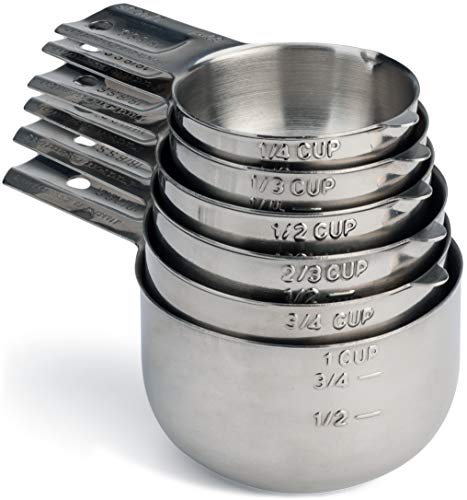
Complete set of six: includes 1/4, 1/3, 1/2, 2/3, 3/4 and 1 cup premium stainless steel measuring cups