

Ever wondered how to get precise measurements with your food scale? A little setup and proper use can make a big difference in accuracy.
By the end of this, you’ll know how to set up your scale correctly and use it effectively for smooth, reliable results.
Keep reading to see how to get the most out of your Etekcity Food Scale.
How to Set Up and Zero Your Etekcity Food Scale Every Time
Before weighing anything, place your Etekcity Food Scale on a flat, hard surface and remove any packing materials. Ensure the batteries are installed correctly and that the battery cover is secured tightly. Turn on the scale by pressing the power button, but wait to place items on it until the display stabilizes at 0.00. If it doesn’t read zero, press the Z/T or ZERO button to calibrate the scale to an empty state. Doing this ensures your measurements are accurate. Keep the surface clean and dry for consistent results. Re-zero the scale every time you move it or notice any drifting. To tare, put your empty bowl or container directly in the center of the scale, wait for the weight to register, then press the tare button to reset the display to zero. Once confirmed at zero, add your food for precise weighing. A stuck bowl can similarly be fixed by applying even pressure and lubrication to release the mechanism. For consistent accuracy, choose a scale with proven quality and performance. You might also consider crafting a custom bundt pan if you prefer homemade baking tools over store-bought options.

𝗘𝗳𝗳𝗼𝗿𝘁𝗹𝗲𝘀𝘀 𝗪𝗲𝗶𝗴𝗵𝗶𝗻𝗴: Supports 5 units (oz/lb:oz/fl'oz/g/mL), tare function, and includes 2 AAA batteries for hassle-free operation

Digital kitchen scale with food-safe, BPA-free plastic components
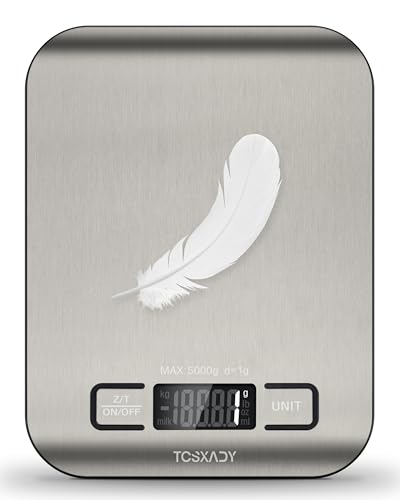
【Versatile Measurement Mastery】Tcsxady food scale supports 6 units (g/kg/lb/oz/ml/milk ml) for baking, meal prep, or liquid tracking. Optimized for recipes requiring precise conversions, it replaces guesswork with quick-tap unit switching. Ideal for food scales for kitchen enthusiasts prioritizing flexibility.
Select Grams, Ounces, or mL on Your Etekcity Food Scale
Always double-check the display after cycling through units, as the placement of the units may vary depending on your model. Stick to the correct unit for accurate measurements: use grams for baking, ounces for imperial recipes, and milliliters for liquid ingredients. You don’t need a separate button for changing units; all adjustments are made with the same UNIT key. For precise baking, you may also want to use the best circle cake pans to ensure even heat distribution and consistent results. To keep your scale performing well, follow the Silpat mat care guidelines for wiping down the surface after each use. The scale’s tempered glass construction ensures durability and easy cleaning after measuring liquids. For roasting larger cuts of meat, consider using a roasting pan with rack to elevate the food and improve air circulation.

𝗬𝗼𝘂𝗿 𝗛𝗲𝗮𝗹𝘁𝗵 𝗘𝘅𝗽𝗲𝗿𝘁: Easily track your intake of up to 19 nutrients, monitor trends, create daily, weekly and monthly nutrition reports and more by connecting to the free Vesync app, Apple Health and Fitbit

𝗠𝗮𝘅 𝗖𝗮𝗽𝗮𝗰𝗶𝘁𝘆: Weigh objects as heavy as 22 lb/10 kg and as light as 2 g in increments of 1 g

High-Precision: Minimum Measurements: 1 g. Upgraded sensors offer instant readings and reliable measurements for items. Unique Dual Increments: <1000 g, 0.1 g; 1000-5000 g,1 g
Use the Tare Button on Your Etekcity Scale for Container Weighing
The Tare button is a crucial feature because it subtracts the container’s weight from your total, allowing you to measure only your ingredients. Once your container is centered on a stable surface, press the tare button before adding anything. This resets the scale to zero, so when you add flour, sugar, or liquids directly into the container, the display shows only the weight of those ingredients. If the reading drifts after taring—perhaps due to an unstable surface or movement—simply remove everything, clear the scale, and press tare again. This quick step makes it easy to add multiple ingredients one after another without cluttering your workspace with extra dishes or bowls. For best precision, ensure the scale is placed on a stable surface like a baking rack resting securely on a countertop. The scale also supports five units of measurement for versatile use in different recipes. For bakers using loaf pans, the tare function is similarly essential for measuring dough ingredients directly into a best loaf pan without dirtying extra bowls. Understanding how to reset the scale to zero with the tare button eliminates the need for manual subtraction of container weight.

【PRECISE WEIGHT】 The digital food scale built-in four high-precision load sensors, quickly and accurately response 1g or 0.1oz increments when adding ingredients, its measuring range: 0.1oz to 22 lbs and 3g to 10kg(Min. weigh at 0.1oz or 3g).

30 lb Heavy-Duty Capacity: Measure large roasting pans, heavy Dutch ovens, and full mixing bowls without dividing portions or guessing weights.

Contemporary Slim Design: Made of Stainless Steel Material; It is easy to use and clean; Provides accurate weight data with a user-friendly control panel and system; With high precision sensors to ensure correct performance and readouts
How to Avoid Overloading Your Etekcity Food Scale
To avoid damaging your Etekcity food scale, stay within its posted capacity—typically 11 pounds or 5,000 grams for standard models. Always watch for overload warnings like “EEEE” or “Err,” and remove the item immediately if they appear. Maintain a safety margin below the maximum limit, especially when weighing items whose final weight you are uncertain about. Remember to subtract the weight of your container, as heavy bowls can quickly consume your usable capacity. For larger loads, consider switching to a scale with a higher capacity. Proper calibration depends on weighing within the correct range; never force the scale past its limit. Regularly clean the sensors to ensure consistent readings, and avoid weighing debris or items that could cause overload errors. When handling dense ingredients, batch them into smaller portions to stay within safe limits. The sensors are delicate, and exceeding the capacity risks permanent damage, which can ruin future calibrations. Always verify your specific model’s capacity on its label before you start weighing. For managing different kitchen tasks, a similar Kitchenaid mixer attachment may help distribute heavy loads across separate tools. Using the bowl as a cover when not in use also protects the scale from debris.

𝗕𝘂𝗶𝗹𝘁 𝗳𝗼𝗿 𝗕𝘂𝗹𝗸 𝗖𝗼𝗼𝗸𝗶𝗻𝗴 & 𝗣𝗿𝗲𝗽: This high-capacity kitchen scale weighs up to 22 lb (10 kg) with 1 g precision, ready for meal prep, holiday baking, sourdough, or grilling. Not for laboratory or microgram measurements.
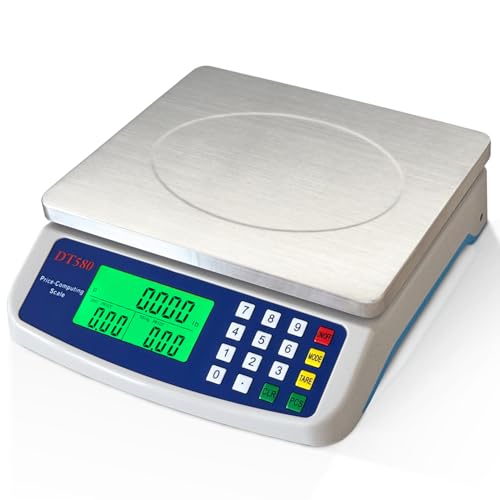
High Capacity and Accurate: Up to 40kg/88lb Wide Range - The precision food scale is equipped with an upgraded high-sensitivity build-in sensor with a large weighing range of 5g to 40kg (88lb) with 1g increments. Suitable for weighing food, parcels, and commercial items within this range
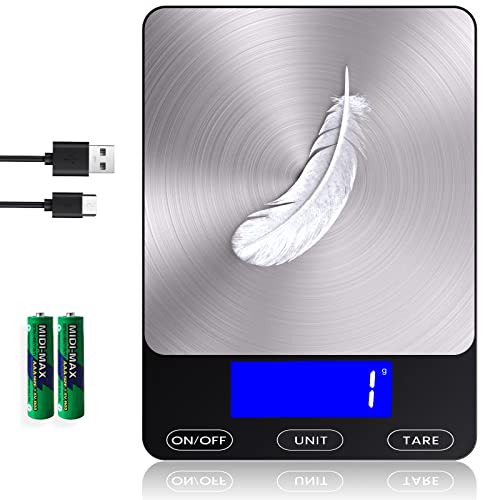
【Precise Weight Food Scale】Our Food Kitchen Scale equips four high-precision load sensors, waterproof Anti-collision glass weighing panel. Large measuring capacity with 1g precise graduation from 0.1oz/3g to 33 lbs/15kg.
Keep Readings Stable: Flat Surfaces, Slow Loading, and Still Air
To keep readings stable, place your Etekcity food scale on a hard, level surface. Soft or uneven surfaces cause the scale to wobble, leading to fluctuating measurements. Avoid counters made of foam, rubber, or wobbly furniture. Ensure all four feet of the scale are in full contact with the countertop for maximum stability.
Add ingredients slowly and position them in the center of the platform. Rapid pouring or off-center loading can cause the scale to shake or take longer to settle. Wait until the stability indicator shows the reading is steady before recording the weight.
Drafts from fans, open windows, or heat sources can move air around the scale, making the display drift, especially when weighing light items. Place the scale in a draft-free environment, away from vents or heaters. When the area is calm and vibration-free, your readings should stabilize within seconds, giving you accurate results every time.
Always zero the scale fully between measurements, and avoid shifting the bowl or container during weighing. By controlling surface flatness, loading method, and airflow, you ensure consistent, reliable measurements for every session.

Comfort and Quality: the kitchen rug is made of high-quality, soft PVC foam which provides a thick cushion to provide support and comfort when standing; relieves pressure on muscles and joints, and alleviates foot, knee, leg and back discomfort
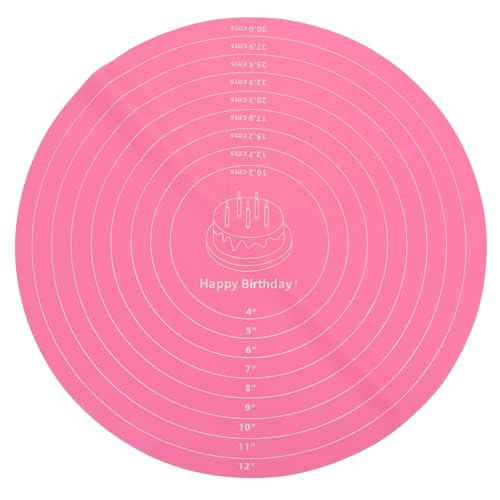
Quality Silicone Material: Made from high-quality food-grade silicone, this baking mat is heat-resistant up to 220°C, non-stick, and easy to clean, ensuring safe and reliable use in the kitchen for years to come.

Comfortable:The KMAT anti-fatigue kitchen mats are ergonomically engineered,extra thick mat provides comfortable support to help improve circulation and posture and to ensure that you are able to stand comfortably while working in the kitchen
Fix Inconsistent Weights on Your Etekcity Food Scale
To fix inconsistent readings on your Etekcity food scale, start by rechecking the zero point before each use. Confirm that the display resets to 0.0 after turning on the scale. If the measurement drifts after removing a container, reset it using the tare function and then zero the scale again. Ensuring proper zeroing prevents errors caused by residual weights. Additionally, always zero the scale after any movement to maintain accuracy. A similar approach is used in KitchenAid mixer bowls to ensure consistent volume readings. For example, you should avoid using brownie batter that is too thick, as residue can also affect the scale’s sensor if it spills onto the platform.
Apply calibration tips if the scale’s readings seem off or drift unexpectedly. Turn the scale off, then back on, and follow your model’s specific recalibration instructions. This process helps correct persistent inaccuracies and stabilizes the readings. Regular calibration is essential if you notice large deviations from expected weights.
Be mindful to avoid overloads. Exceeding the 5000 g weight limit can trigger error messages like “EEEE” or damage the sensor. Keep the platform clean by wiping off crumbs or residue that could interfere with touch points. Proper maintenance helps the scale work reliably and extends its lifespan.
Finally, inspect the sensor mechanically. Do not move the scale during measurement, and look for signs of damage after repeated overloads. If inconsistent readings persist despite zeroing and cleaning, physical damage or sensor wear may be the cause. In such cases, professional repair or replacement may be necessary. For a more budget-friendly approach, you can apply DIY piping bag savings tips from homemade guides to avoid expensive store-bought replacements.
What Display Errors and Battery Issues Mean (and How to Fix Them)?
Display errors and battery issues often appear as warning indicators, such as “Lo” or a flashing battery symbol. These signals usually mean your device is experiencing low power, which can lead to unstable readings or failure to turn on. To fix this, replace non-rechargeable batteries with two fresh 1.5V AAA batteries, ensuring you match the polarity marks inside the compartment. For rechargeable batteries, charge the device immediately via USB before attempting to use it again. If problems persist, remove the batteries, wait a few seconds, and reinstall them to reset the device’s circuitry. Always check your specific model’s user manual or code guide because warning symbols can vary between product lines. For reference, opting for measuring cups with spoons that have clear markings can improve accuracy when using your food scale. For comparison, silicone oven mitts share similar heat resistance limits that degrade if batteries or material integrity are compromised by overheating or misuse. The flat beater for a KitchenAid stand mixer, however, relies on durable metal construction to avoid performance issues from wear or misuse. Addressing these warnings quickly helps ensure accurate weigh-ins and reliable device performance.
Shut Down and Store Your Etekcity Scale to Save Battery Life
After weighing, press and hold the ON/OFF or Z/T/ON/OFF button for about 2 seconds to manually shut off your scale. This quick action stops battery drain immediately, helping conserve power between uses. If you plan to store the scale for an extended period, remove the batteries entirely. Leaving batteries inside can waste energy and increase the risk of leakage over time. Without batteries, your scale requires less maintenance, and its reliability remains intact. To ensure accurate readings after storage, you should perform a calibration using the proper reset procedure for your specific model. When you’re ready to use it again, insert fresh batteries with the correct polarity and perform a calibration, following your model’s reset procedure. Store the unit in a cool, dry place, and avoid pressing the display or buttons accidentally. Using a consistent storage routine is similar to properly caring for tools needed for building a butcher block table, ensuring longevity. Consider using a dedicated organizer to keep your scale and any attachments neatly separated, preventing damage and accidental button presses. This simple routine extends battery life and ensures your scale remains accurate over time.
Three Maintenance Habits for Long-Term Accuracy
Maintaining long-term accuracy with your Etekcite scale involves three key habits. First, calibrate the scale once a month. Place a known, stable weight in the center of the platform to correct any minor drift. After calibration, perform multiple test weighings to ensure consistency, especially after relocating the scale. Second, keep the scale free of dust by wiping the platform with a soft, slightly damp cloth after each use. Dry it immediately to prevent damage to electronic components. For light dust or debris, a dry cloth suffices. Third, avoid exceeding the rated capacity of your scale. Lightly place items to prevent sensor strain, and always re-tare before weighing a container to account for its weight. These habits guard against drift, debris buildup, and overload, keeping your scale accurate and reliable over time.
Why Surface Choice Still Matters for Accurate Etekcity Scale Readings
The surface beneath your scale must be hard, level, and stable for the most accurate readings. A firm, solid surface like wood, tile, or concrete provides a sturdy foundation that resists compression and minimizes movement. Soft supports such as rugs, towels, or foam flex under the weight, causing fluctuations and inconsistent results. An uneven or sloped surface further affects accuracy by shifting the load away from the load cells, making your measurements unreliable.
To ensure optimal placement, choose a flat, non-porous area free of debris. Use a bubble level app to find the flattest spot and confirm the surface is truly level. Even small inclines can tilt the scale and produce skewed data. Regularly check and re-level the surface as necessary, and keep the area clean to prevent loose particles from creating false readings. Repeatedly testing with the same item helps verify that your setup consistently delivers precise measurements.