If you’ve ever wondered what size pan is perfect for small batches or tight spaces, you’re not alone. A quarter sheet pan, measuring roughly 13 by 9 inches, is a compact but versatile tool that fits into most kitchens easily.
Whether you’re roasting veggies or catching drips from baking pies, this little pan can do a lot. Keep reading to see how it compares to other pans and why it might be just what you need.
What Exactly Is a Quarter Sheet Pan?
A quarter sheet pan measures approximately 13 by 9 inches, making it smaller than a standard full sheet pan. This size is perfect for baking small batches of cookies, roasting vegetables, or preparing snacks without using too much space or energy. Its compact dimensions help you focus on individual portions or quick tasks, and it fits easily into most ovens.
You’ll find quarter sheet pans made from different materials. Heavy-duty aluminum is common, offering excellent heat conduction and durability. Nonstick coatings, on the other hand, make it easier to release baked goods and clean up afterwards. When cleaning, hand-wash nonstick pans to preserve their coating, while aluminum pans can be scrubbed with steel wool if needed. For precise cooking tasks, using a best food scale can help ensure accurate ingredient measurements for consistent results. For those who enjoy baking versatility, pairing this pan with a KitchenAid mixer attachment can streamline tasks like mixing dough or batter. To remove stubborn baked-on residue from nonstick pans, applying a gentle cleaner and non-abrasive scrubbing helps maintain the coating.
The raised edges, about an inch high, contain juices and oils, preventing spills and messes during roasting or baking. This feature makes it particularly handy for roasting vegetables, toasting nuts, or baking a small batch of cookies. Because it’s sturdy enough to withstand high oven temperatures, it’s a reliable, everyday kitchen tool for a variety of tasks.
How Big Is a Quarter Sheet Pan Compared to Other Sizes?
A quarter sheet pan measures about 13 by 9 inches. This size makes it ideal for small batches, reheating leftovers, or prep work because it fits easily in most home ovens and toaster ovens. Compared to half sheet pans, which are typically 18 by 13 inches, quarter sheet pans are roughly half the size, providing more control for smaller tasks. They’re significantly smaller than full sheet pans at 26 by 18 inches, making them more suitable for limited space and quick, concentrated cooking. When selecting silicone oven gloves for handling hot pans, prioritize those with a high heat rating and textured grip for safety and comfort. Leaving an ungreased cookie sheet uncoated with butter or oil is often recommended for achieving crispier bottoms on items like roasted vegetables.
While a jelly roll pan is usually 15.5 by 10.5 inches, a quarter sheet pan is slightly narrower and shorter but shares a similar footprint, with the advantage of shallower rims that are about 1 inch high. This shallow depth makes them perfect for roasting vegetables or small-batch baking without excess spillage. The size and shape of these pans also influence performance: lighter aluminum pans reflect heat for even baking, while darker ones absorb heat to produce crispier edges. For tube pans, using cake release tricks can prevent baked goods from sticking fast to the pan.
Why Quarter Sheet Pan Sizes Are Confused With 9×13
Quarter sheet pans are often labeled as “9×13,” but that measurement typically refers to the pan’s outer dimensions, not the usable interior baking surface. The confusion arises because retailers may emphasize the outside footprint, which includes the rim and exterior edges, rather than the interior baking area. Material thickness plays a role; thicker rims reduce the interior space available for baking. Rim styles also matter: a rolled edge increases the pan’s overall outside measurement, making it seem larger than the actual baking surface. Additionally, deep casserole dishes labeled as “9×13” with 2-inch sides can be mistaken for quarter sheet pans, even though their depth differs significantly. A quarter sheet pan usually has a shallow 1-inch rim, sharing the same footprint but not the height. For a similar footprint with less depth, you might consider using a rolling pin substitute to flatten dough directly on a counter instead. The pan’s intended use for tasks like baking cookies or roasting vegetables also helps distinguish it from deeper dishware. To avoid confusion, always verify whether the product is a shallow sheet pan or a deep baking dish when you see “9×13.” For comparison, a half sheet pan like the Ultra Cuisine Nonstick Half Sheet Baking Pan features a diamond textured baking surface that promotes airflow for even baking.
How to Verify Quarter Sheet Pan Dimensions Before Buying
To verify quarter sheet pan dimensions before buying, measure the pan yourself with a tape measure. Many manufacturers list sizes like 13 by 9 inches, but actual dimensions can vary slightly, such as 13 by 9.5 inches or 12.1 by 8.8 inches. Always record the full outer rim-to-rim length and width for accuracy. Check the rim height separately, as it usually hovers around 1 inch but can differ slightly depending on the model.
Interior usable space is also important—rolled edges can reduce the effective cooking area, which impacts lining the pan with parchment or silicone mats. Material matters too; heavier pans often heat more evenly and retain heat longer, but they are also bulkier to handle. Confirm the pan’s size and material with your oven rack clearance to ensure it fits comfortably. For kitchen tasks requiring precise measurements, a similar focus on mixing bowl lids ensures a secure seal and proper fit.
Don’t rely solely on the category name or advertised size. Always compare the actual dimensions listed in the product specifications to avoid surprises upon arrival. A quick measurement step can save you from a disappointing purchase or an ill-fitting pan. For those seeking uniform results, reviewing comparisons of top grain mill attachments for other kitchen tools can provide insight into the importance of precise dimensions. Just as with pans, choosing a poorly sized attachment can ruin a recipe, so look for a flex edge beater that conforms perfectly to the bowl for optimal mixing.

Nonstick Quarter Sheet Pan for baking cookies, roasting vegetables, reheating leftovers; commercial grade and heavy gauge aluminized steel
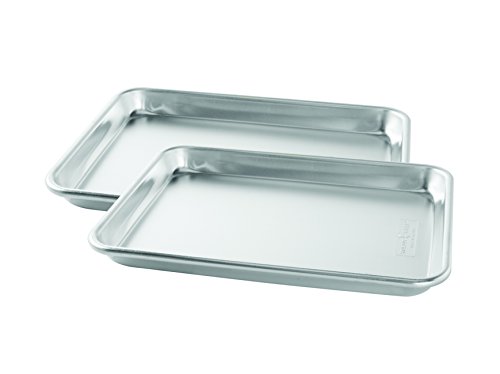
Naturals commercial bakeware is made of pure aluminum which will never rust for a lifetime of durability

INGENUITY DIAMOND TEXTURE - This rimmed baking sheet has a diamond texture on the base increases its non-stick properties and ensures even and quick heat airflow to the cookie, which makes the cookies consistently baked without any over or undercooked part
What Can You Cook on a Quarter Sheet Pan?
You can cook a variety of small-batch dishes on a quarter sheet pan. Its compact size makes it ideal for baking single or small portions, such as one or two cookies or a mini sheet cake for testing recipes without waste. You can also prepare quick weeknight dinners by roasting a single chicken breast, a couple of thighs, or a fillet of salmon. Toss vegetables like broccoli, potatoes, or onions with oil and seasonings for fast, flavorful roasted sides. Additionally, you can toast nuts, granola, or croutons, make single-serving nachos, or reheat leftovers to prevent sogginess. For larger tasks, you could adapt this pan for use alongside a KitchenAid mixer to prepare dough or batters for small-batch baking without dirtying a full-sized sheet pan. This pan is also useful for prepped ingredients, freezing small portions, organizing spices or herbs, or catching drips from pies. Its size encourages efficient, small-batch cooking for everything from snacks to main courses, all with minimal cleanup. For precise portion control, consider pairing it with an accurate food scale to ensure consistent results in your small-batch recipes. Using a quarter sheet pan underneath a woven pot holder can protect your countertop when placing hot pans directly from the oven.

Our popular natural aluminum quarter sheet with a nesting, oven-safe and nonstick steel grid

Our popular natural aluminum quarter sheet with a plastic lid, great for transporting and storage.

Width: 9.5” | Length: 13” | Depth: 1”
How Quarter Sheet Pans Save Space in Your Kitchen
Because quarter sheet pans measure just 9 by 13 inches, they easily fit into narrow cabinets, deep drawers, and tight freezers where larger pans won’t go. Their compact size creates practical storage options for small kitchens, releasing space that would otherwise be wasted. Vertical dividers or tension rods can be used to turn gaps into organized storage spots. They nest neatly when stacked, saving shelf width. In the refrigerator or freezer, they slide in easily for prep work or quick freezing, without occupying much valuable space. You can store them upright in file-style organizers for quick access and minimal restacking. Using quarter sheet pans reduces cabinet congestion and eliminates the need for constant rearranging of larger bakeware, making your kitchen less cluttered and more efficient. Unlike glassware that may have thermal shock limits, these metal pans are highly durable and dishwasher safe for easy cleaning. This standard size is half the footprint of a half sheet pan, making it a versatile choice for everyday cooking and baking tasks. Their simple construction allows them to be used as heat-resistant hot pads for trivets when placed on countertops.

NONSTICK: Swiss-engineered heavy-duty coating allows for nonstick release when baking
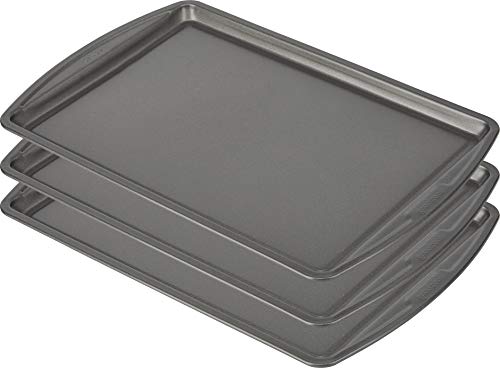
SET OF 3 BAKING SHEETS: GoodCook’s Nonstick Cookie Sheet Set comes with three 13 x 9-inch baking sheets to bake your favorite recipes from cookies, desserts, and tasty sheet pan dinners

13 x 9-INCH COOKIE SHEET: Upgrade your kitchen with this GoodCook Baking Sheet. Perfect for your favorite recipes from cookies and baked goods to sheet pan dinners
Key Features to Check When Buying a Quarter Sheet Pan
Quarter sheet pans are typically around 12 by 8.8 inches with a depth of 1 to 1.25 inches. This size fits most household ovens and offers enough surface area for baking multiple cookies or roasting vegetables without overcrowding. When choosing one, verify the interior dimensions to ensure it suits your oven’s space. Depth matters too: deeper pans prevent spills and contain juices, which is useful when roasting meats or making layered dishes. For even better results, consider reviewing Top Cookie Sheets for perfect baking to compare top-rated options. Many baking sheet pans with racks also include a wire rack that elevates food for better air circulation and crisper results.
Materials vary and impact performance. Heavy-gauge aluminum heats quickly and distributes heat evenly, making it ideal for delicate baking. Aluminized steel adds rust resistance and durability, suitable for frequent use. Stainless steel is tough but heats more slowly; it’s better if you want a resilient pan that withstands frequent washing. Look for pans with rolled or encapsulated rims to avoid warping over time—these reinforce the edges and maintain shape. Choosing the perfect baking sheet for your kitchen depends on matching the material to your cooking needs.
A nonstick coating offers easy food release, especially for sticky baked goods, but it requires gentle cleaning. Uncoated aluminum will need parchment paper to prevent sticking and promote easy cleanup. When cleaning, hand-wash coated pans to preserve their nonstick finish and avoid abrasive scrubbers that may scratch or damage the surface. Overall, prioritize a smooth interior surface and a solid rim construction for longevity and reliable performance.

HEALTHY & HEAVY DUTY: CEKEE stainless steel cookie sheet for baking is crafted from premium 18/0 stainless steel, ensuring durability and resistance to rust and corrosion, without coating, no need to worry about any toxic material falling into the food when using a scraper. Baking tray is sturdy & rust free, making it a reliable choice for all your baking needs

★ EXTRA STRONG ALUMINUM CAKE PANS – When using foil pans instead of real metal baking pans you need something that’s strong and durable to cook all your delicious cakes in. These quarter size pans are 45 gauge aluminum and strong enough for transporting even the heaviest of food items.

QUALITY CONSTRUCTION: Constructed from food grade silicone and NSF Certified for safe food contact and professional use
Why Buy More Than One Quarter Sheet Pan?
Having more than one quarter sheet pan boosts your kitchen efficiency and flexibility. Use two pans at once to roast proteins, vegetables, and snacks side-by-side without flavor transfer or wasted space. Because two pans fit on a single oven rack, you can remove each item as it finishes, preventing overcooking and ensuring even heat distribution. It also simplifies prep work: you can stage different components, bread proteins, or marinate without overcrowding your workspace.
For cleanup, swapping pans during cooking makes washing easier since each tray is small and quick to clean. Additionally, these pans excel for storage—stack them neatly in compact ovens or cabinets—and are perfect for freezing portions before transferring to containers. Buying an extra set not only optimizes your timing and reduces mess but also streamlines your overall kitchen workflow, making meal prep quicker and more organized.
![Quarter Sheet Pan with Cooling Rack Set [2 Baking Sheets + 2 Baking Racks], CEKEE Stainless Steel Cookie Sheets for Baking and Wire Rack - Rust & Warp Resistant & Nonstick, Size 12 x 9.8 x 1 Inch](https://m.media-amazon.com/images/I/51bCW7VK2dL._SL500_.jpg)
PERFECT AND COMPLETE SET: CEKEE quarter baking sheet with rack sets are 4 PIECES , which includes 2 baking pans: 12.59 × 9.84×1.18 Inch, 2 Wire Racks: 11.57×8.97 Inch. This quarter sheet pan with cooling rack is perfect combo, which can help you for baking or cooking favorite food

Naturals bakeware is made of pure aluminum for superior heat conductivity and produces consistently evenly browned baked goods every time.

INGENUITY DIAMOND TEXTURE - The cookie sheet pan set has a diamond texture on the base increases its non-stick properties and ensures even and quick heat airflow to the cookie, which makes the cookies consistently baked without any over or undercooked parts.