

Struggling to get your Bundt cake out of the pan without it breaking or sticking? The key isn’t luck — it’s in a few simple but crucial steps that make all the difference.
By following these reliable tips, you can achieve a clean, beautiful release every time and enjoy your cake as much as the baking process.
Keep reading to discover the foolproof method.
Why Good Prep Is the Only Thing That Really Works for Bundt Cake Release
The key to a flawless Bundt cake release is thorough preparation before you pour in the batter. You need to cover every ridge, flute, and the center tube, or decorative patterns will trap your cake and cause tearing. Missing spots results in rough edges and a damaged surface, which makes frosting more difficult. Use shortening and flour, a baking spray with flour, or a homemade release paste to coat every nook and cranny. Check under strong light to ensure complete coverage and avoid dry patches that can cause sticking. Remember, failures are usually due to inadequate prep rather than the recipe itself. An old or uneven pan, or inconsistent coating, increases the risk of tearing. A quality pan with even heat distribution prevents hot spots that can cause the cake to bake unevenly and stick. The same principle applies to using a quality baking sheet for bacon, where even heat distribution prevents sticking and ensures crisp results. If you are short on time, you could use a regular pan instead, but note that dense batter may not bake evenly and the lack of a central tube affects texture. Properly prepared pans release smoothly, leaving your Bundt cake looking pristine and ready to impress.
The 10-Minute Rule: How Long to Cool a Bundt Cake Before Unmolding
After your cake comes out of the oven, set it on a wire rack and start the 10-minute timer. This is the ideal window for a clean release because a hot cake is too fragile and prone to tearing if unmolded too soon. Conversely, if you wait too long and let the cake cool completely in the pan, it’ll stick. Ten minutes allows the crumb to firm up enough to hold its shape while remaining warm enough to release easily. In contrast, angel food cake requires inverted cooling in a tube pan and should never be made in a Bundt pan due to the lack of structural support.
For a standard 9-inch Bundt cake, 10 minutes is generally perfect. Lighter batters may need the full 10 minutes, while denser ones might benefit from waiting around 15 minutes. Mini pans, on the other hand, require only about 5 minutes. The key is not to cool the cake completely in the pan, as overcooling can make removal difficult even with proper preparation. For pans with baked-on residue, cleaning silpat mats after each use prevents buildup that can affect future releases. Placing the cake pan directly on the wire rack for the 10-minute rest promotes even air circulation.
Once you’ve unmolded the cake, let it cool completely on a wire rack. This step is essential if you plan to add decorations or apply glazes or drizzles. Proper timing ensures your cake keeps its shape and achieves a professional finish.
How to Loosen a Stuck Bundt Cake Without Tearing It
To loosen a stuck Bundt cake without tearing it, start by gently running a thin silicone spatula or plastic knife around the outer edge and center tube of the cake. Move slowly to avoid damaging the crust or scratching the pan finish. Then, drape a warm, damp towel over the inverted pan for 5 to 15 minutes. The steam created helps loosen stubborn spots without making the cake soggy. After that, give the pan a light tap against the counter and shake it side to side with controlled movements—do not force it. If the cake remains stuck, placing the pan in the fridge for 10 to 15 minutes can help shrink the cake for easier release. Using a top cooling rack for the inverted pan can also improve airflow and prevent sogginess. For cakes that require extra structural strength, hand kneading develops a firmer crumb that resists tearing during release. Keep checking the edges to ensure they are completely free before attempting to lift the cake. If some bits tear, save them for a crumb topping. This method works well for delicate or sticky cakes, especially when you want to maintain their shape and presentation. For especially stubborn spots, applying a silicone spatula between the cake and pan can gently break the seal without damaging the cake.

【Quantity & SIZE】This pans for baking nonstick includes 2 pans, each with a 10-inch diameter and a height of 3.4 inches. They are designed with a large capacity, making them perfect for both home and commercial use. Easy to operate and user-friendly, these silicone pans for baking are your go-to tools for baking delicious cakes !
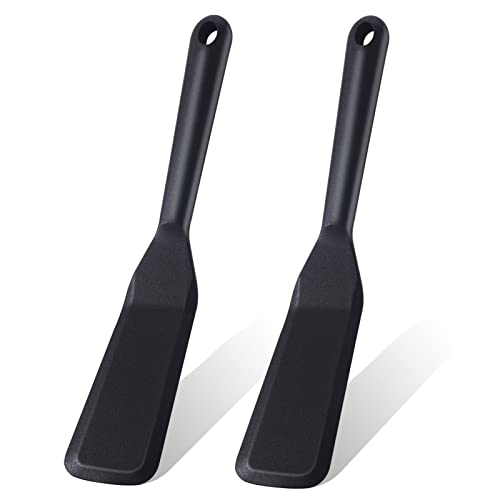
【Food Grade Small Silicone Spatula】: Brownie silicone spatula are made from inner nylon and outer silicone material,you will get 2 pieces of nonstick skinny spatula , they are safety-tested which are no BPA .Smooth edges especially suitable for Non-stick Pan.

Flexible head easily slides beneath delicate food
How to Invert a Bundt Cake Without Dropping It
Once the cake has cooled for 10 to 15 minutes and you’ve loosened any stuck spots, position a wire cooling rack directly on top of the Bundt pan, making sure it’s centered. Hold the pan and rack firmly together—use oven mitts if the pan remains warm. In one quick, confident motion, flip the assembly over. Gently set it down and wait a few seconds; you’ll hear a release sound indicating the cake has separated from the pan. Unlike an angel food cake pan, which often has a removable bottom for easy release, a Bundt pan requires this inversion technique. The popping sound you hear from a baking sheet in the oven is often caused by rapid thermal expansion of the metal, which is unrelated to the cake release. Lift the pan straight up without twisting or prying to avoid damaging the cake. If the cake lands smoothly onto the rack, it’s ready to be decorated or served. For easier releases in the future, consider using a nonstick coated pan. Allow the cake to cool completely on the rack before handling further. To enhance your baking setup, consider investing in top attachments for KitchenAid mixers to help perfect your batter preparation.

Premium Cake Pan: The Gold Fluted Tube Cake Pan offers professional-level results; it measures 9.49 inches in diameter and 3.37 inches deep

PRACTICAL SIZE: The round cake pan features a 9.5” outer diameter,9” inner diameter, and a 3” height, making it perfect for sharing with friends, family, or guests.The pound cake pan is suitable for most ovens. With its narrow base, straight sides, and extra-large center tube, this buntz cake pan non stick is a must-have kitchen essential. Made from professional-weight formed bakeware, this tube cake pan is a fantastic addition to any kitchen.

Heavy Gauge (1.0 mm) Aluminized Steel Construction for Even Heating
What to Do When Your Bundt Cake Still Sticks (Steam Hack and Other Fixes)
If your Bundt cake still sticks to the pan, try the steam hack: wrap the hot pan in foil or a damp towel for 15 to 20 minutes. This moisture softens any areas where the cake is stuck, making it easier to release. After waiting, gently run an offset spatula around the edges and the center tube, taking care not to scrape aggressively and damage the cake’s decoration. If the cake still won’t release, dip the pan in warm water for a few seconds or briefly heat the pan’s base to loosen the residue. Lightly tap the pan and let it rest upside down on a cooling rack. For persistent sticking, repeat the steaming process once more. Keep in mind that changes in moisture—such as ingredient substitutions—can affect how easily your cake releases. Always resist the temptation to force the cake free, as this can tear or damage the delicate structure. Instead, preserve intact sections and trim any damaged parts. Proper greasing and flouring the pan before baking significantly reduces sticking problems in future batches, and using a compatible stand mixer attachment can ensure a consistent batter texture for better results. Patience and persistence increase the likelihood of successful removal when dealing with persistent sticking. Unlike angel food cake, which requires an ungreased pan to climb the sides, Bundt cakes depend on a greased and floured pan to release cleanly. For similar reasons, do not substitute wax paper for parchment paper when lining pans, as wax paper is not heat-resistant and can melt or smoke in the oven.

12-Cavity Mini Cake Design – This set includes two mini cake pans for baking, each pan features 12 fluted cavities, perfect for making evenly shaped mini cakes for home baking, parties, and holidays

2025 UPGRADE FEET DESIGN - Designed with three sturdy feet, this updated angel food cake pan allows for improved airflow during cooling. No need for a bottle! The feet elevate angel food cake pan for faster and more even cooling, keeping your cake soft and fluffy.
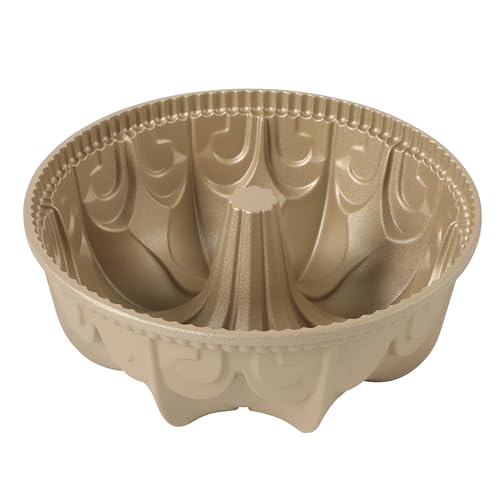
A BOX INCLUDES: One flower-shaped cast aluminum cake mold. Measures 9.3 inches (24.3cm) daimeter x 3.9 inches (9.9cm). Capacity: 10-cups (2.5-qt). The Dunelle Bakeware Collection from Martha Stewart turns simple ingredients into warm, inviting baked creations with thoughtfully crafted essentials. With classic silhouettes and charming molds, this collection offers everything you need to bake, brown and delight.