Wondering if you can bake a cake in a glass pan? The answer is yes, but you’ll need to make some adjustments. Lower your oven temperature by 25°F and watch your baking time closely.
Glass pans heat differently than metal, so with the right tweaks, you can get a perfect cake every time. Keep reading for all the tips and tricks.
Is It Safe to Bake a Cake in a Glass Pan?
Baking a cake in a glass pan is safe only if the pan is explicitly labeled as oven-safe. Always look for that label, as not all glass cookware can withstand oven temperatures. Tempered glass is typically the standard material designed for baking, and it offers better resistance to thermal stress. Check the condition of your glassware before use—discard any pan that’s cracked, chipped, or scratched—as damage increases the risk of breakage during baking. Similarly, keeping your bakeware in pristine condition involves regular cleaning to prevent residue buildup that can affect performance. For achieving flawless results, using a stand mixer with buttercream ensures your frosting is smooth and well-aerated. However, even with a clean pan, you must still master proper cake pan prep to ensure your cake releases easily without sticking.
Thermal shock is the main hazard when baking with glass. To prevent it, always preheat the oven fully before placing your glass pan inside. Avoid placing a cold dish directly into a hot oven, as rapid temperature changes can cause the glass to crack or shatter. When removing the baked cake, avoid sudden temperature shifts by setting the hot pan on a dry towel or cooling rack away from cold surfaces. Never move a glass pan from the freezer directly into a hot oven, as this can also lead to breakage. Following these precautions helps ensure your safety and keeps your glassware intact while baking.

INCLUDES: This bakeware set contains (1) 8-inch baking dish and (1) red TrueSeal lid. Unlike most plastics and metals, glass is all-recyclable, won’t stain, and won’t retain odors. Enjoy a cleaner experience.

INCLUDED & DIMENSIONS: This bakeware set includes one 8-inch square Essentials glass cake dish, the perfect size for small batches of brownies, cornbread, and pound cake. A must-have staple for any home baker.
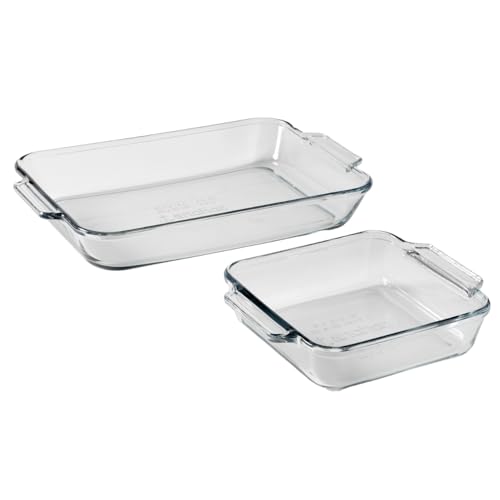
INCLUDES: Set includes a tempered glass cake dish and a 3-quart baking dish, perfect for a variety of baked goods and meals.
Adjust the Oven Temperature by 25°F for Glass Pans
When you swap a glass pan for a metal one, reduce the oven temperature by 25°F—so a recipe calling for 350°F becomes 325°F. This adjustment prevents overbrowning by slowing surface caramelization. You’ll see a more distinct color contrast between the golden crust and the interior, and the texture will improve: the outer layer won’t set too quickly, allowing the center to bake evenly. The baking time generally stays similar to the original, but start checking for doneness 5 to 10 minutes earlier. Use a toothpick inserted into the center—if it comes out clean, it’s done. This rule of thumb works well for sweet baked goods, so prioritize visual cues over strict timing. For mixing dense cake batters, a KitchenAid dough hook provides efficient kneading power. For additional safety, always use heat resistant oven gloves when handling hot glass pans. For additional kitchen versatility, you can explore top attachments for your stand mixer to expand your baking options.

OVEN MITT: Comes with 1 machine washable, hot surface handler Ove Glove

【Extreme Heat Resistance】Our barbecue gloves & oven mitts, are designed to withstand temperatures up to 1472°F(Test max temperature tolerance), providing perfect protection for your hands from high temperatures whether you're grilling, baking, or cooking.

MULTI-FUNCTIONAL: Great for barbeques, kitchen, rearranging fireplace logs, car repair, welding, light bulb changes and more! JOSEPH ENTERPRISES INC: is the only legal manufacturer and distributor of the trademarked The 'Ove' Glove
Why Glass Bakes Cakes Differently Than Metal Pans
Glass heats more slowly than metal because it has lower thermal conductivity. This means it transfers heat into your batter at a slower rate, causing the edges to warm up before the center. As a result, your cake may bake unevenly, with the outside browning faster than the inside. However, once heated, glass retains that heat longer due to its superior heat retention. Even after removing the cake from the oven, it continues to brown and dry at the edges because of this stored heat, leading to darker edges and a slightly drier crust. Metal pans, being highly conductive, transfer heat quickly and evenly, which promotes a more uniform rise and consistent doneness, but they also cool faster, resulting in more even baking throughout. For recipes requiring thorough mixing, a stand mixer with dough hooks can ensure consistent batter texture, though it won’t affect pan heat distribution. A food scale helps measure ingredients accurately for consistent results, but it does not change how the pan conducts heat. Similar to glass bakeware, KitchenAid mixing bowls are not recommended for microwave use due to thermal stress risks from uneven heating.
Best Practices for Prepping Glass Pans for Cake Baking
To prepare a glass pan for cake baking, start by ensuring the pan is clean and dry. Any residue or moisture from storage can interfere with your cake’s texture. Apply a full, even layer of grease using butter, shortening, or a spray, making sure to cover every corner and seam. Avoid leaving bare patches, especially along the edges, as they can cause sticking. Greasing the pan shortly before adding the batter helps keep the coating effective and keeps the leavening active. For extra assurance of non-stick release, dust the greased surface with flour or line the bottom with parchment paper. This hybrid method helps compensate for glass pans’ tendency to stick more easily than metal. Be careful to avoid lumps of grease or flour, which can mar the cake’s surface. If your batter is particularly sticky, consider increasing the greasing and dusting. Using a precise cooking scale to weigh your flour and other dry ingredients can greatly improve baking consistency. Proper prep ensures easy release and simplifies cleanup afterwards.

For Fat Free Cooking, so there’s more on your plate, and less in your pan

One 5 oz can of PAM Non Stick Olive Oil Cooking Spray

Fat-free cooking spray, 5 ounces
How Glass Affects Doneness Cues (And When to Pull the Cake)
Because glass retains heat longer than metal, your cake’s edges and top might brown before the center is fully baked. Don’t rely on color alone as your doneness cue. Instead, focus on the center: insert a toothpick there and look for a clean or slightly moist crumb. You’ll also notice the center springing back lightly when tapped. Avoid judging doneness solely by the browned top, as it can be deceptive. To prevent overbaking, start checking your cake about 5 to 10 minutes before the recipe’s stated end time. Lower your oven temperature by 25°F if you notice excessive browning. Treat the recipe’s indicated time as a guideline rather than a strict finish line. Pull the cake when the center toothpick comes out clean and the top is set, but don’t wait for heavy browning. Keep in mind that residual heat will finish baking the cake even after you remove it from the oven. Using an Etekcity food scale can help you measure flour accurately for consistent cake results.
Mistakes That Can Crack Your Glass Pan (And How to Avoid Them)
To prevent cracking, never expose a glass pan to sudden temperature changes. Thermal shock occurs when a hot pan is placed into a cold environment or vice versa, causing uneven expansion or contraction of the glass. Always allow your pan to come to room temperature or adjust gradually. For example, don’t transfer a cold pan directly from the fridge into a hot oven, or move a hot pan onto a cold or wet surface. Use protective layers like a dry towel, trivet, or wooden board to shield the glass from direct contact with cold surfaces. For perfectly cooked meals, consider using a top roasting rack instead to avoid thermal stress entirely. Similar to how glass reacts to heat, butcher block tables require gradual temperature changes to prevent warping or cracking of the wood. Likewise, selecting from top rolling pin bands can help bakers avoid similar material stress in their tools.
Avoid adding cold liquids to hot dishes; instead, incorporate any basting liquids before heating. Inspect your pan carefully before each use, checking for chips or deep scratches, because defects weaken the glass structure and increase the risk of cracks. Never use glass pans on the stovetop or under a broiler, as the direct heat can create uneven stress points. Following these steps ensures your glass pan remains intact, even after many baking sessions.

Decorative and Color Your Home:This silicone trivet set features 3 different elegant designs to decorate and brighten your kitchen and dining space. Practical and useful hot mats for kitchen, while also enhancing the decor of your dining room, terrace and other areas of your home.

Food Safe Silicone: 100% Silicone. BPA free. No smell, non-toxic, soft and flexible.

【Temperature Resistant Glass Bakeware】This glass baking dish supports temperatures ranging from -40℉ to 482℉. Suitable for oven and microwave baking & reheating. After use, you can store leftovers in the freezer, and clean it conveniently in the dishwasher.
Best (And Worst) Cakes for Glass Pans
Sheet cakes and single layers are the best options for baking in glass pans. Their shallow, even layers allow for uniform baking and easy frosting application. Dense or custardy cakes, like pound cakes or coffee cakes, also perform well because their moist textures benefit from glass’s gentle heat. These types of cakes tend to bake evenly, reducing the risk of over-browning or doming.
Avoid tall, thick layers in glass pans. They often bake unevenly, with edges browning too quickly while the center remains underdone. Chocolate cakes or recipes that require strong browning are rarely successful, as glass can cause the outside to over-brown before the interior is fully set. For decorating ease, stick to sheet cakes or single-layer cakes, which provide a smooth surface for frosting.
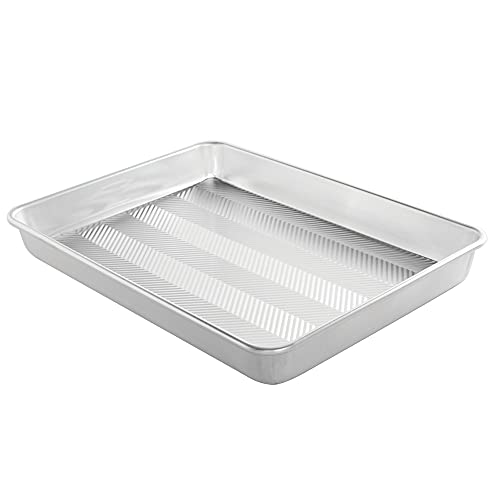
Better Airflow for Crisping

A better way to chill, store and transport baked goods

BAKING DISH SIZE: Includes one normal-depth 9x13 glass baking dish (measures 9 x 13 x 2 inches) with matching GLASS lid.