

If you’re trying to decide between a silicone baking mat and parchment paper, you’re probably weighing convenience against performance.
Silicone mats are heat-resistant up to 500°F and reusable.
Parchment is better for achieving crisp, golden edges.
Your choice depends on your baking habits—here’s what you need to know to pick the right one for your kitchen.
Heat Tolerance: Which One Can Take More Heat?
Silicone baking mats can handle higher temperatures than parchment paper, making them the better choice for high-heat cooking. Standard silicone mats are rated for 428°F to 480°F, while basic parchment paper usually tops out near 450°F. Premium silicone mats can withstand over 500°F, surpassing most parchment options. This higher heat tolerance means silicone is more durable under intense heat without scorching or smoking. However, to keep a silicone mat performing at these high temperatures, it is essential to use gentle cleaning methods that lift baked-on residue without damaging the silicone surface. For roasting or baking above 425°F, silicone offers a wider safety margin. Keep in mind, silicone isn’t broiler-safe, and exceeding its temperature limit can cause warping or smoke. For everyday baking at moderate temperatures, parchment works fine. But when hot oven conditions are intense, silicone’s higher heat capacity helps protect your baking surface and keeps your kitchen smoke-free. Unlike paper, silicone mats are made of microwave safe materials that won’t absorb moisture or harbor bacteria when cleaned properly. For making ice cream cakes, a springform pan with a silicone mat base ensures even heat distribution and easy removal. Choose the material whose temperature limit comfortably exceeds your oven setting.

Best German Silicone: We attach great importance to the health of our customers. Therefore, we use the best German WACKER silicone as the raw material in the industry. Food Grade, BPA Free, PFOA Free, Non-toxic. NOT made in Germany.
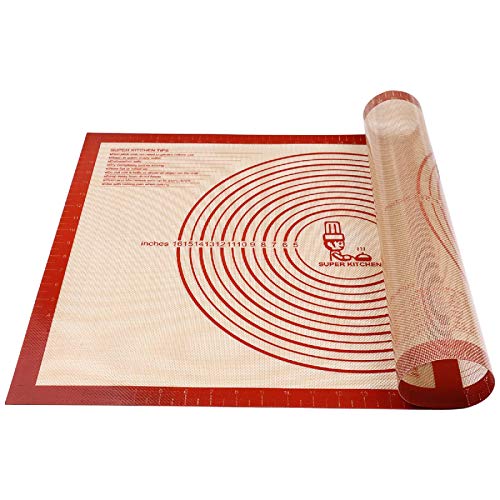
Premium Safe Silicone:We attach great importance to the health of our customers.So we offer the premium food grade silicone to pretect your safe.

Easy Cleanup: The surface helps reduce baked-on residue, and the mats can go in the dishwasher once cool for convenient cleanup between batches
Reusability: Does Silicone’s Lifespan Justify the Cost?
Silicone mats typically last between two to three years with regular baking, making their lifespan well worth the initial investment. This longevity means you can often use them hundreds or even thousands of times, which spreads out the higher upfront cost over many uses. For frequent bakers, this reusability translates into significant savings compared to constantly replacing parchment paper. For those serious about precise cooking, a top rated food scale offers similar long-term value by ensuring accurate measurements for consistent results. Silicone’s flexibility also adds to its appeal — they lie flat without curling and are easy to store by simply rolling them up. In contrast, reused parchment paper wears out quickly because of grease and heat exposure, requiring frequent replacements that add up in cost over time. For occasional baking, parchment’s lower initial price might make sense, but if you bake regularly, silicone’s durable lifespan offers better value and less hassle. For persistent baked-on residue, silicone mats can be cleaned effectively using a paste of baking soda to lift stubborn marks without damaging the surface. Similarly, if a recipe calls for a springform pan, using a silicone baking mat as a liner can help prevent sticking in standard pans, though it won’t fully replicate the pan’s removable sides.
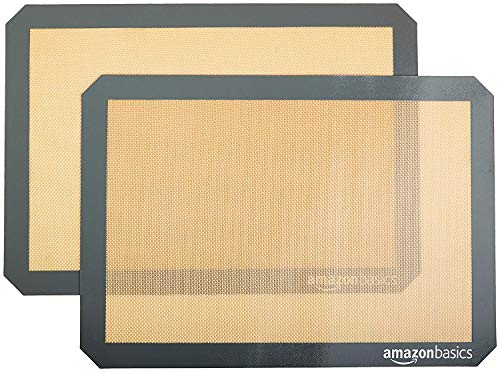
SHIPMENT CONTAINS: 2-pack of food-safe silicone baking mats for easy and convenient baking, roasting, or food prep

2 Half (16.53 x 11.61 inches) & 2 Quarter sheet (11.81'' x 8.26'')Silicone Baking Mats, perfect for keeping different recipes separate—no more mixing flavors

Packaging & Size: We include a 2-pack large silicone baking mat per pack, measuring 16.5 x 11.6 inches. Easy to bake and enhance your baking results.
Cookie Texture: How Parchment vs Silicone Affects Spread and Browning
Silicone mats tend to insulate more effectively than parchment, which delays the set time of cookies and allows the dough to spread outward more easily. This increased spread results in cookies that are thinner with crisper edges, but it often leaves the bottoms pale and soft rather than evenly browned. Because of the greater expansion, silicone liners can reduce moisture retention within the cookies, making them denser and less tender. Unlike parchment, piping bags are reusable when properly cleaned and maintained, offering a similar durability advantage for bakers who rely on reusable tools.
If you want crisp bottoms and reliable browning, parchment paper generally outperforms silicone mats. Parchment heats more evenly and promotes better caramelization, leading to a richer, more uniform color on the cookies’ bottoms. Conversely, silicone liners are suitable when you prefer softer, thinner cookies or need a cookie that releases very easily, but you’ll need to adjust your baking times accordingly. The fat content of your dough still plays the most significant role in the final texture and coloring, but the choice of liner significantly influences how your cookies spread and brown.

Nonstick Surface: Premium non-stick surface; most cakes, cookies and bread release without added grease; reusable substitute for disposable parchment paper
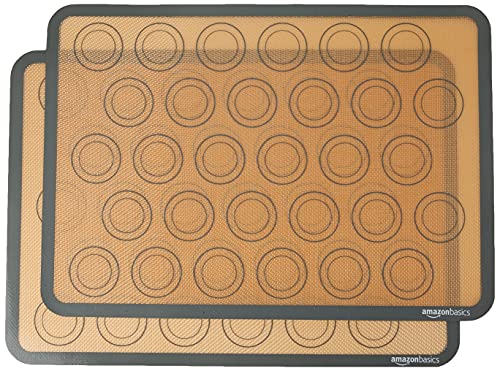
Baking mat (2-pack) with macaron cookie template (includes guidelines for 30 macaron halves per sheet)

MUST-HAVE SILICONE BAKING MAT HALF SHEET: Elevate your baking with our 16.5"x11.6" silicone baking mats. This 2-pack set is perfect for baking cookies, bread, macarons, pastries, and more without the need for parchment paper or cooking sprays. Ideal for baking supplies and kitchen gadgets.
Safety: What’s Actually in Parchment vs Silicone Mats?
Most parchment papers are coated with a silicone layer, which provides good chemical stability and is PFAS-free, making it a safe non-stick option. However, some cheaper or unlabeled brands may use coatings based on PFAS chemicals, which can pose health concerns. To ensure safety, choose parchment paper that is clearly labeled as silicone-coated. Silicone baking mats rely on food-grade silicone, often platinum-cured, offering inherent chemical stability without BPA or phthalates. But the key is to buy from reputable sources, as some low-grade mats may lack proper certification or quality standards. For KitchenAid mixers, users can find your perfect fit among these attachment materials when choosing between options. Temperature safety varies as well: silicone mats should not be used above 480°F, and parchment paper should stay under 450°F to prevent degradation. Exceeding these limits can cause materials to scorch, tack, or degrade. Neither option is suitable for the broiler. Ultimately, your safety depends on knowing the coating type and sticking to recommended temperature ranges.

【DURABLE SAFE SILICONE MAT】The pastry mat made from premium quality food grade silicone material, it's nonstick and will not tarnish or discolor. It is durable and will serve you years for baking need. BPA free.

【DURABLE SAFE SILICONE MAT】The pastry mat made from premium quality food grade silicone material, it's nonstick and will not tarnish or discolor. It is durable and will serve you years for baking need. BPA free.

PREMIUM MATERIAL: Made of 100% food-grade silicone, these non-stick baking mats ensure safe and healthy cooking without any BPA
Parchment vs Silicone: The Final Verdict for Cookies, Candy, and Cleanup
Silicone mats are your best bet for reusability and consistent release, especially if you bake often. They can handle heat up to 500°F, making them suitable for various recipes and repeated use. Parchment, on the other hand, is ideal if you prefer quicker cleanup after sticky tasks like candy making since you can just toss it away. While silicone mats reduce long-term waste and are environmentally friendly if used frequently, their production consumes more energy, which might offset some ecological benefits if you only bake occasionally. Parchment is compostable and more eco-conscious for infrequent baking needs. When it comes to cleanup, parchment wins for simplicity—just toss and replace—whereas silicone mats save effort over dozens of uses. Texture-wise, parchment provides a better surface for certain baked goods, while silicone’s durability suits those who want to bake repeatedly with minimal fuss. Ultimately, if you value texture and ease of disposal, go with parchment; if durability and sustainability for frequent baking are your priorities, silicone is the better choice.
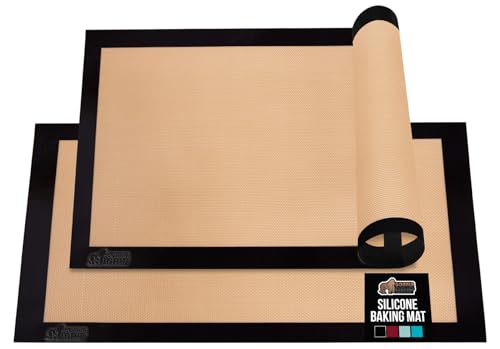
DURABLE AND LONG LASTING: constructed from ultra durable, thick silicone, these silicone baking mats are designed to withstand daily usage; oven safe up to 500 degrees, the silicone baking mats can withstand high temperatures without worry; do not use on broil; slip resistant and won't move around on pans; plus, its even baking surface helps prevent burned undersides; safe for use with metal utensils – do not use serrated edges
DURABLE AND LONG LASTING: constructed from ultra durable, thick silicone, these silicone baking mats are designed to withstand daily usage; oven safe up to 500 degrees, the silicone baking mats can withstand high temperatures without worry; do not use on broil; slip resistant and won't move around on pans; plus, its even baking surface helps prevent burned undersides; safe for use with metal utensils – do not use serrated edges

DURABLE AND LONG LASTING: constructed from ultra durable, thick silicone, these silicone baking mats are designed to withstand daily usage; oven safe up to 500 degrees, the silicone baking mats can withstand high temperatures without worry; do not use on broil; slip resistant and won't move around on pans; plus, its even baking surface helps prevent burned undersides; safe for use with metal utensils – do not use serrated edges